
São Paulo School of Advanced Science on Climate Change: Scientific basis, adaptation, vulnerability and mitigation

3 to 15 July 2017, São Paulo, Brazil
Photos Posters Presentations Program and guidelines Participants Speakers
Suggested Readings Announcement Content Contact Webinar
The São Paulo School of Advanced Science on Climate Change: Scientific basis, adaptation, vulnerability and mitigation was held on 03 to 15 July 2017 at the University de São Paulo (USP), São Paulo, Brazil. The School was organized by the Interdisciplinary Climate Investigation Center (INCLINE) and the Inter-American Institute for Global Change Research (IAI), and sponsored by the São Paulo Research Foundation (FAPESP), Pró Reitoria de Pesquisa/University of São Paulo (PRP/USP), IAI and Santander.
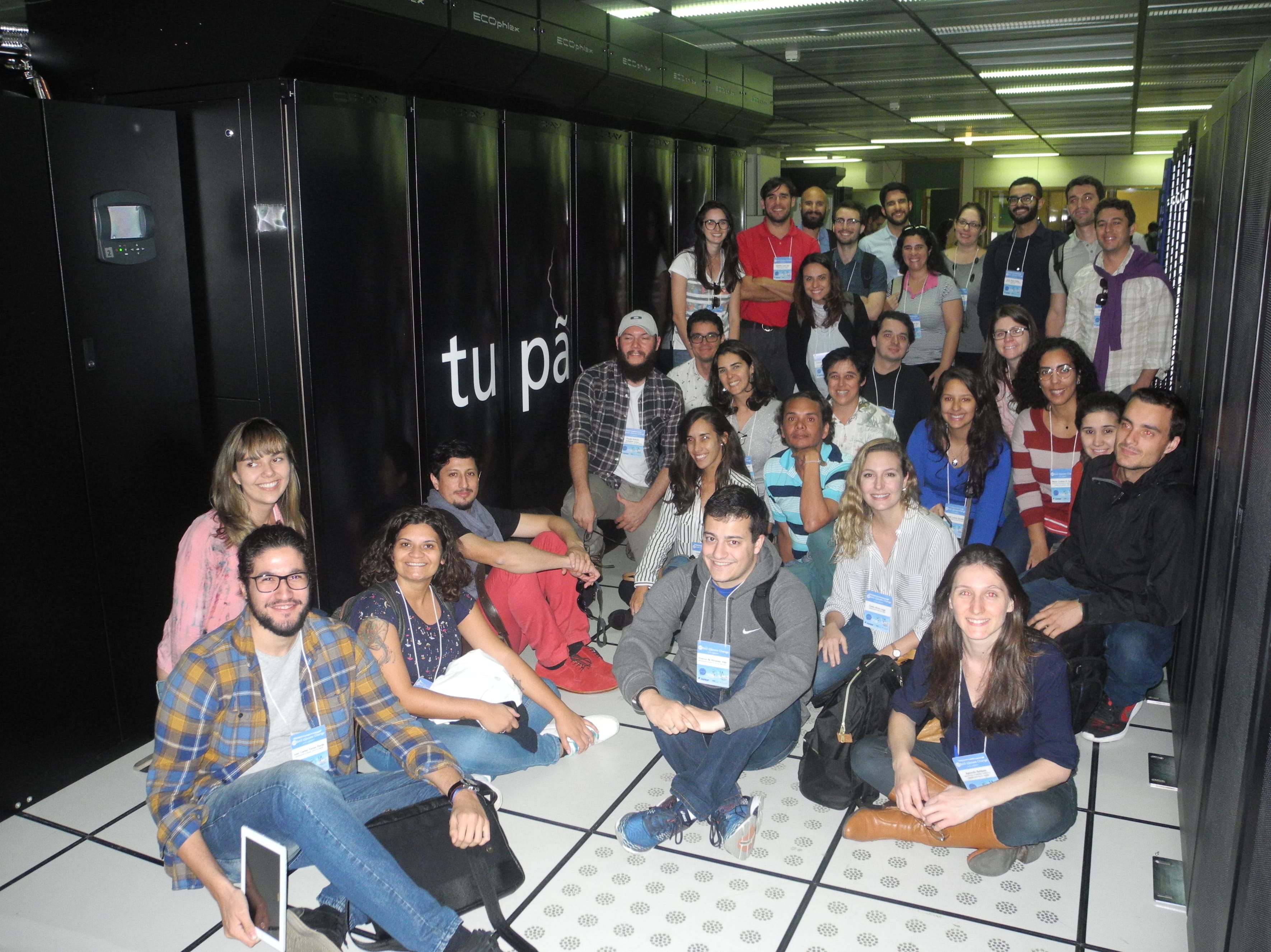
Photos
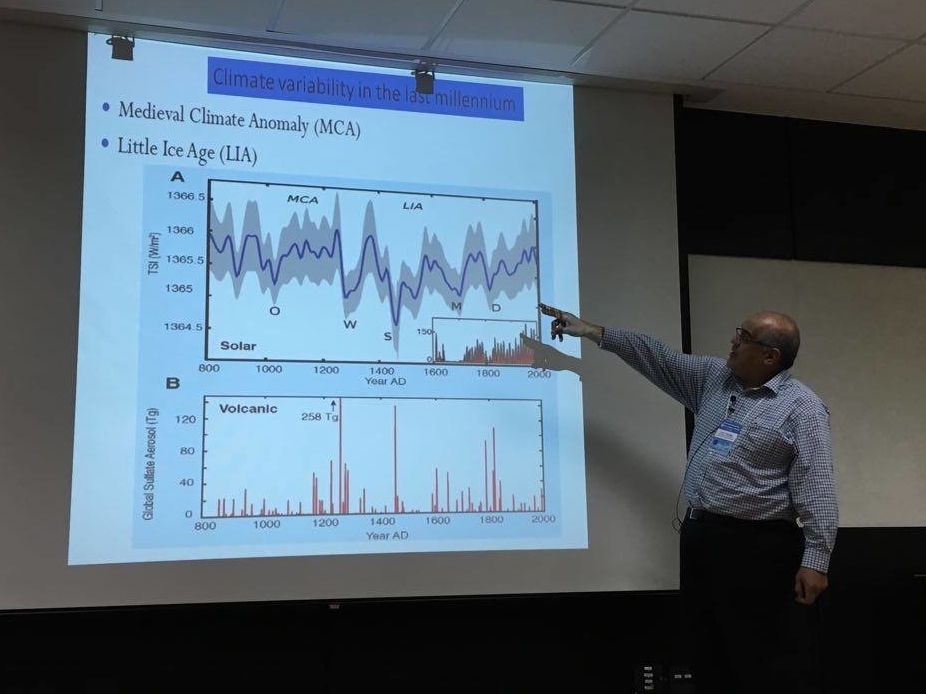
Presentation – José A. Marengo
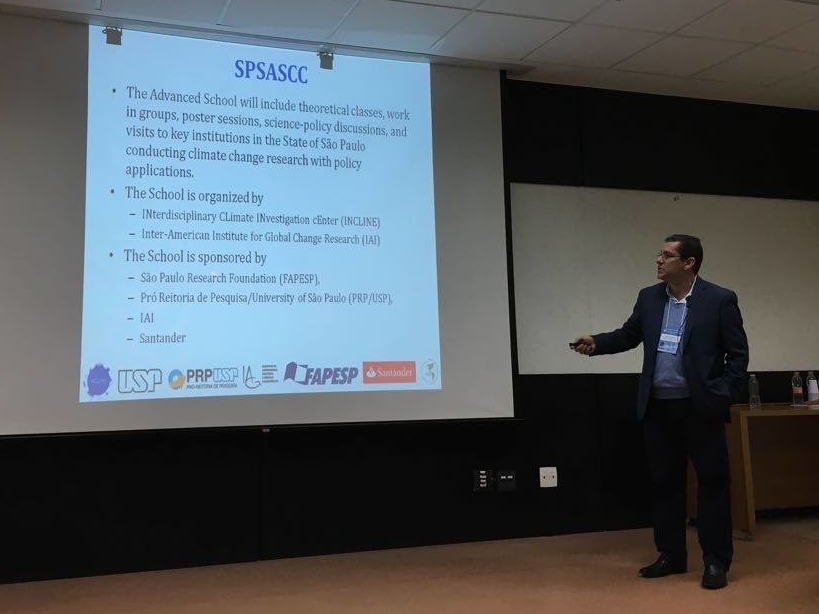
SPSASCC information – Tercio Ambrizzi

Class 1
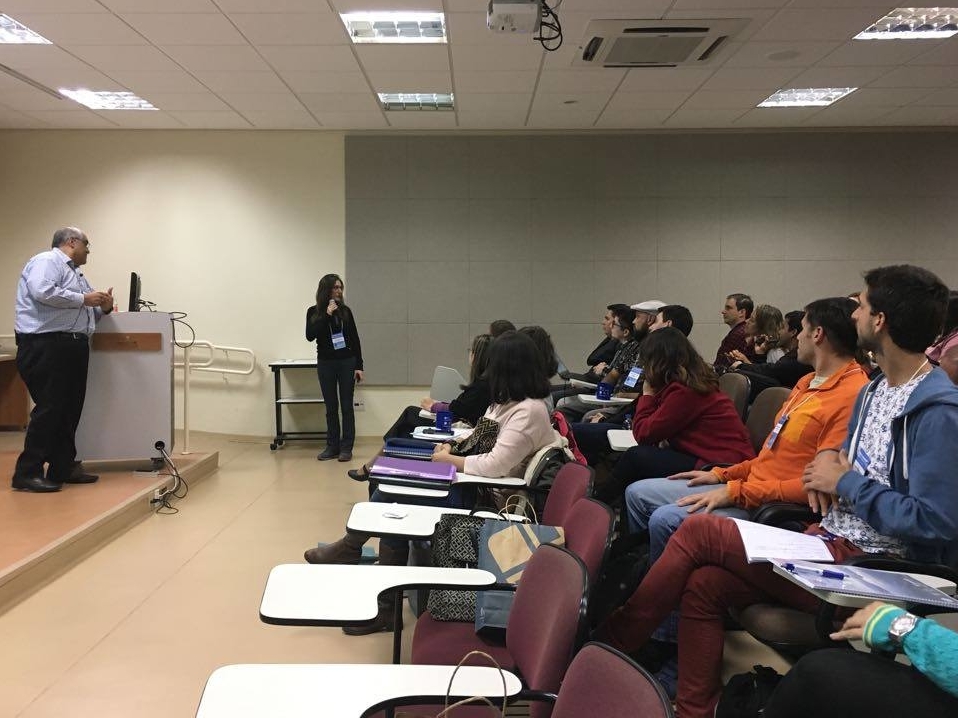
Class 2
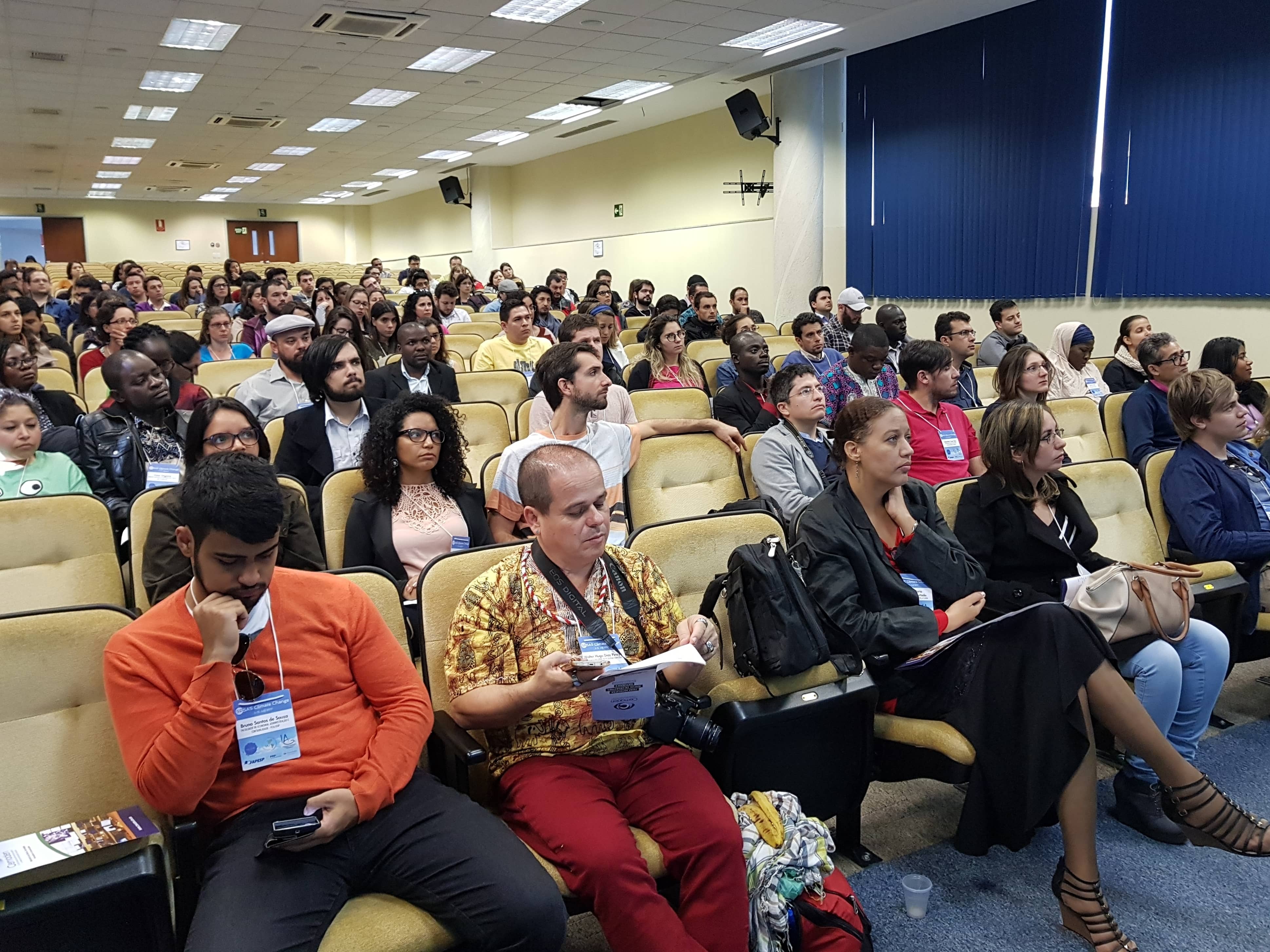
CEMADEN 1
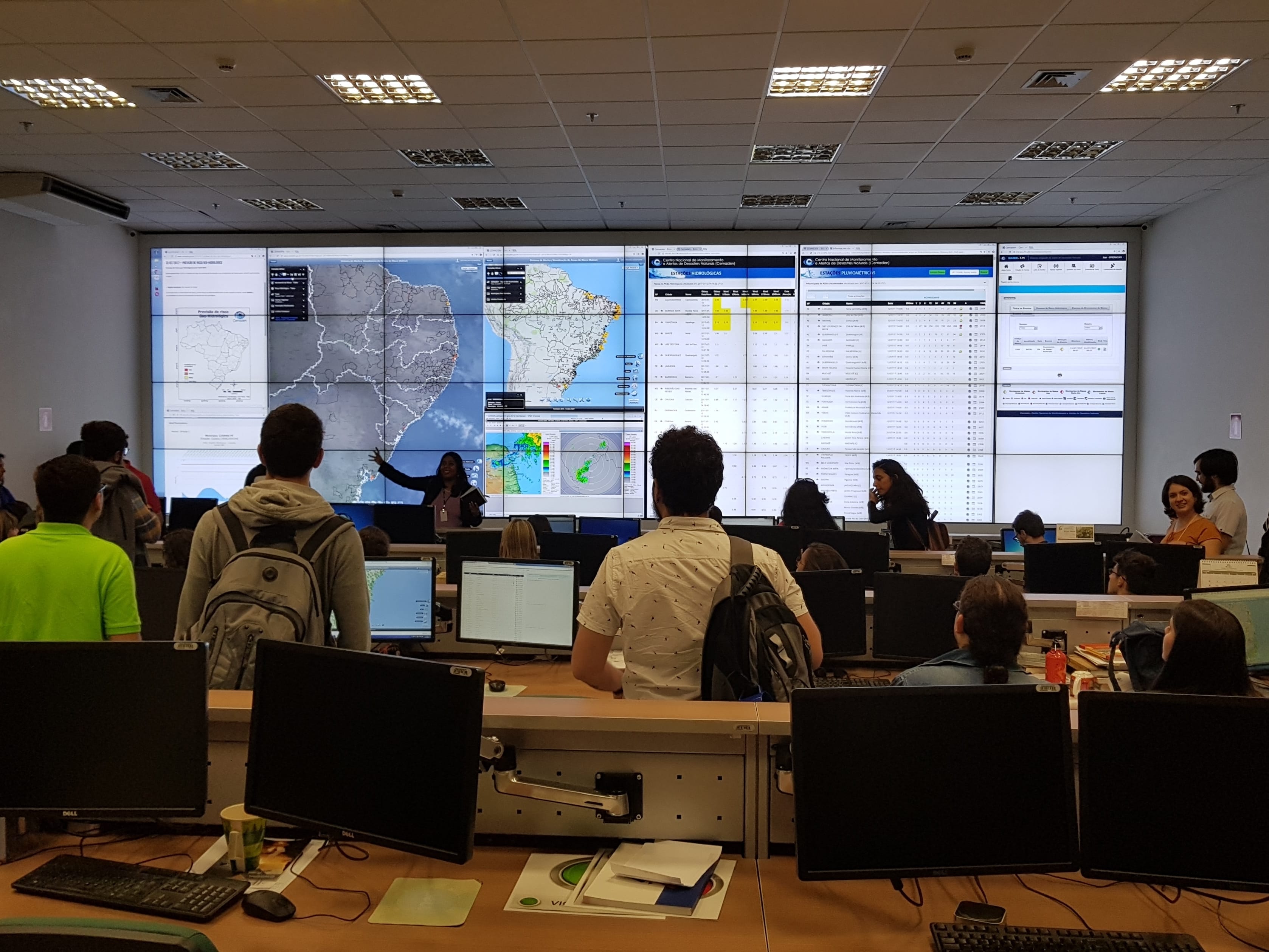
CEMADEN 2
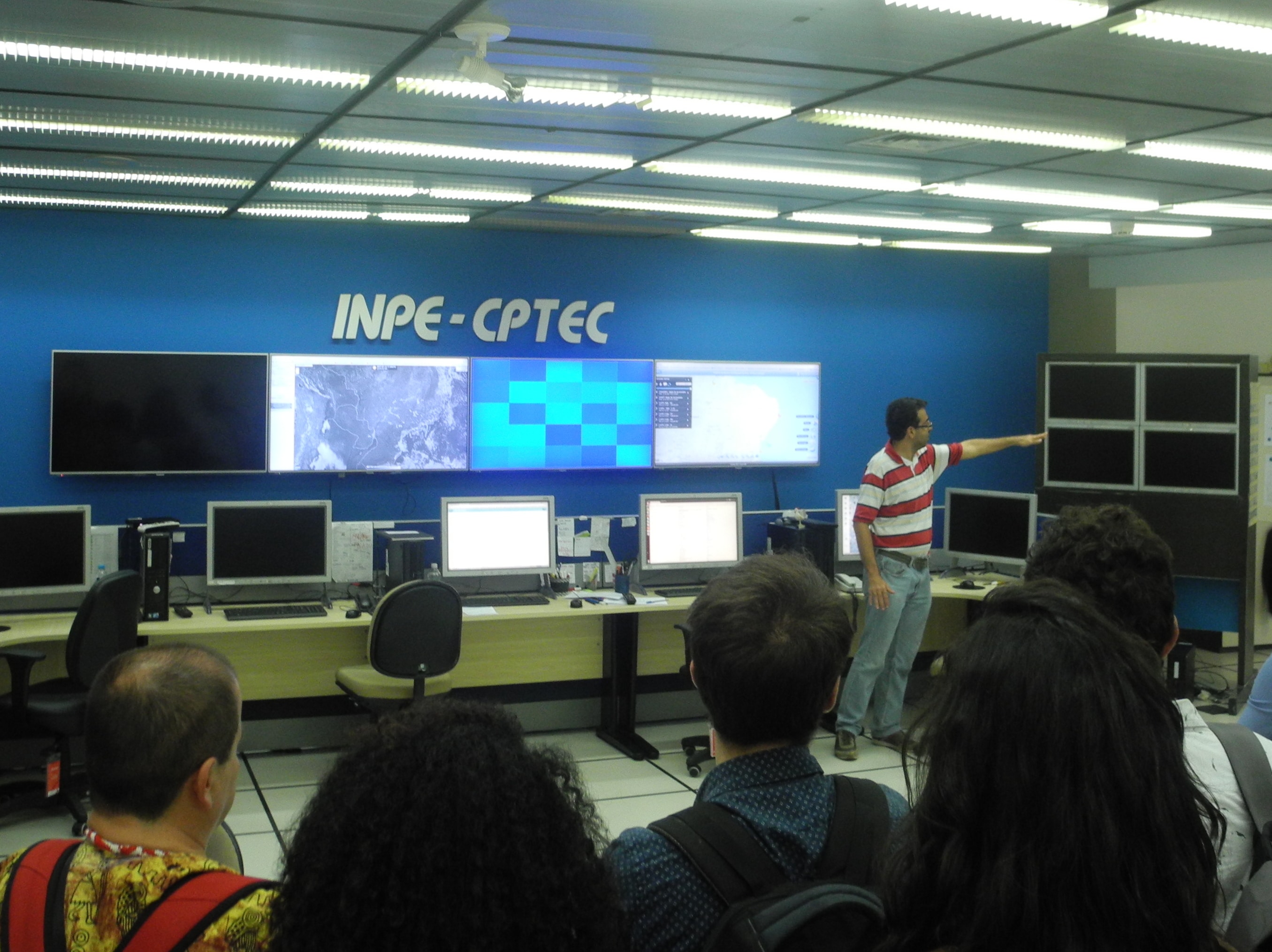
CPTEC 1
CPTEC 2
Posters
ÁFRICA
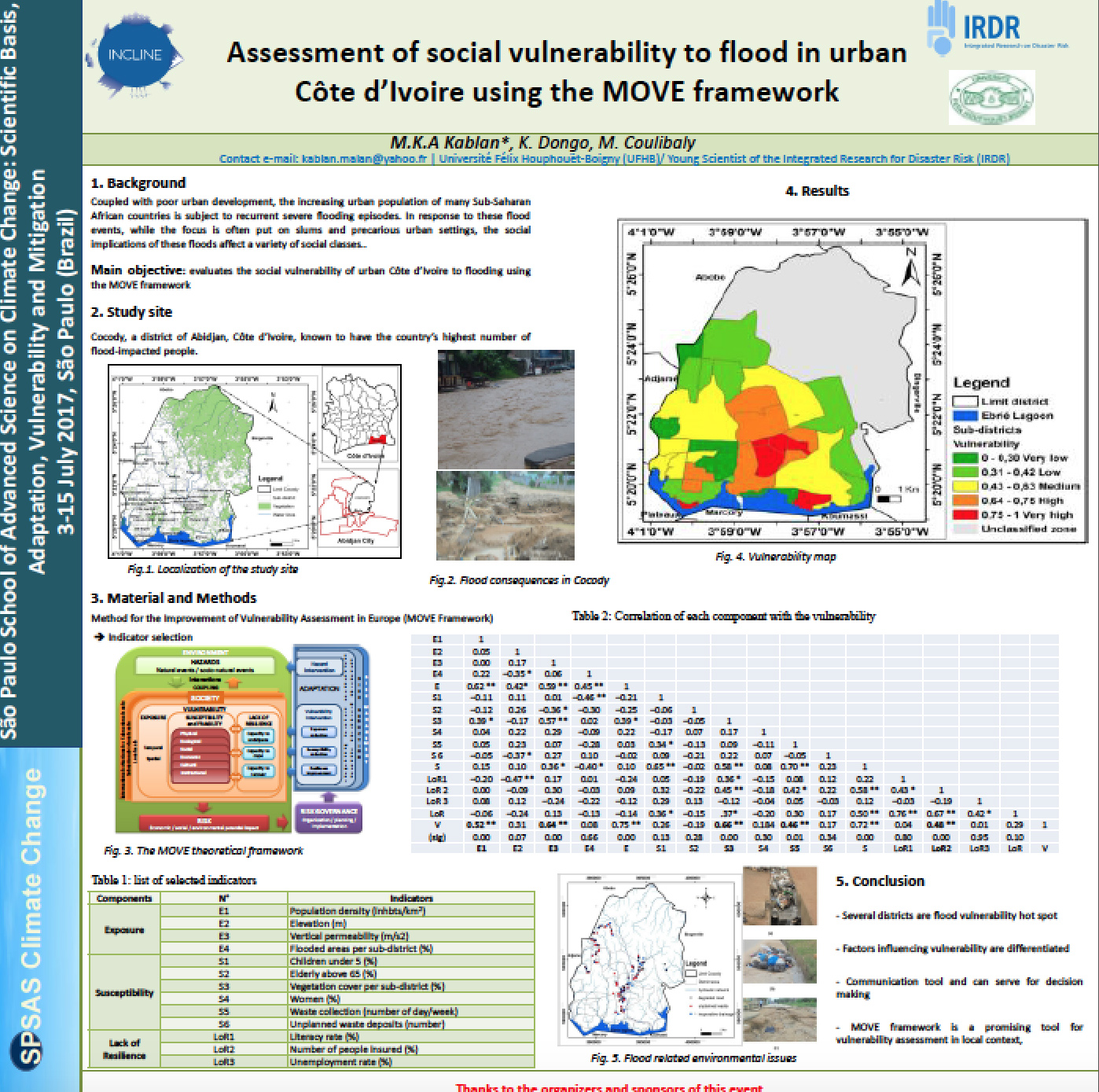 Costa de Marfil
“Assessment of social vulnerability to flood in urban Côte d’Ivoire using the MOVE framework”
– Malan Ketcha Armand Kablan
 Egypt
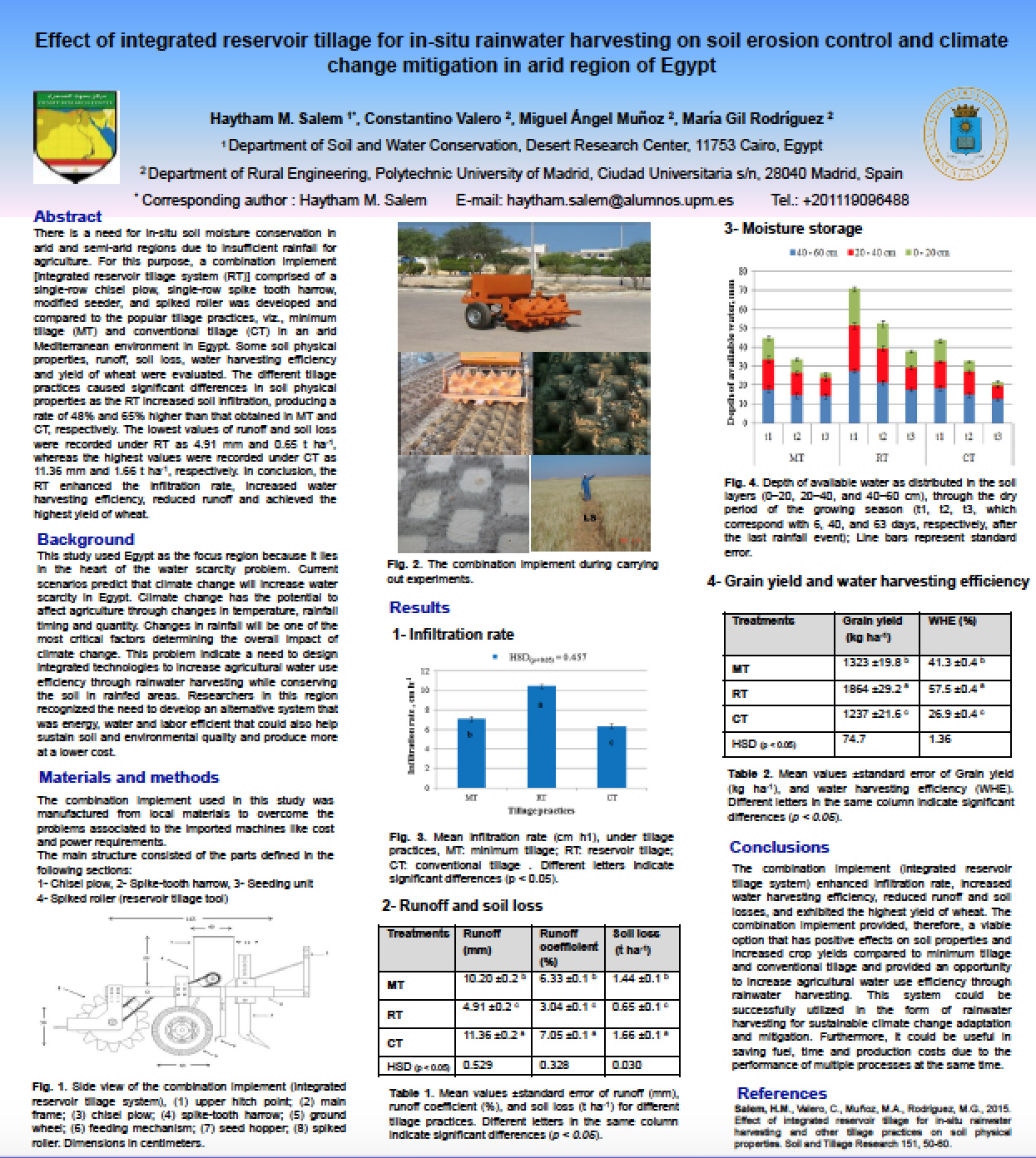
Egypt“Effect of integrated reservoir tillage for in-situ rainwater harvesting on soil erosion control and climate change mitigation in arid region of Egypt”
– Haytham Mohamed Salem Mohamed
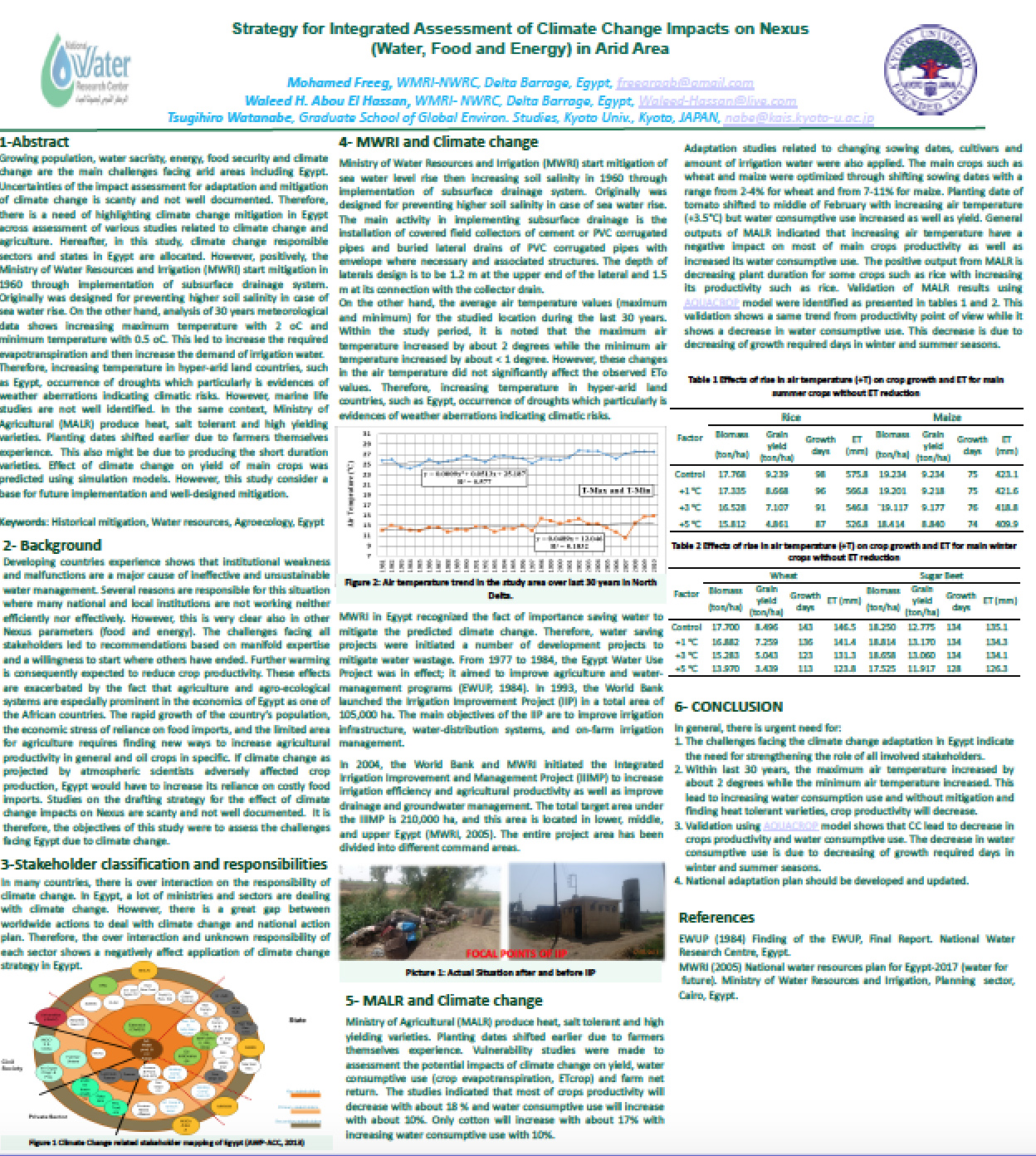 “Strategy for integrated assessment of climate change impacts on Nexus (water, food and energy) in arid area”
 – Mohamed Farig Saad Ragab
 Etiopía
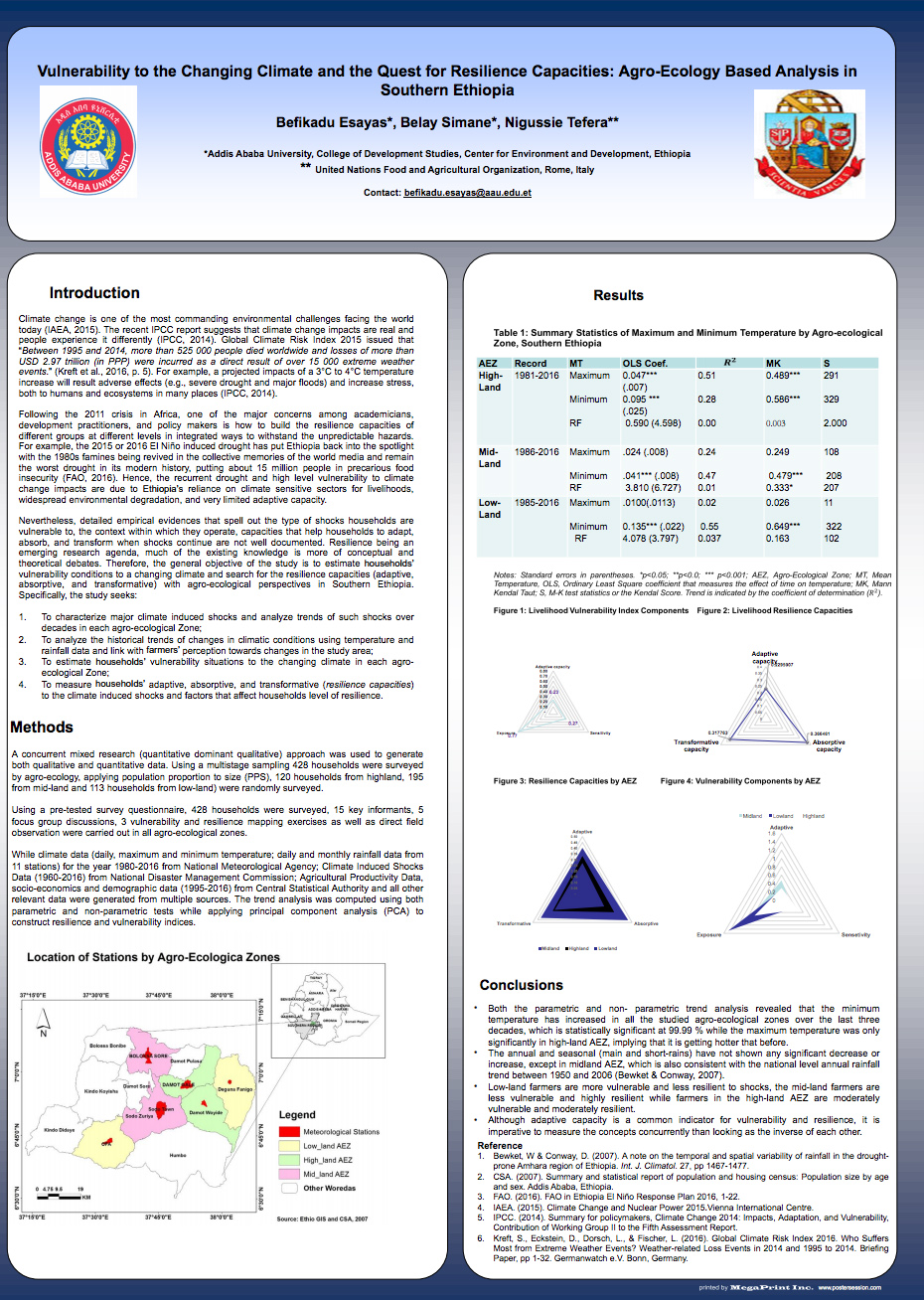
“Vulnerability to the changing climate and the quest for resilience capacities: Agro-ecology based analysis in southern Ethiopia”
– Befikadu Esayas Amphune
 Kenya
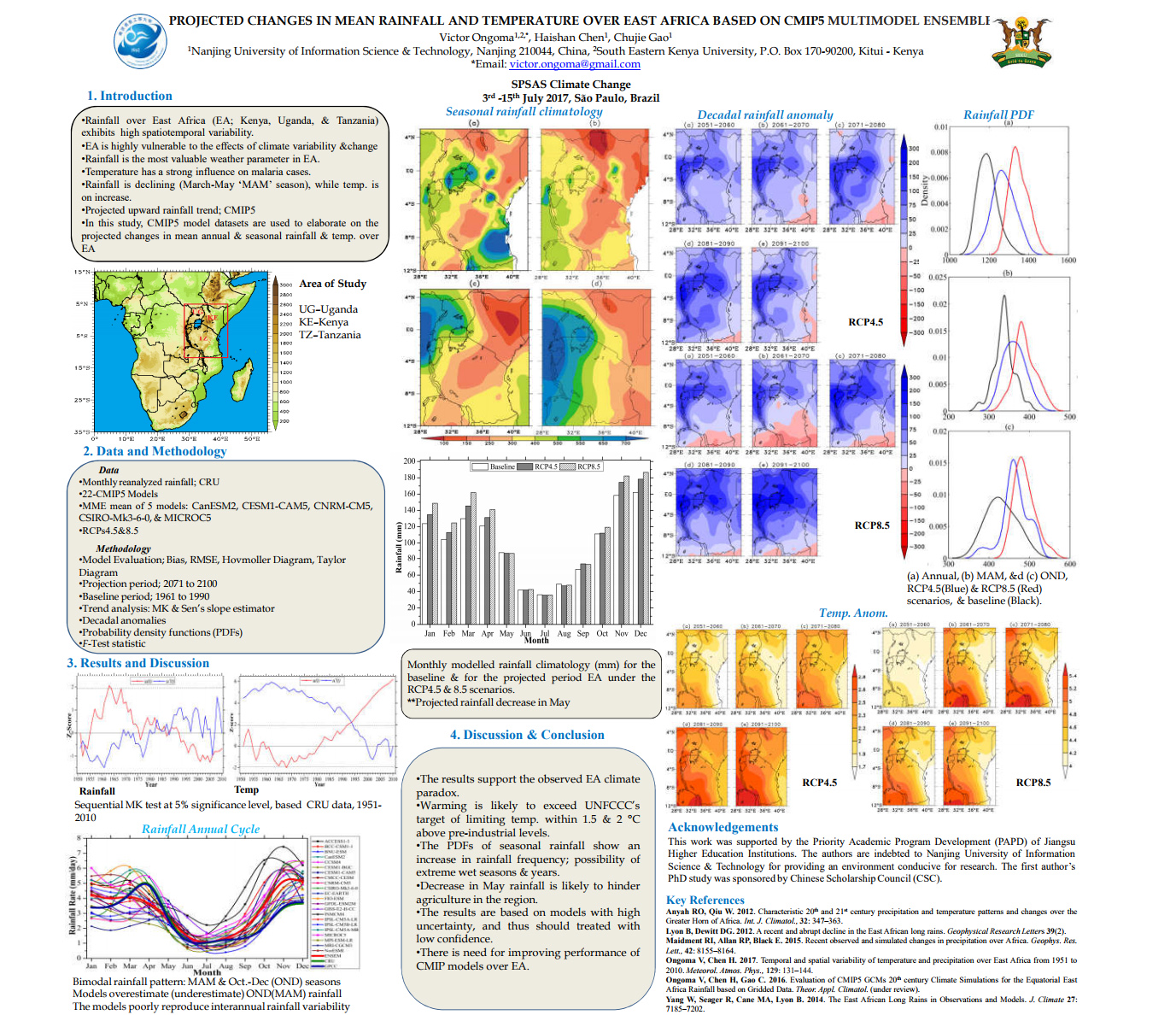
Kenya“Projected changes in mean rainfall and temperature over east Africa based on CMIP5 multimodel ensemble”
– Victor Ongoma
 Nigeria
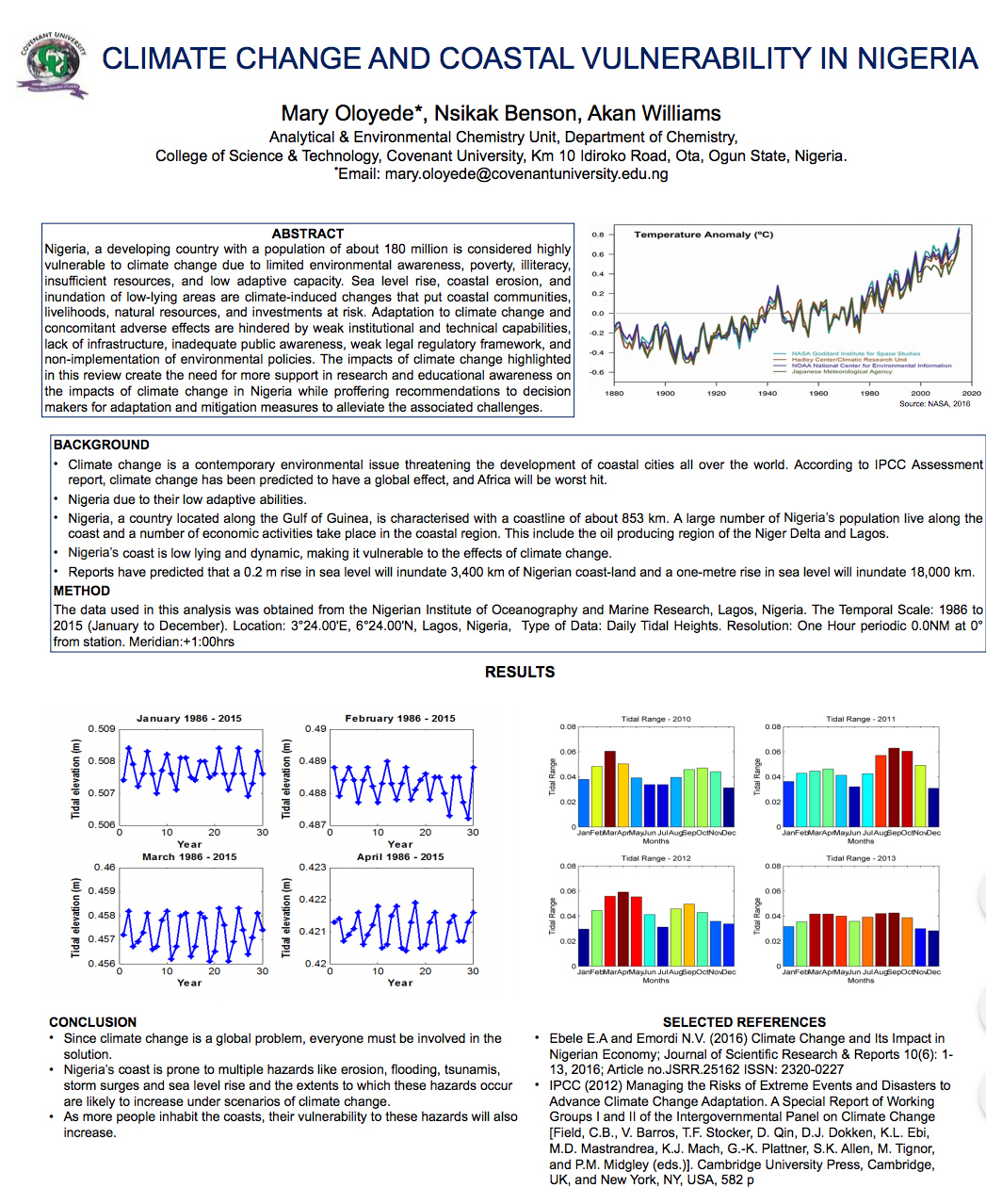
“Adaptation of arable crop farmers to climate variability in rainforest and derived savannah ecosystems of Nigeria”
– Adefunke Fadilat Olawunmi Ayinde
 South Africa
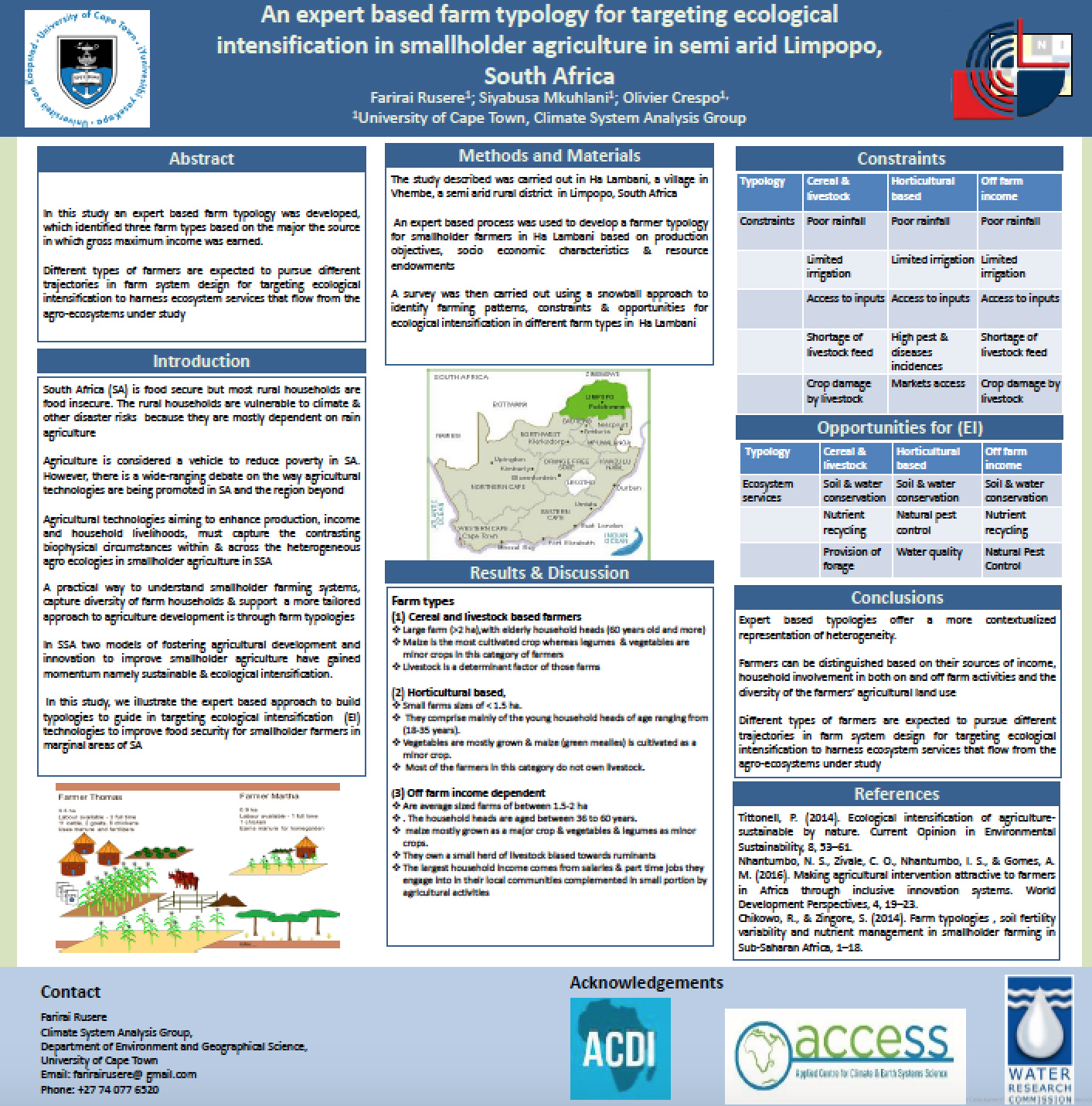
“An expert based farm typology for targeting ecological intensification in smallholder agriculture in semi arid Limpopo, South Africa”
– Farirai Rusere
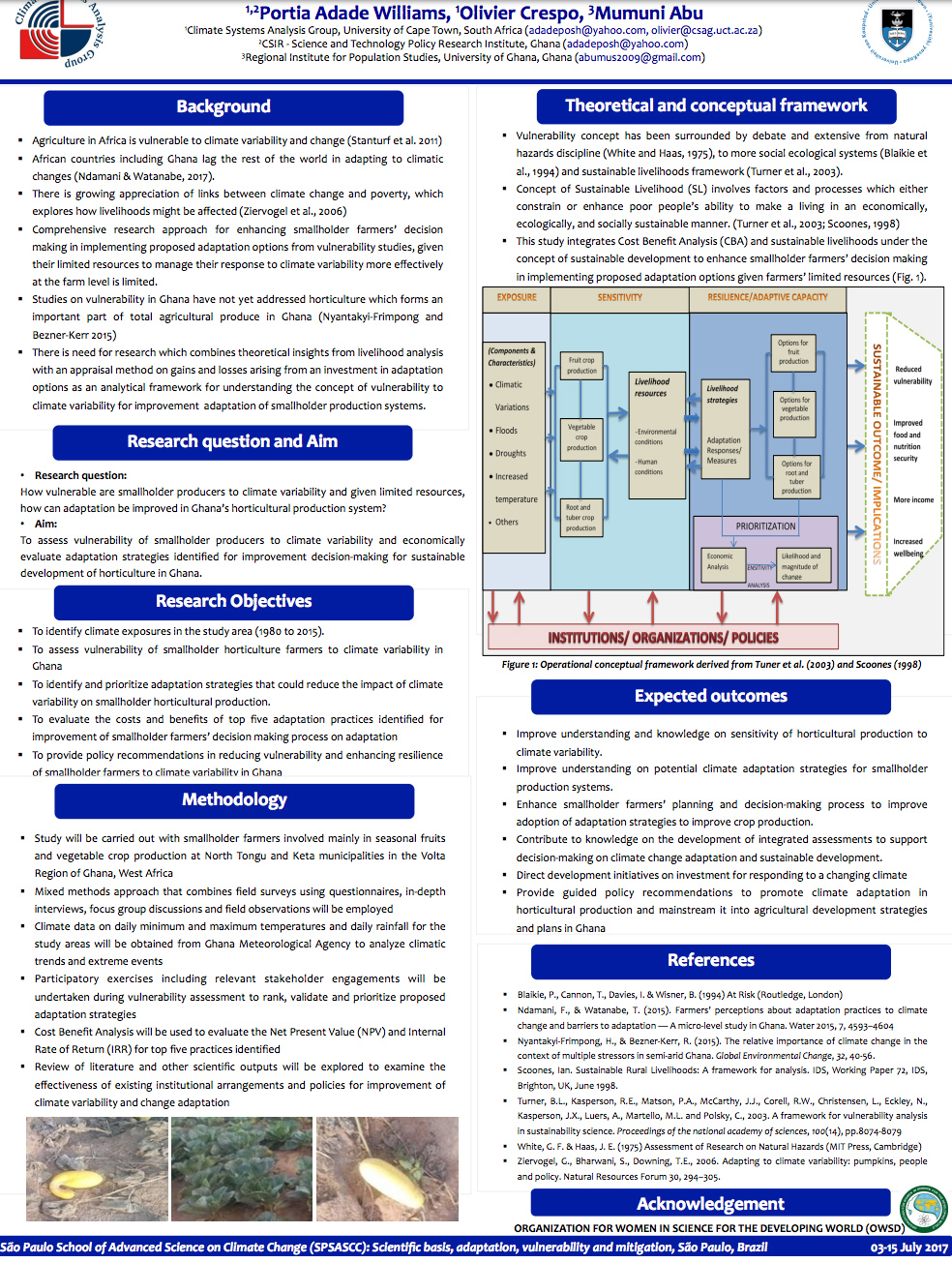 “An integrated approach for improving adaptation of smallholder production systems to climate variability: evidence from horticultural production in Ghana”
– Portia Adade Williams

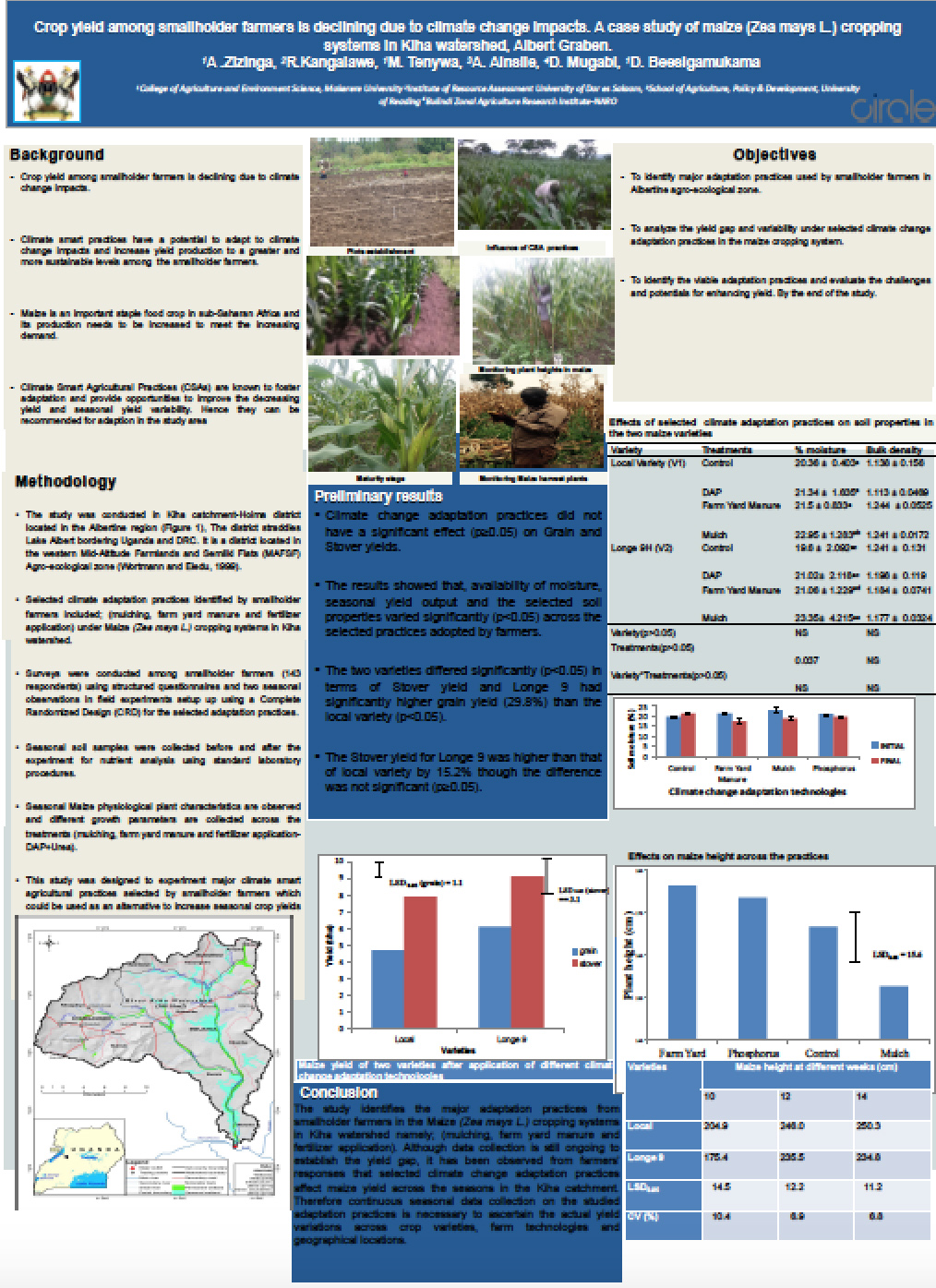
AMÉRICA
 Argentina
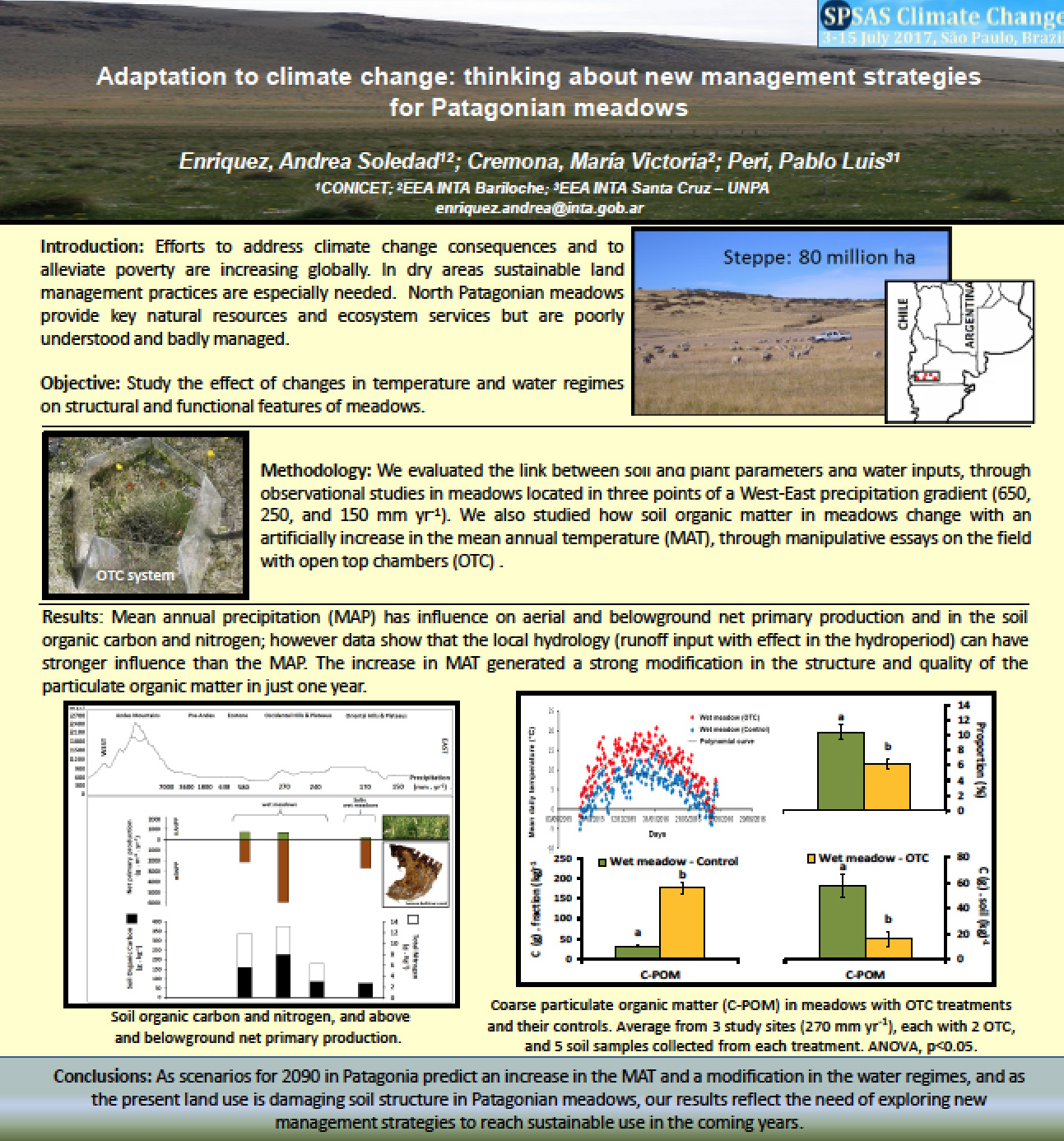
 “Adaptation to climate change: thinking about new management strategies for Patagonian meadows”
– Andrea Soledad Enriquez
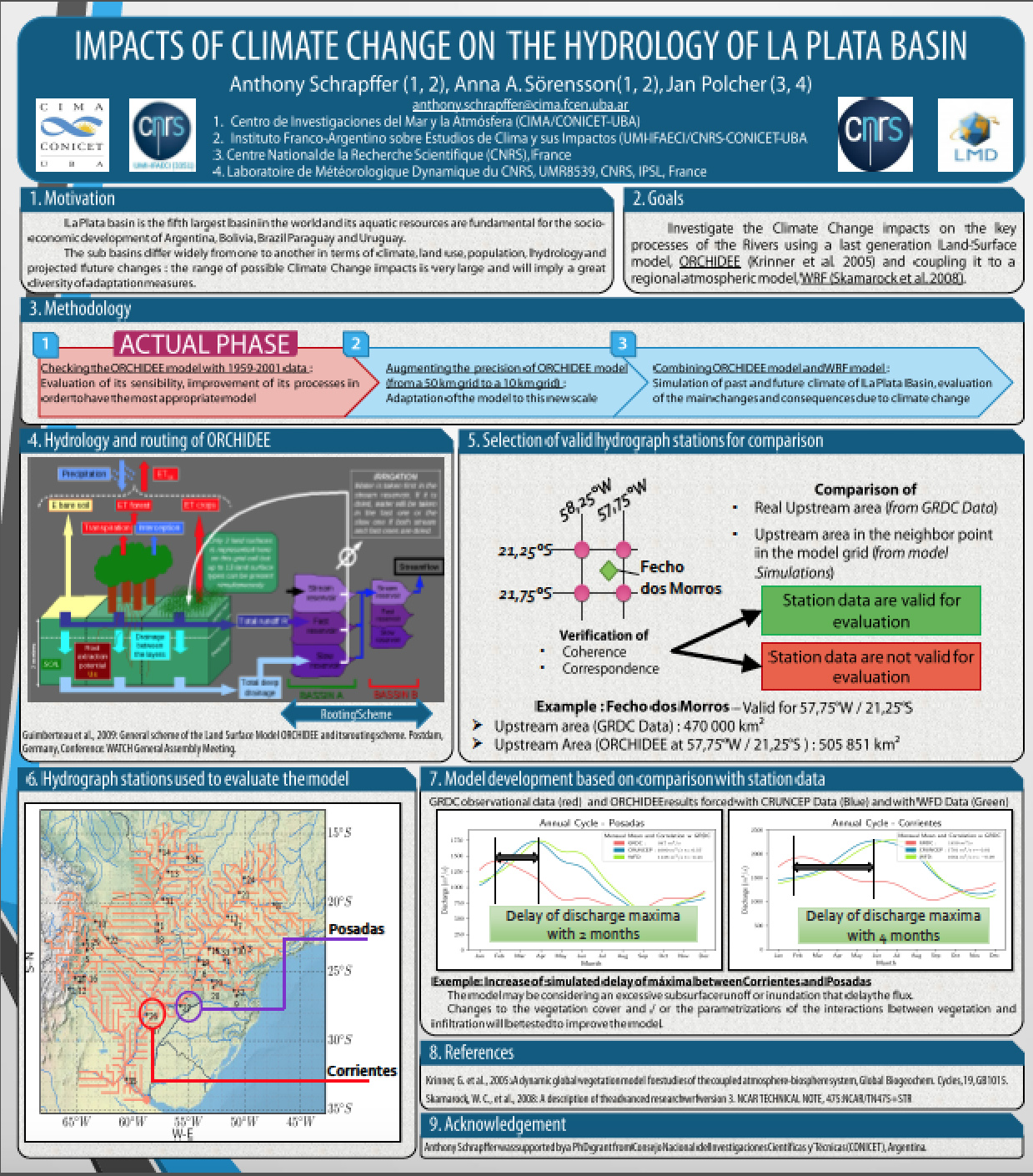


 “Remote effects in the south-eastern South America climate of land use change”
– María Agostina Bracalenti
 “High-resolution information system for space-time integration of greenhouse gases and air pollutants emissions”
– Sebastián Cesar Diez

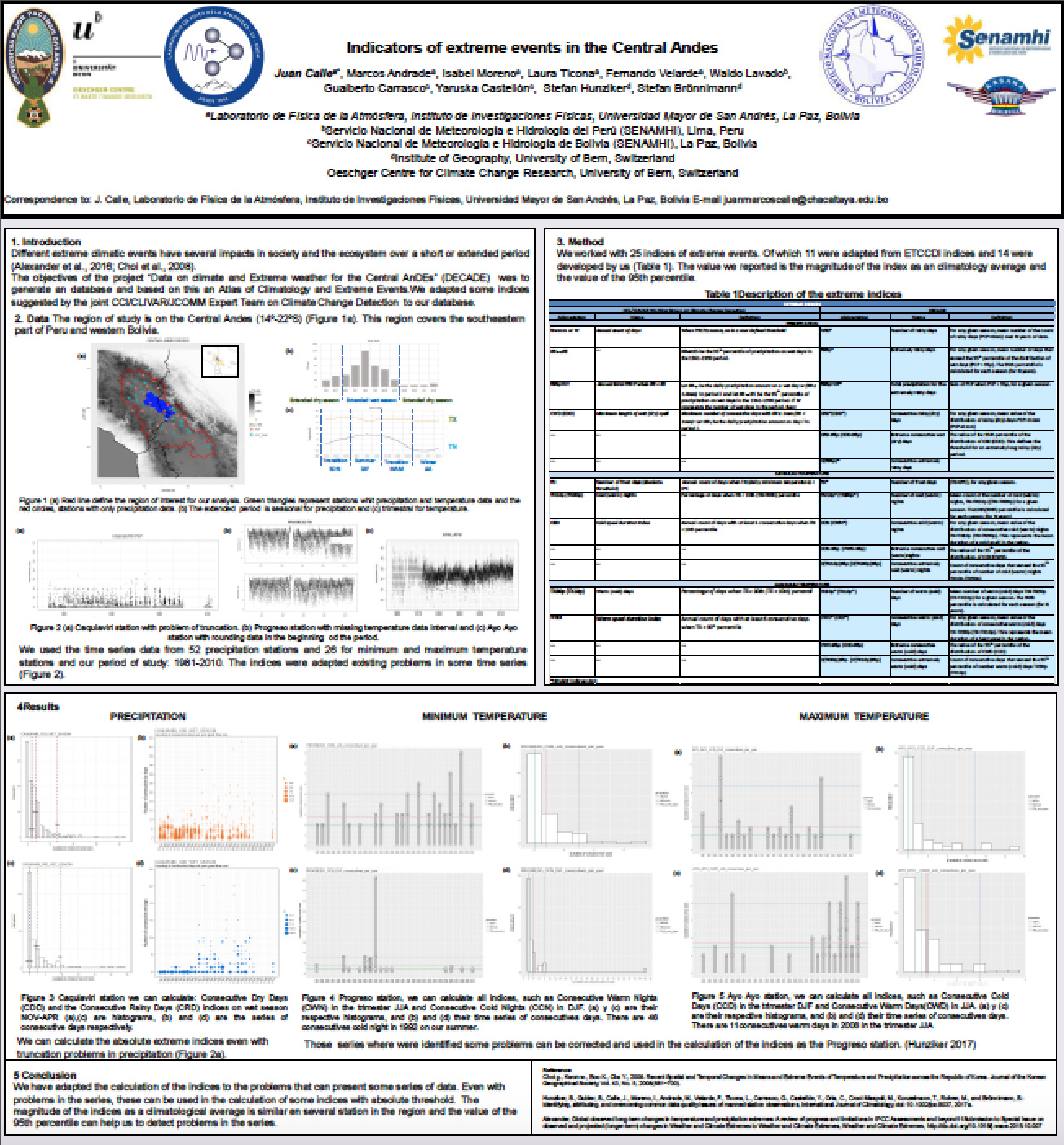
 Brazil
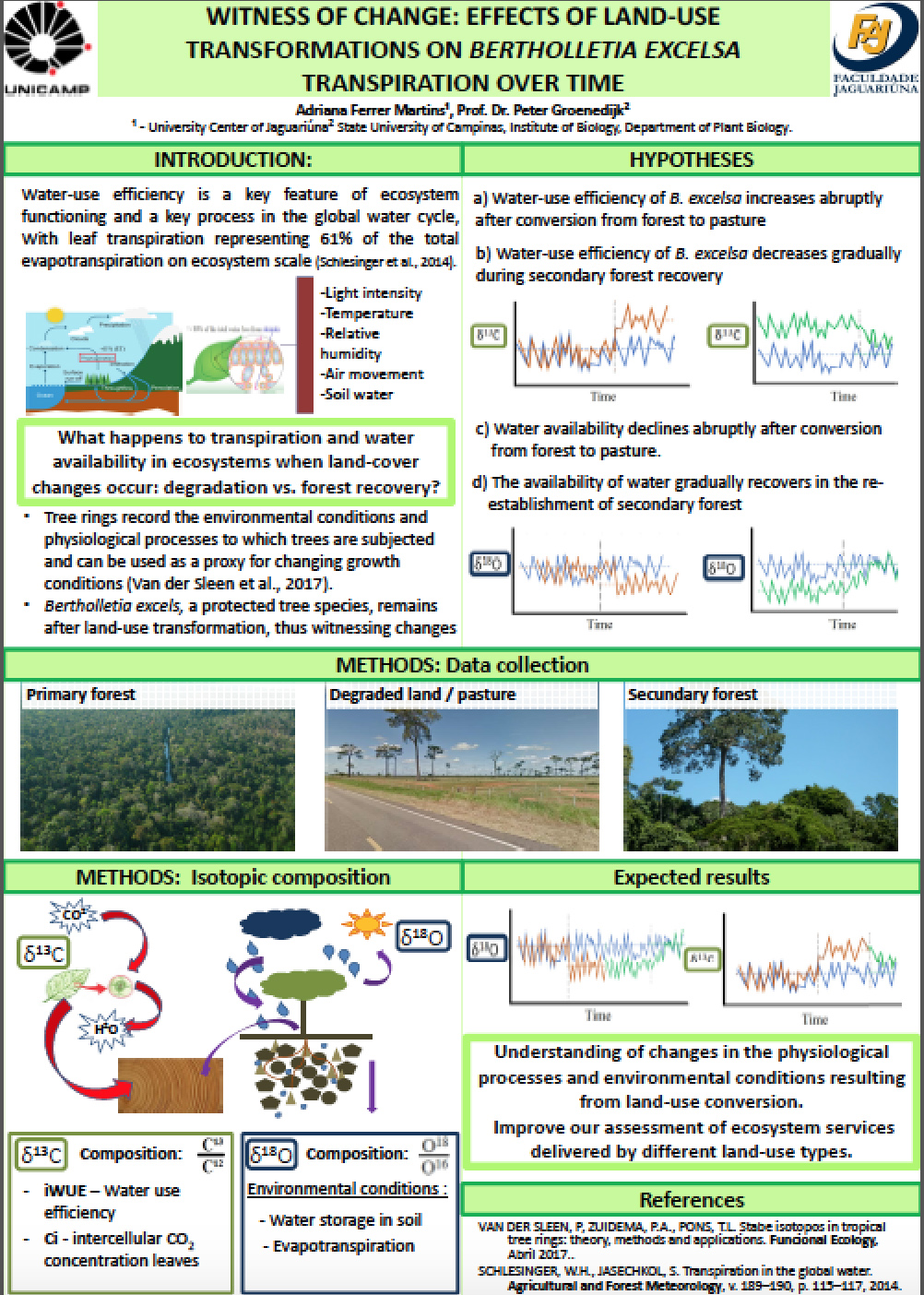
“Witness of change: effects of land-use transformations on Bertholletia Excelsa transpiration over time”
– Adriana Ferrer Martins
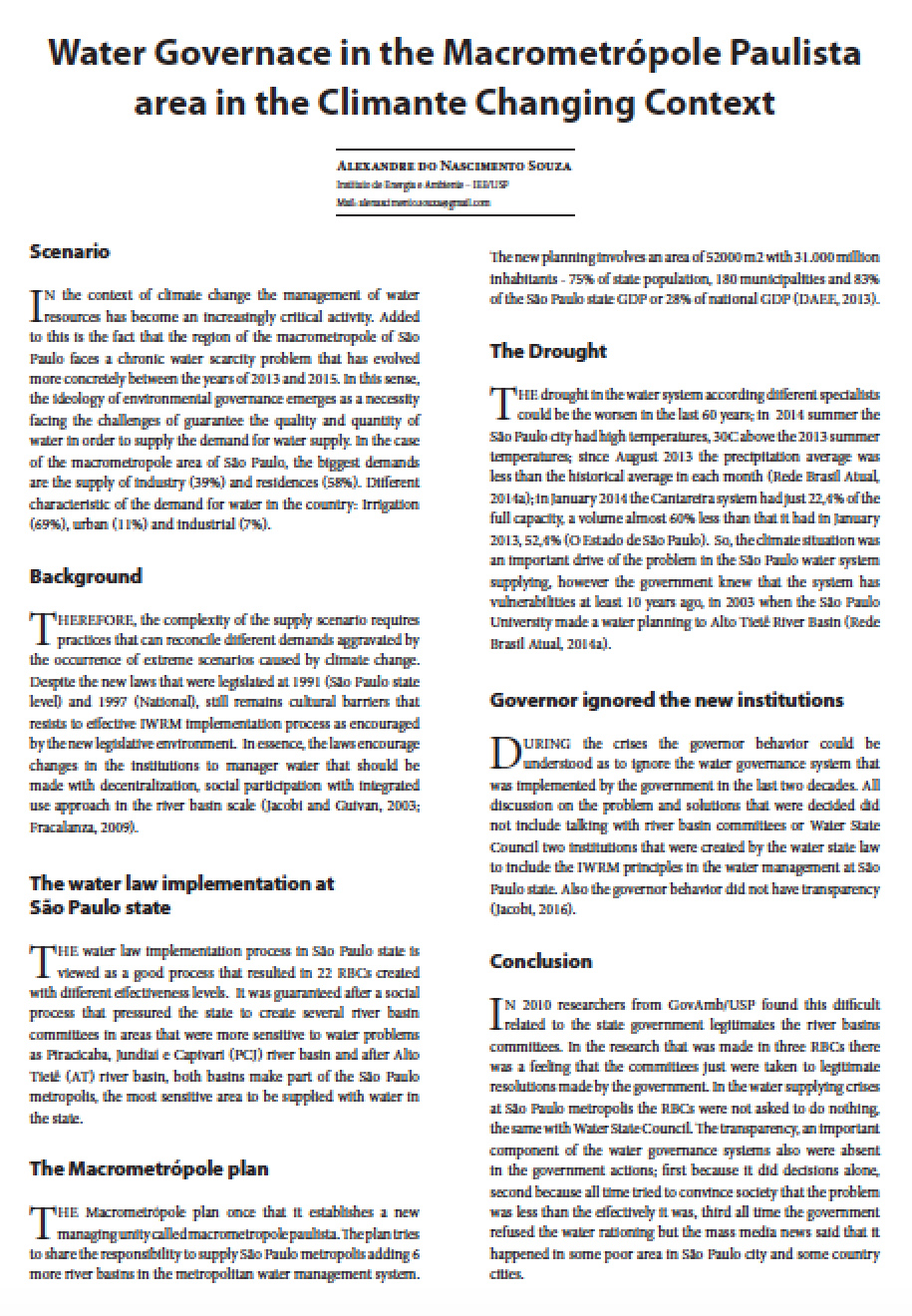 “Water governace in the macrometropole Paulista area in the climate changing context”
– Alexandre do Nascimento Souza
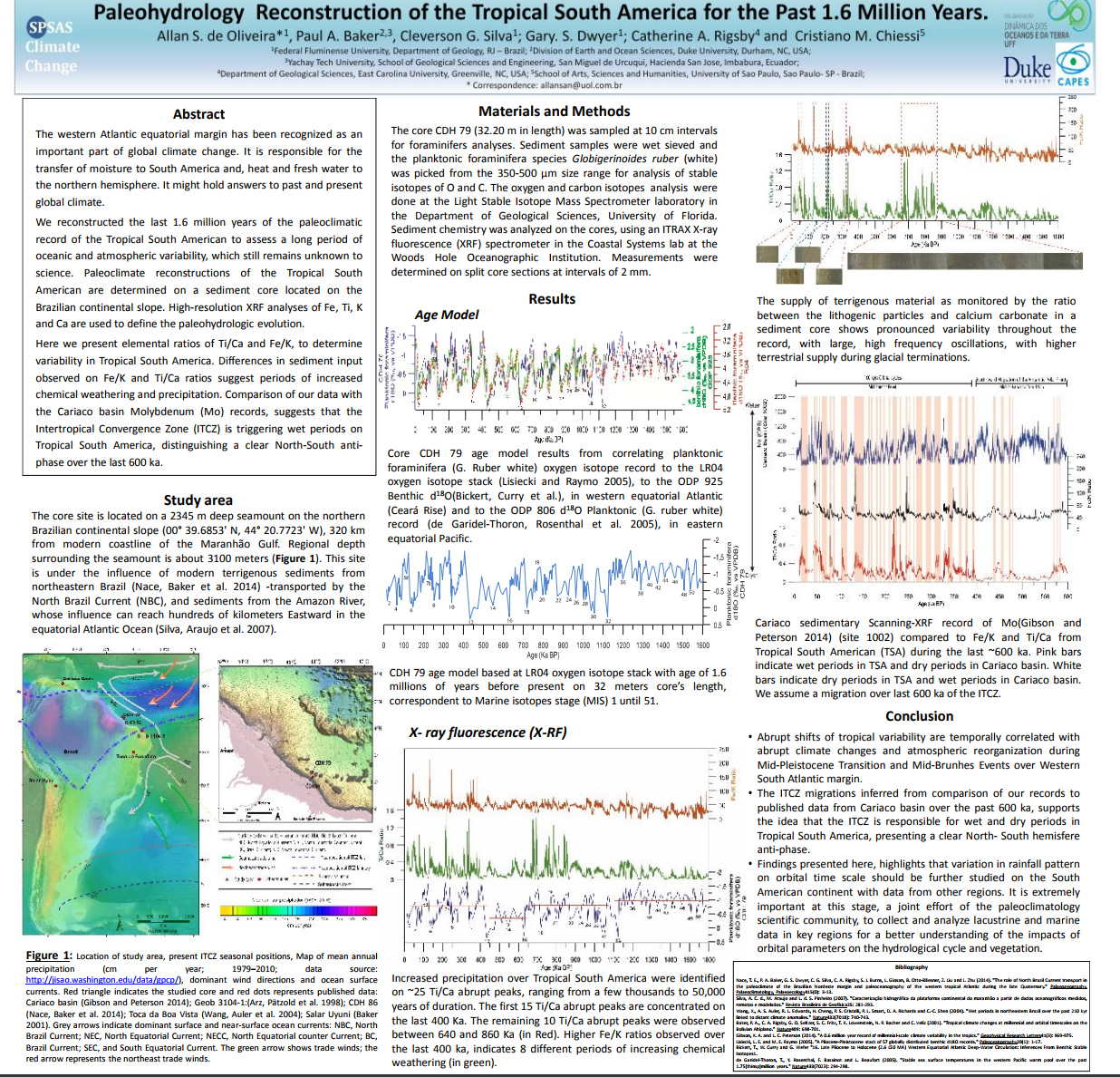 “Paleohydrology reconstruction of the tropical South America for the past 1.6 million years”
– Allan Sandes de Oliveira

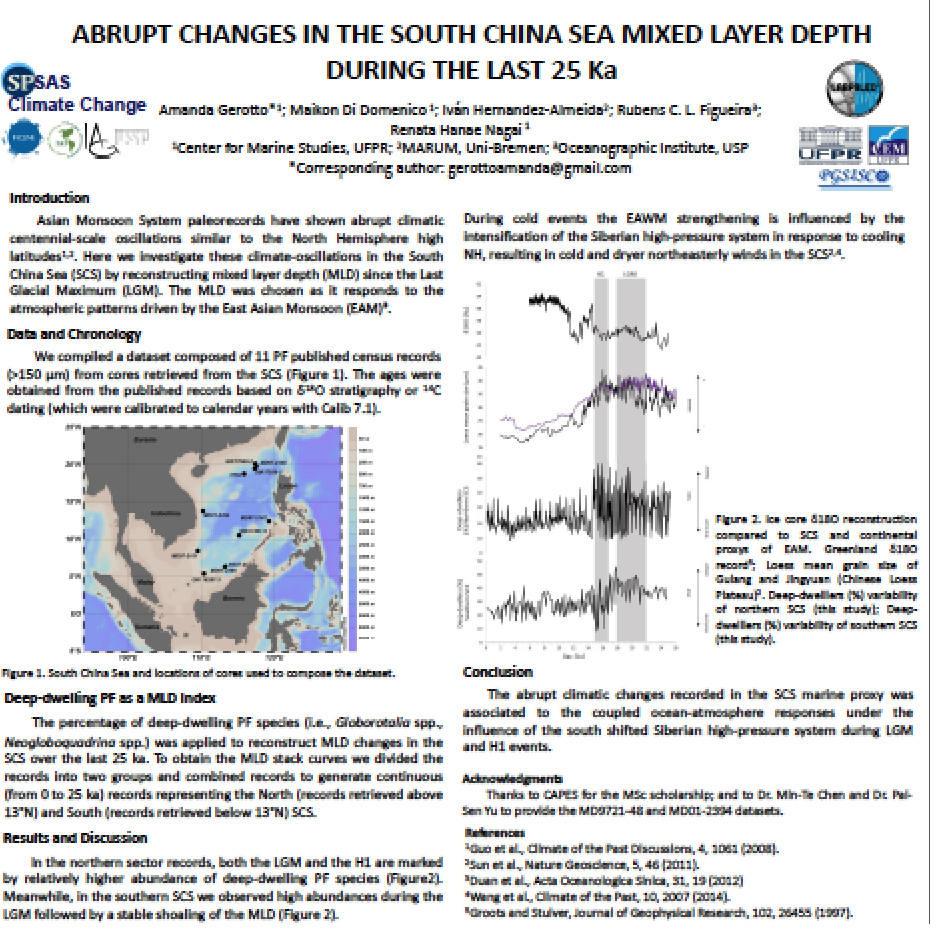
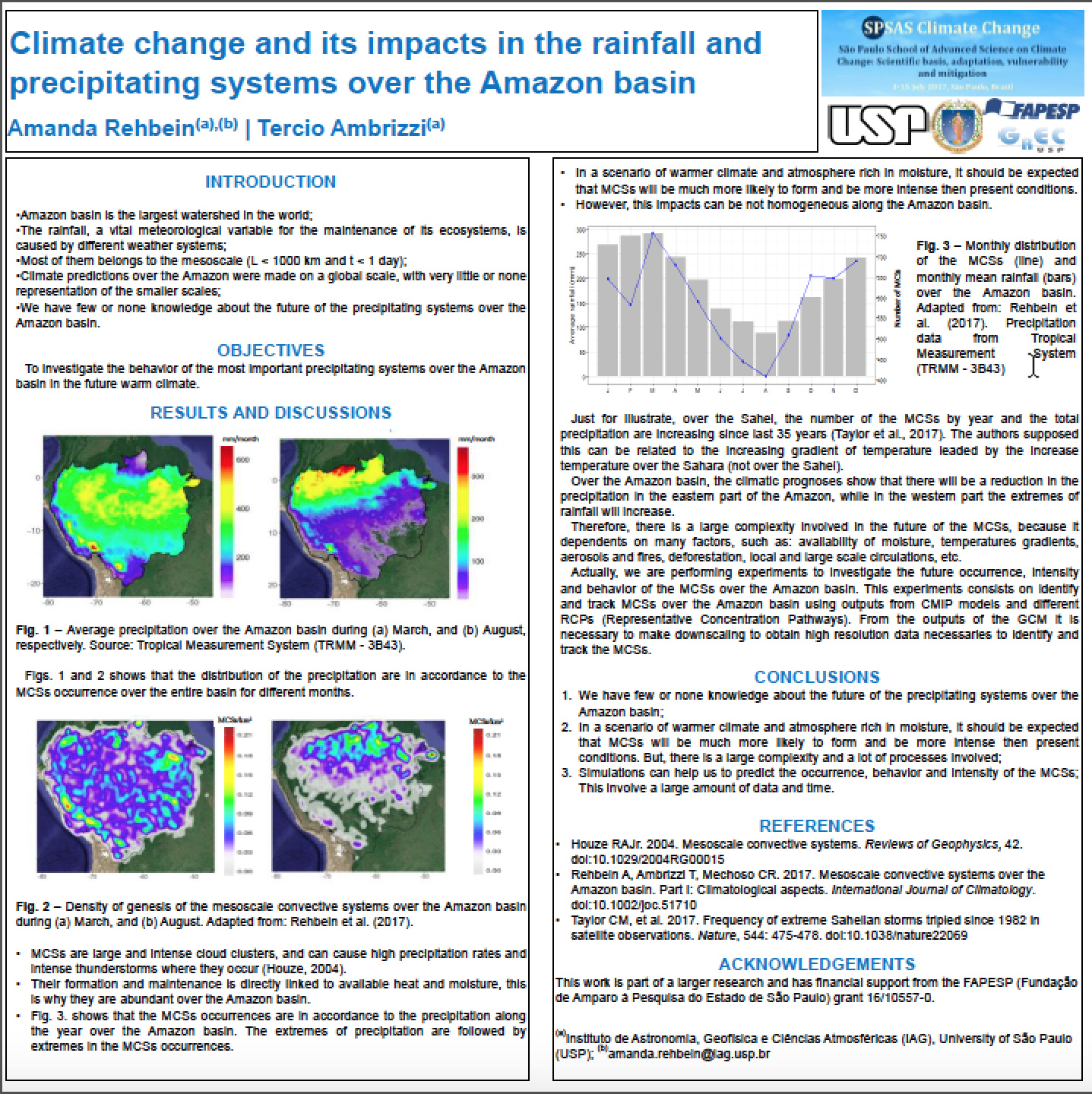 “Climate change and its impacts in the rainfall and precipitating systems over the Amazon basin”
– Amanda Rehbein
 “Elemental composition of atmospheric aerosol particles in the GoAmazon experiment”
– André Araújo Bürger
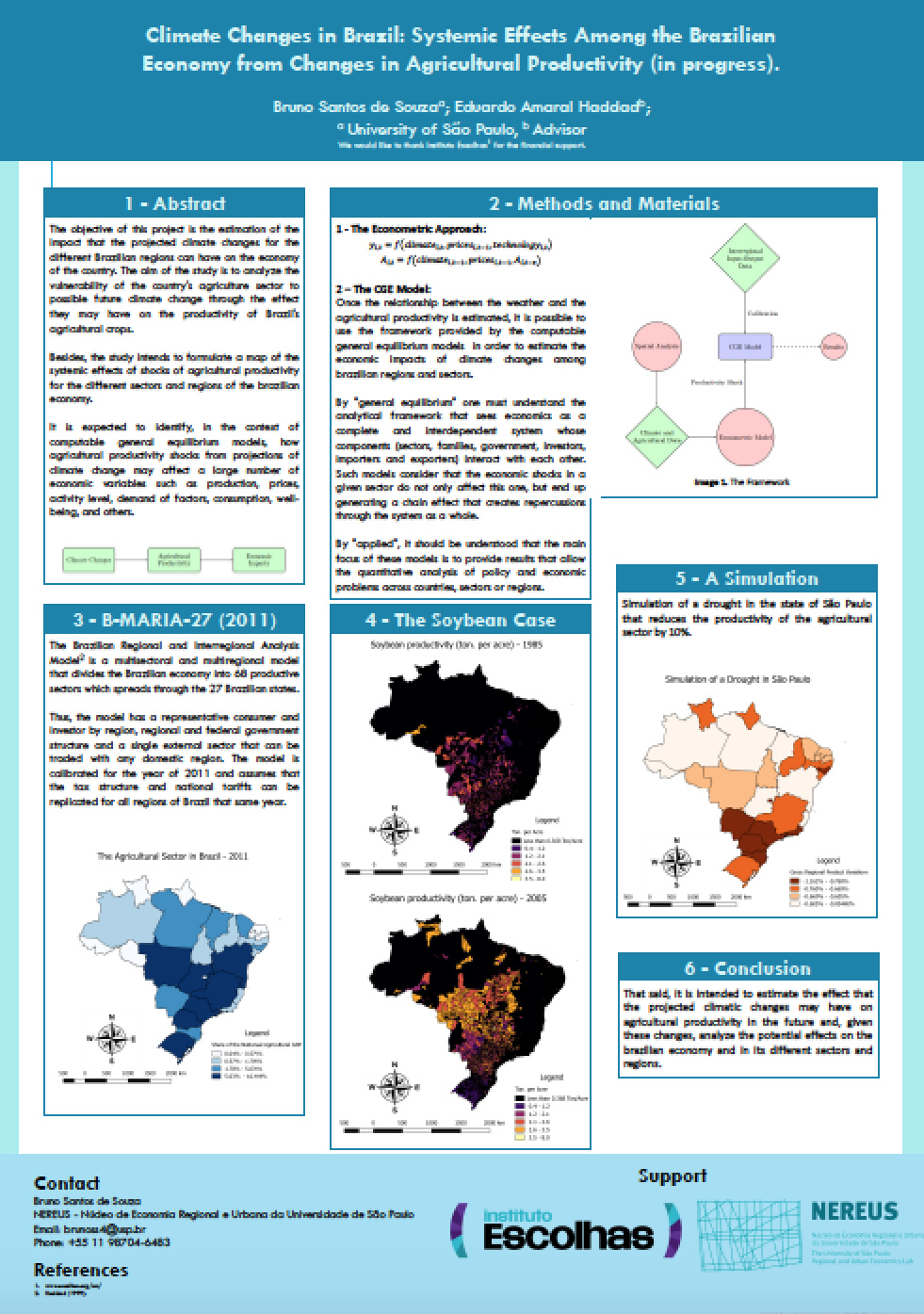
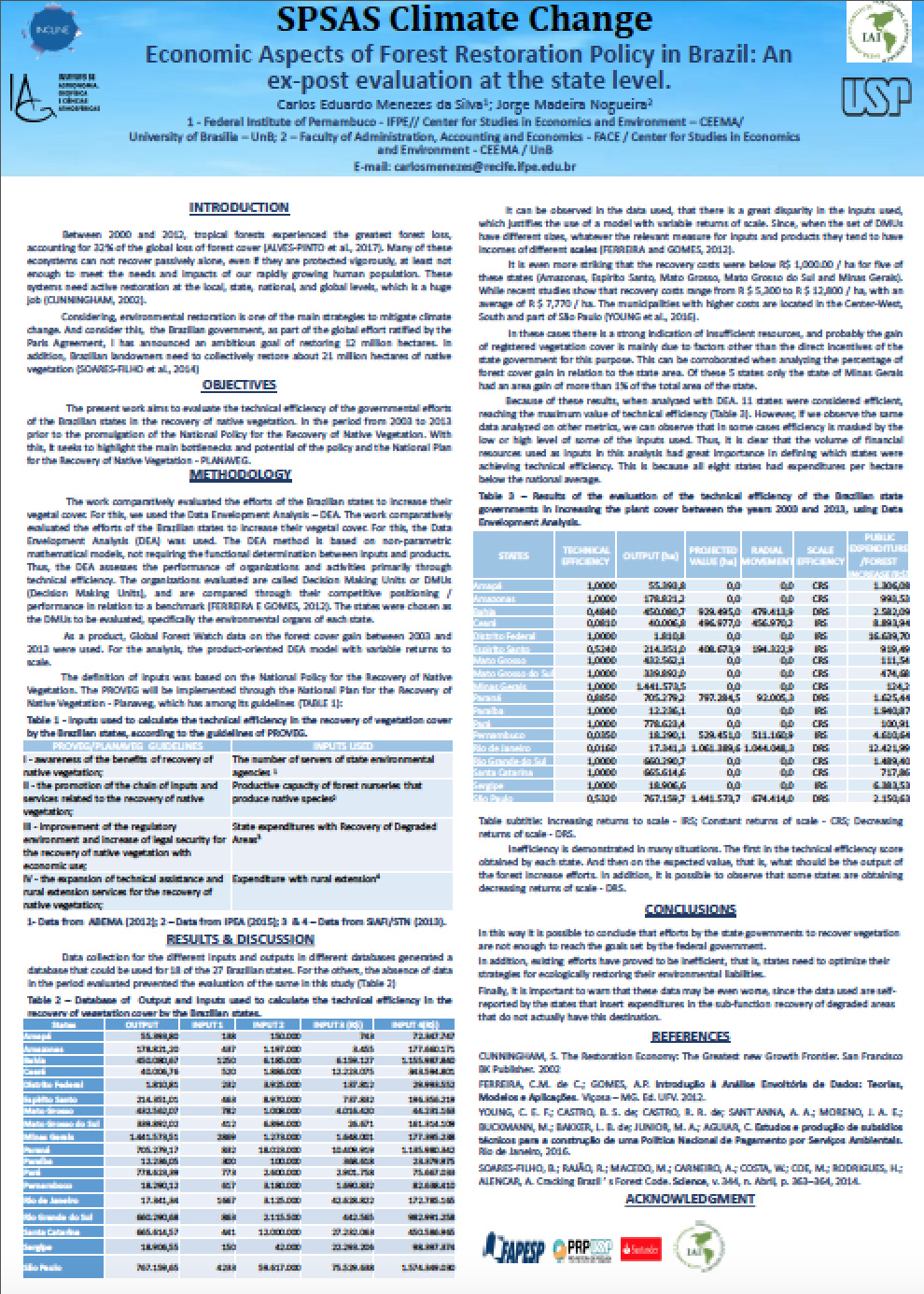 “Economic aspects of forest restoration policy in Brazil: an ex-post evaluation at the state level”
– Carlos Eduardo Menezes da Silva
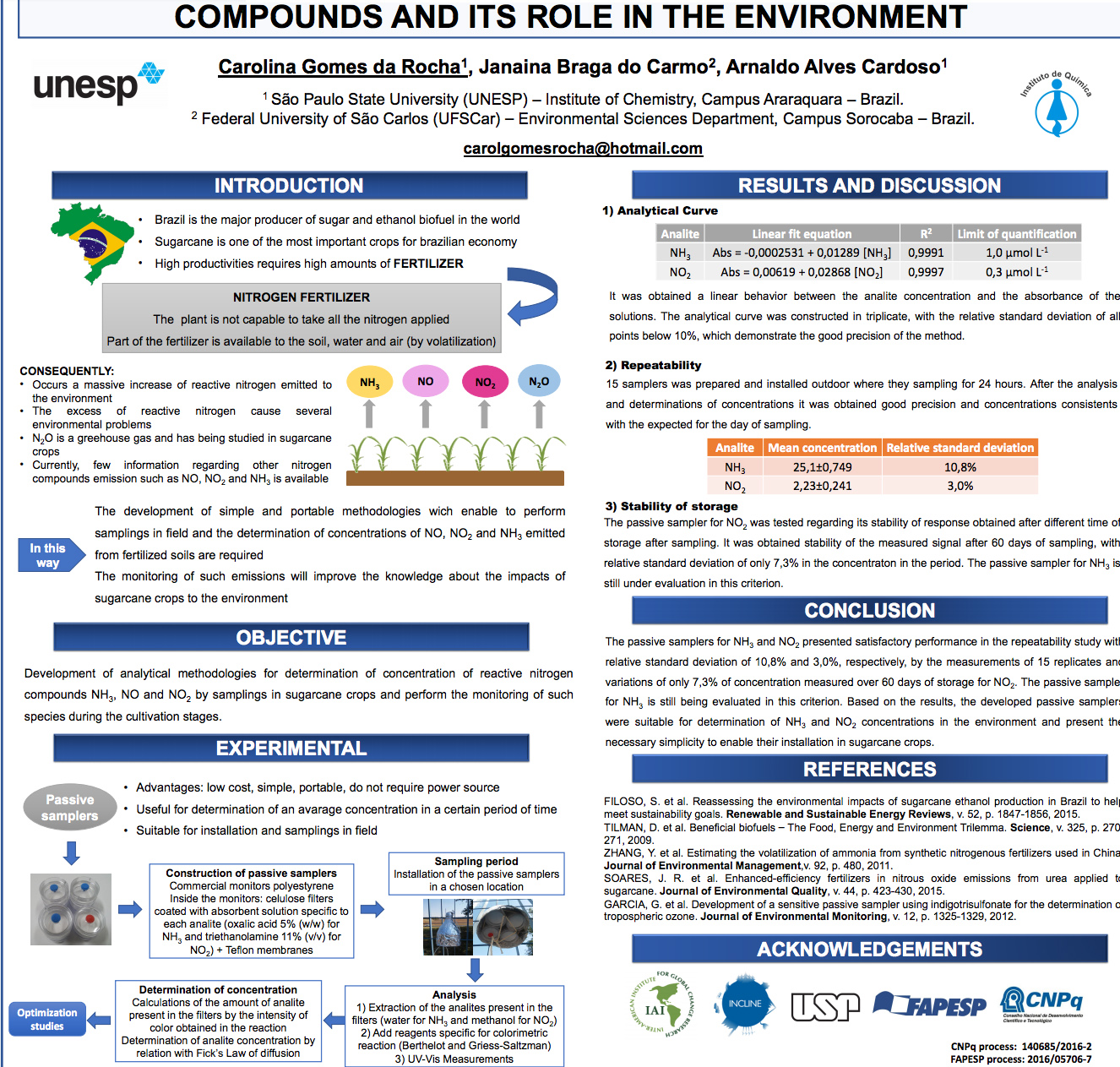 “Sugarcane crop as emission source of reactive nitrogen compounds and its role in the environment”
– Carolina Gomes da Rocha


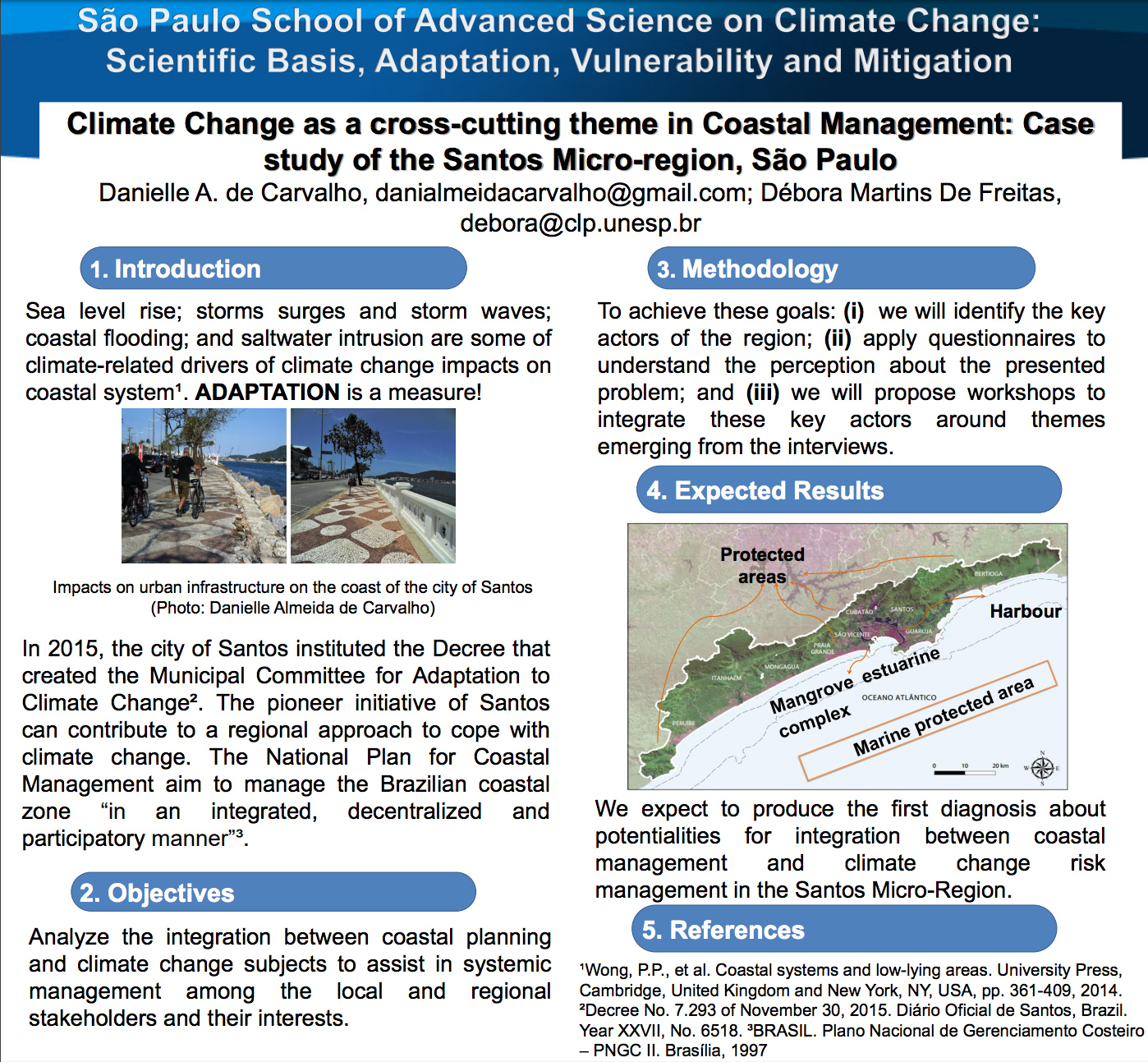 “Climate change as a cross-cutting theme in coastal management: case study of the Santos micro-region, São Paulo”
– Danielle Almeida de Carvalho


 “Adaptation to hydrological extremes through insurance: a financial fund simulation model under changing scenarios”
– Diego Alejandro Guzmán Arias
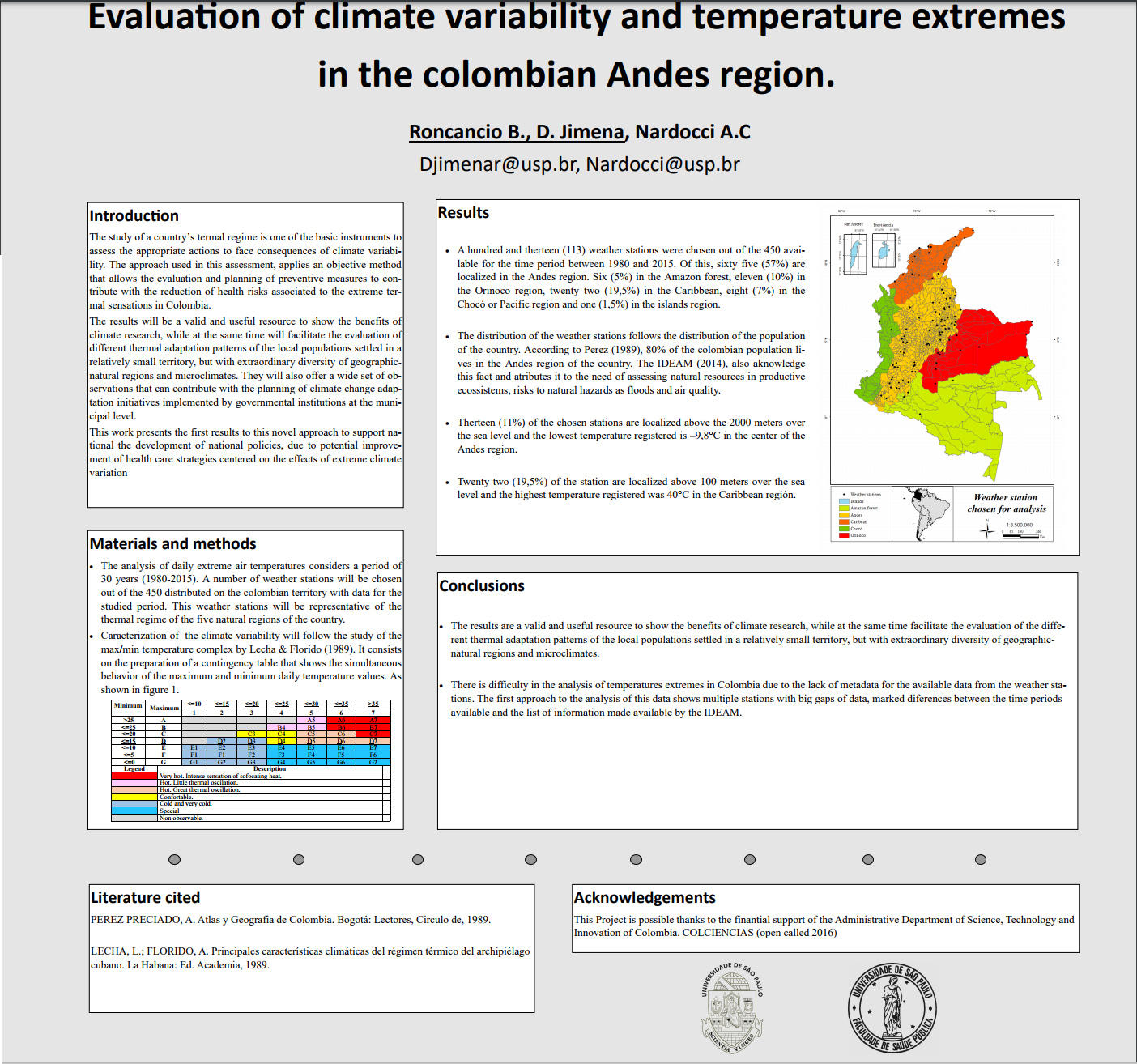 “Evaluation of climate variability and temperature extremes in the Colombian Andes region”
– Doris Jimena Roncancio Benitez
 “Analysis of climatic variations in Potiguar basin from temporary series and remote sensing techniques”
– Ewerton Bruno Brito de Araújo
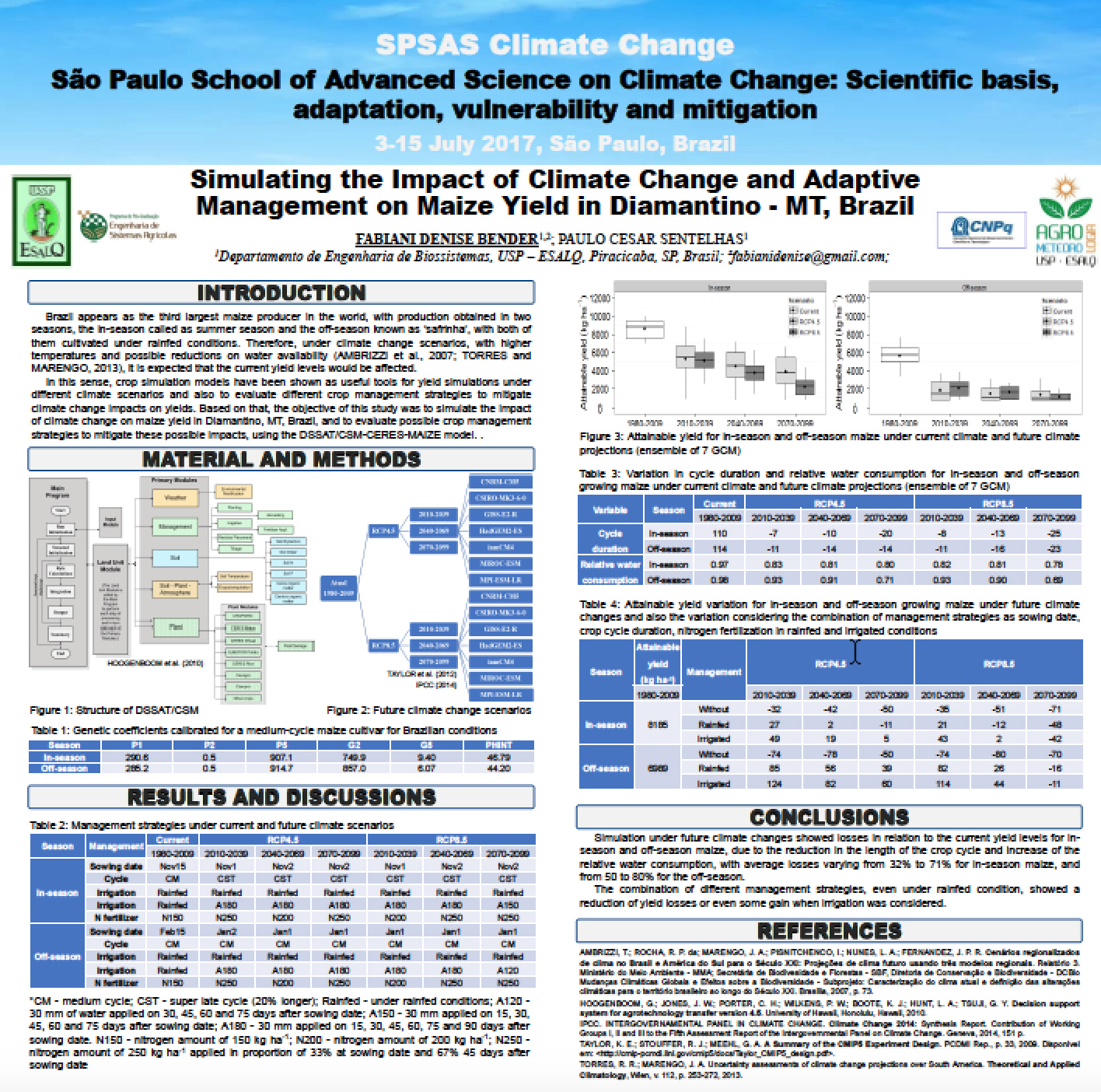 “Simulating the impact of climate change and adaptive management on maize yield in Diamantino – MT, Brazil”
– Fabiani Denise Bender
 “Study of the absorption properties of brown carbon and black carbon using remote sensing (AERONET and AURA) and in situ measurements in the Amazon”
– Fernando Gonçalves Morais
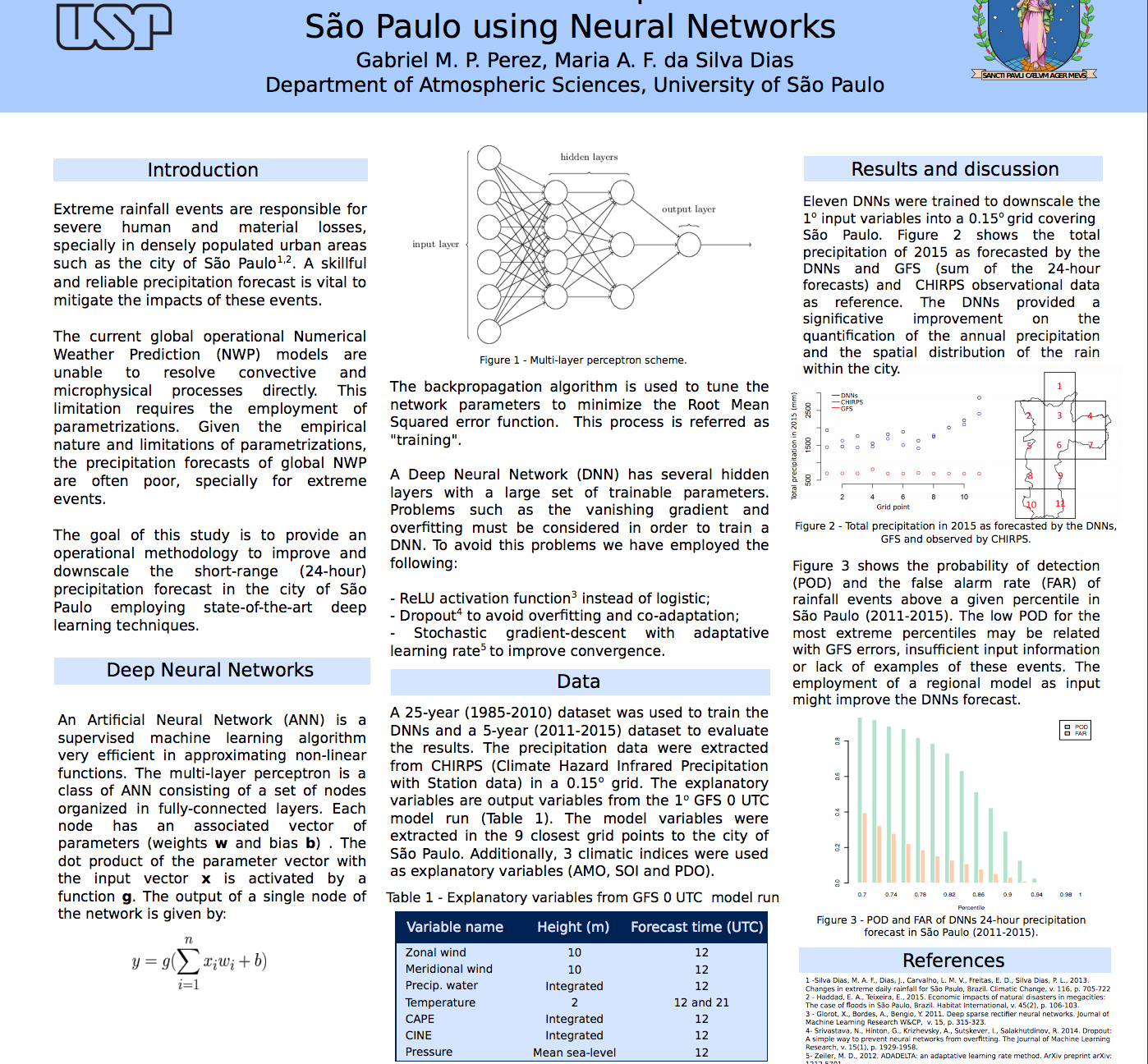 “Forecast of extreme precipitation events in São Paulo using neural networks”
– Gabriel Martins Palma Perez
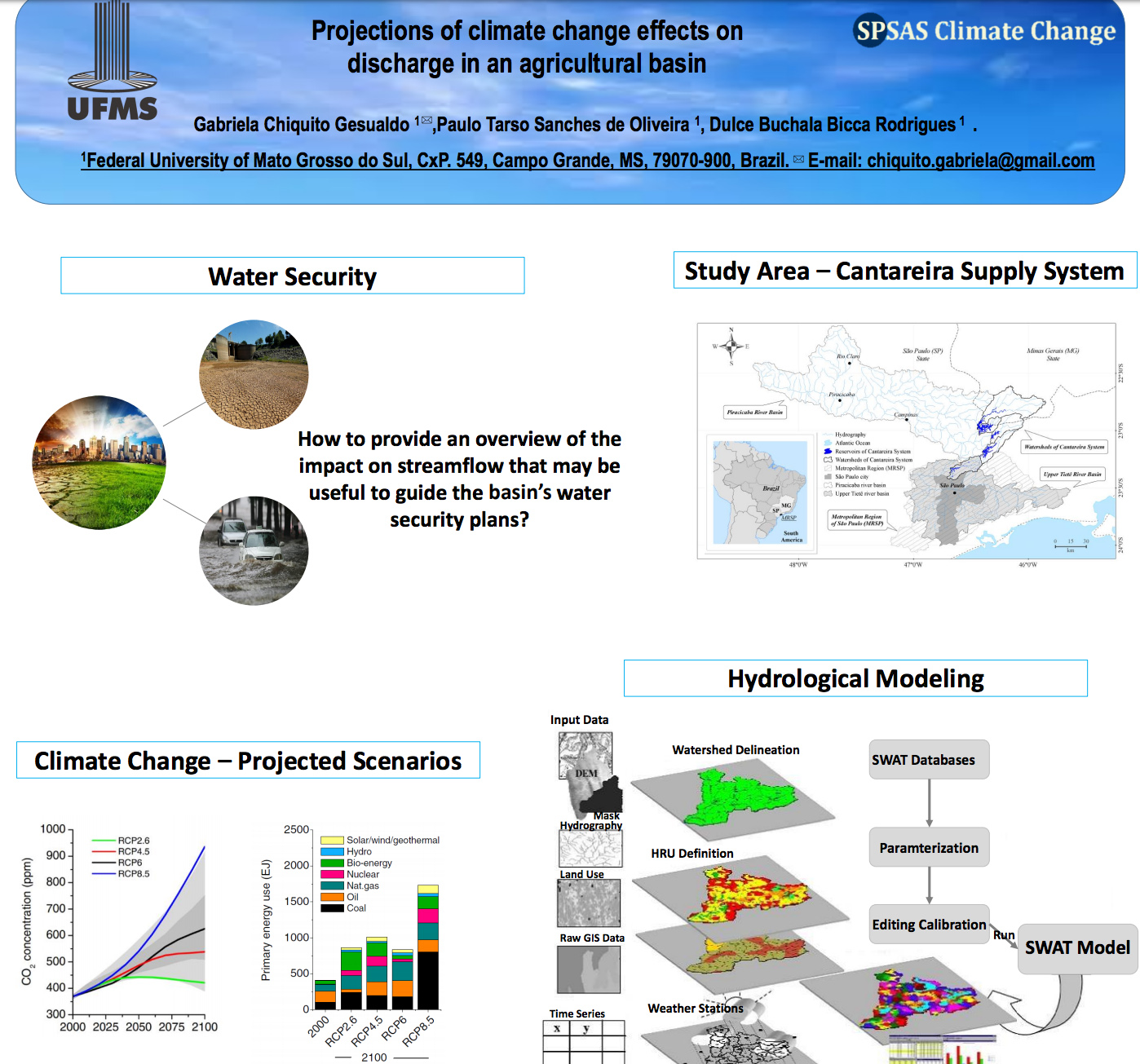 “Proyecciones de los efectos del cambio climático sobre los caudales en una cuenca agrícola” (en inglés)
– Gabriela Chiquito Gesualdo
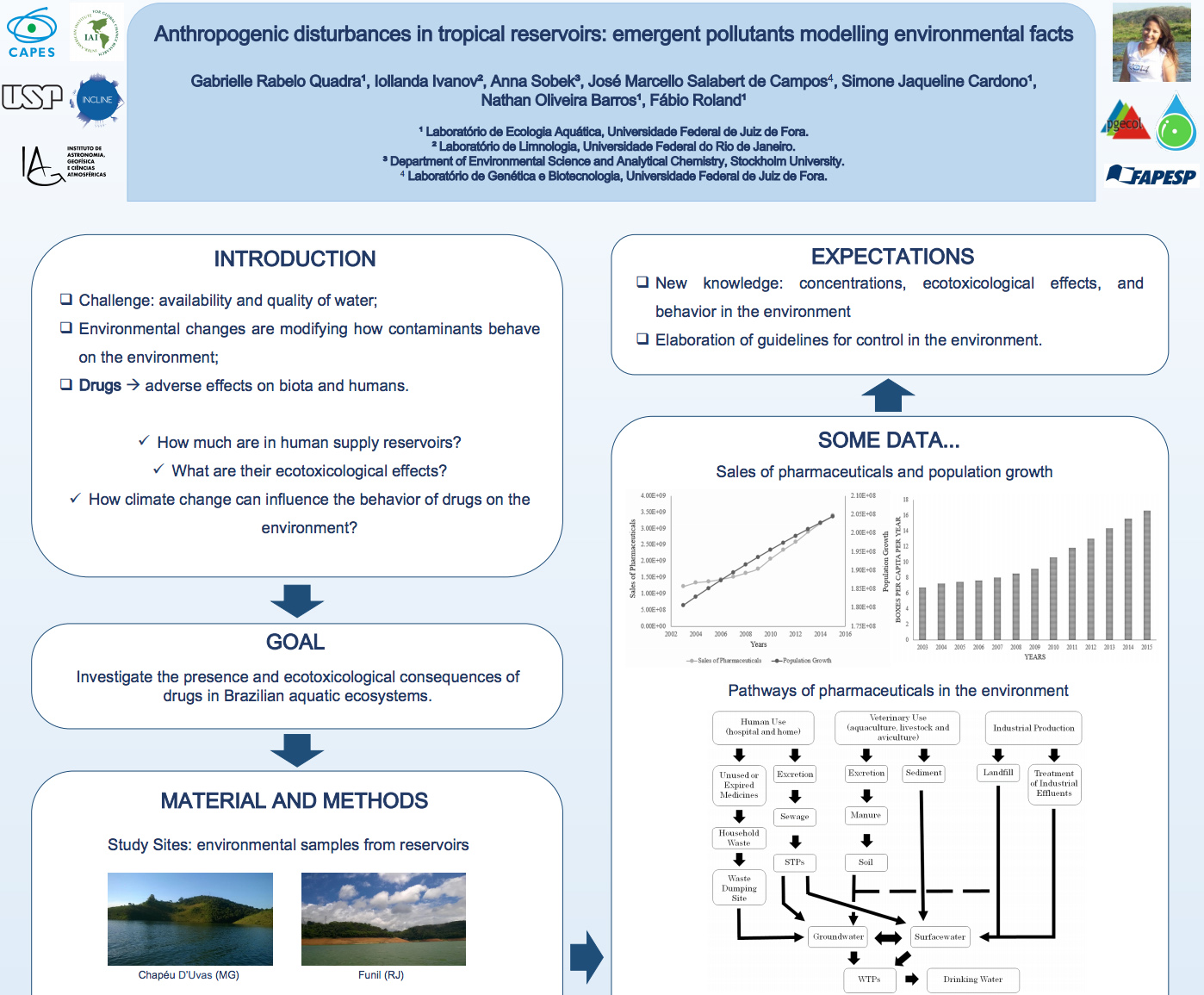 “Anthropogenic disturbances in tropical reservoirs: emergent pollutants modeling environmental facts”
– Gabrielle Rabelo Quadra
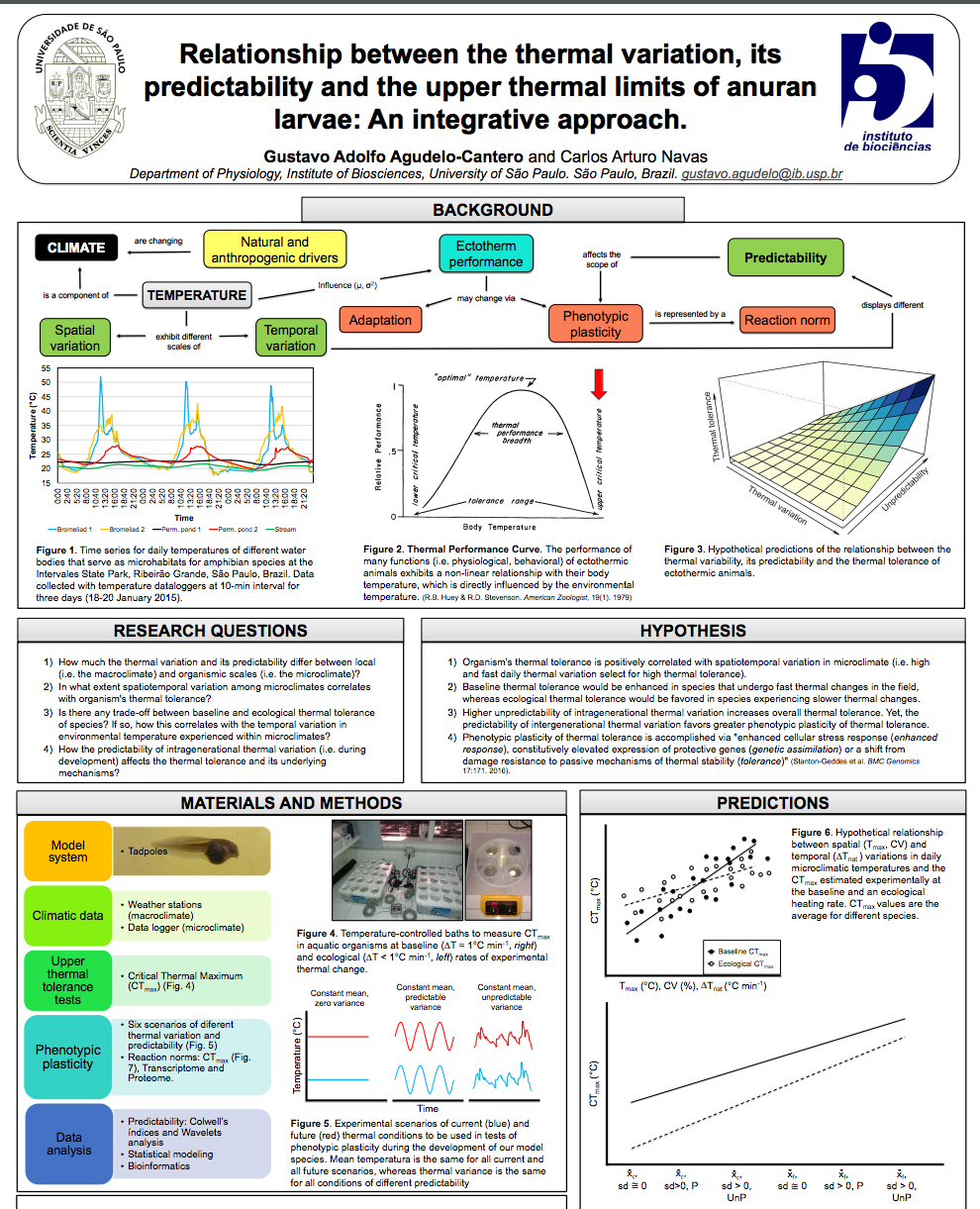 “Relationship between the thermal variation, its predictability and the upper thermal limits of anuran larvae: an integrative approach”
– Gustavo Adolfo Agudelo Cantero
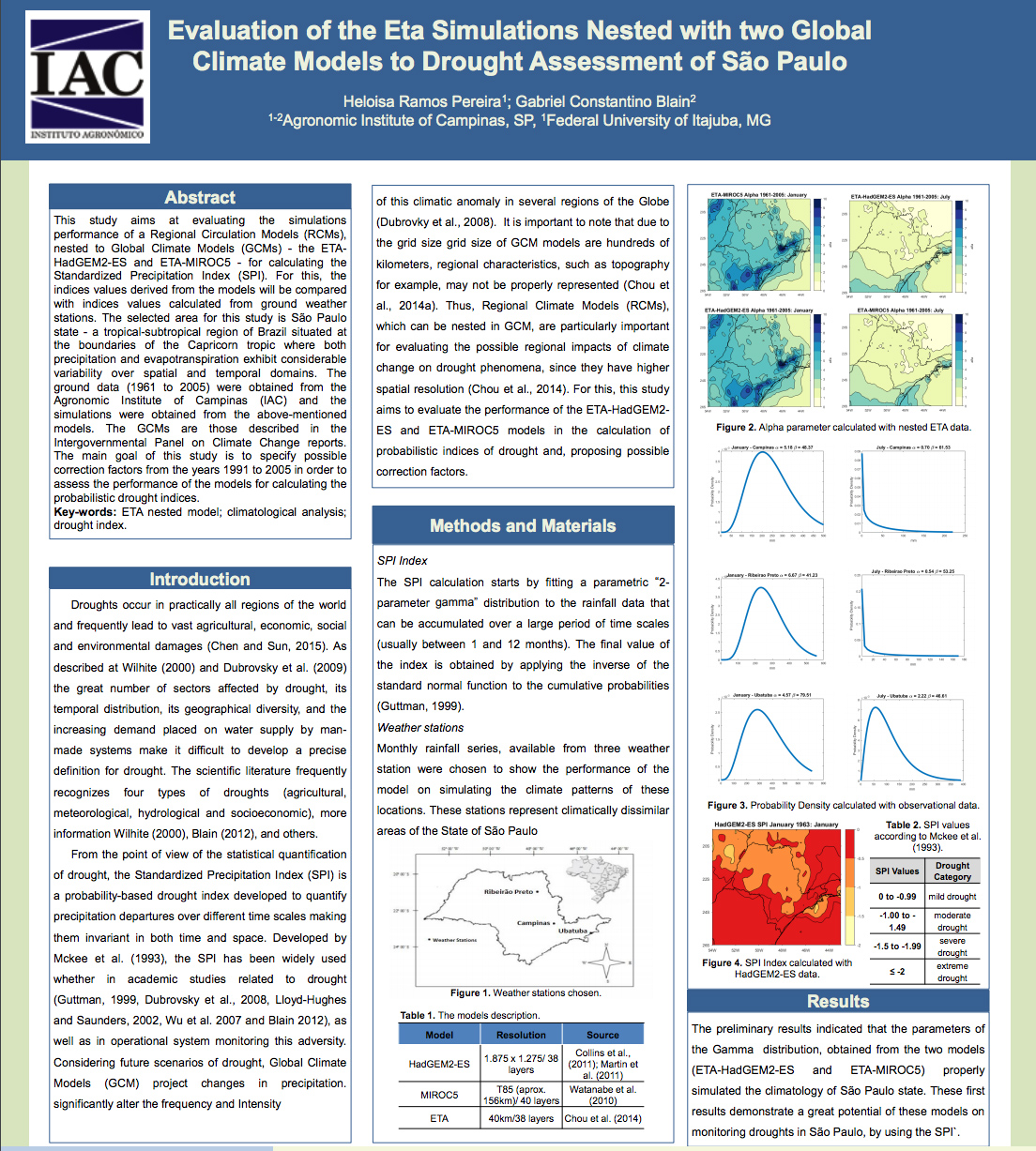 “Evaluation of the Eta simulations nested with two global climate models to drought assessment of São Paulo”
– Heloisa Ramos Pereira
 “Bioclimatic processes and vegetation responses under climate change scenarios in the southern Espinhaço mountains (Brazil)”
– João Francisco Ferreira Sobreiro
 “High spatial variability of diffusive carbon dioxide and methane emission in three tropical reservoirs”
– José Reinaldo Paranaíba Vilela Alves Teixeira
 “The assessment of Brazil’s power generation through wind and water resources based on long-term climate data analysis”
– José Vitor Pereira Miguel
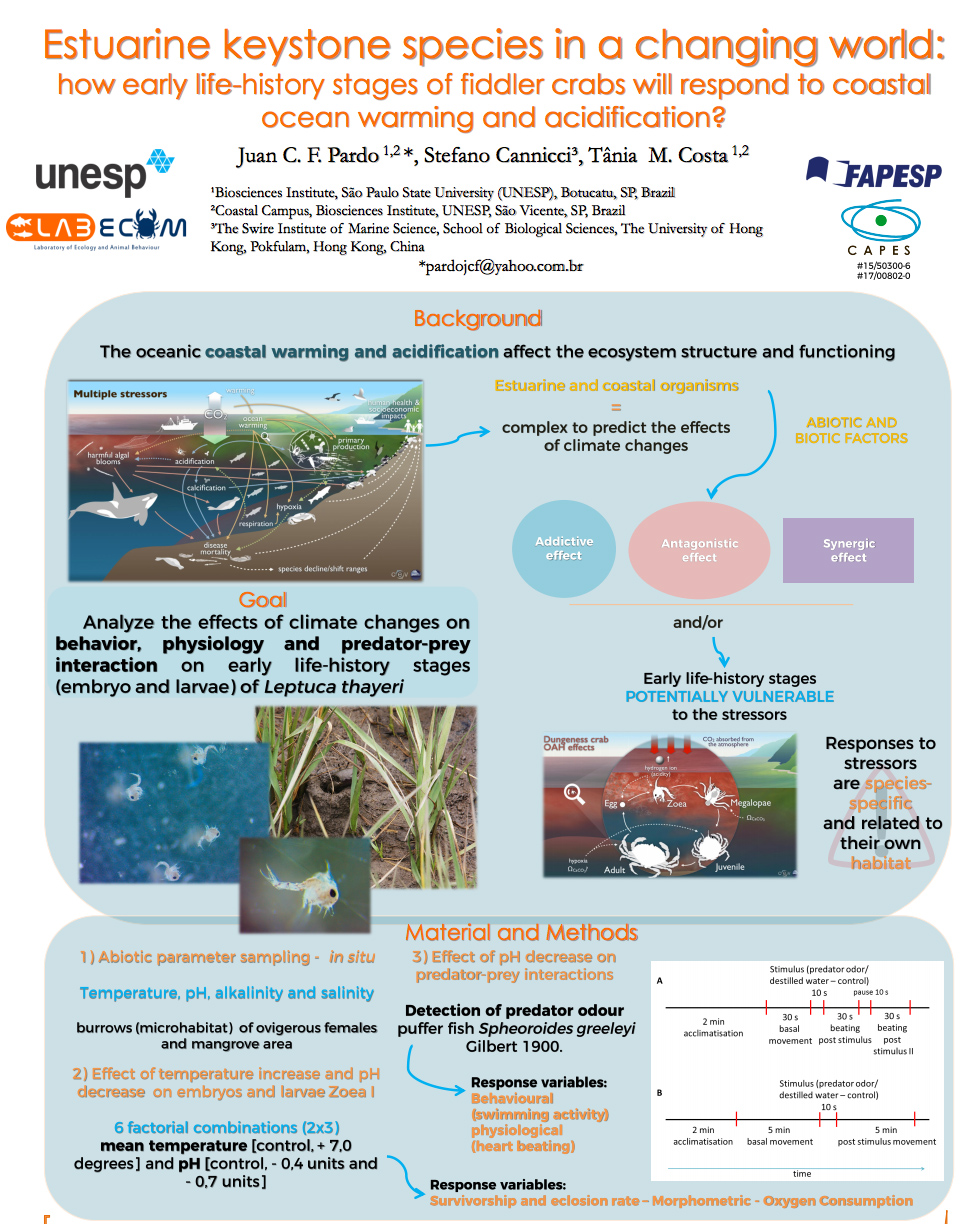
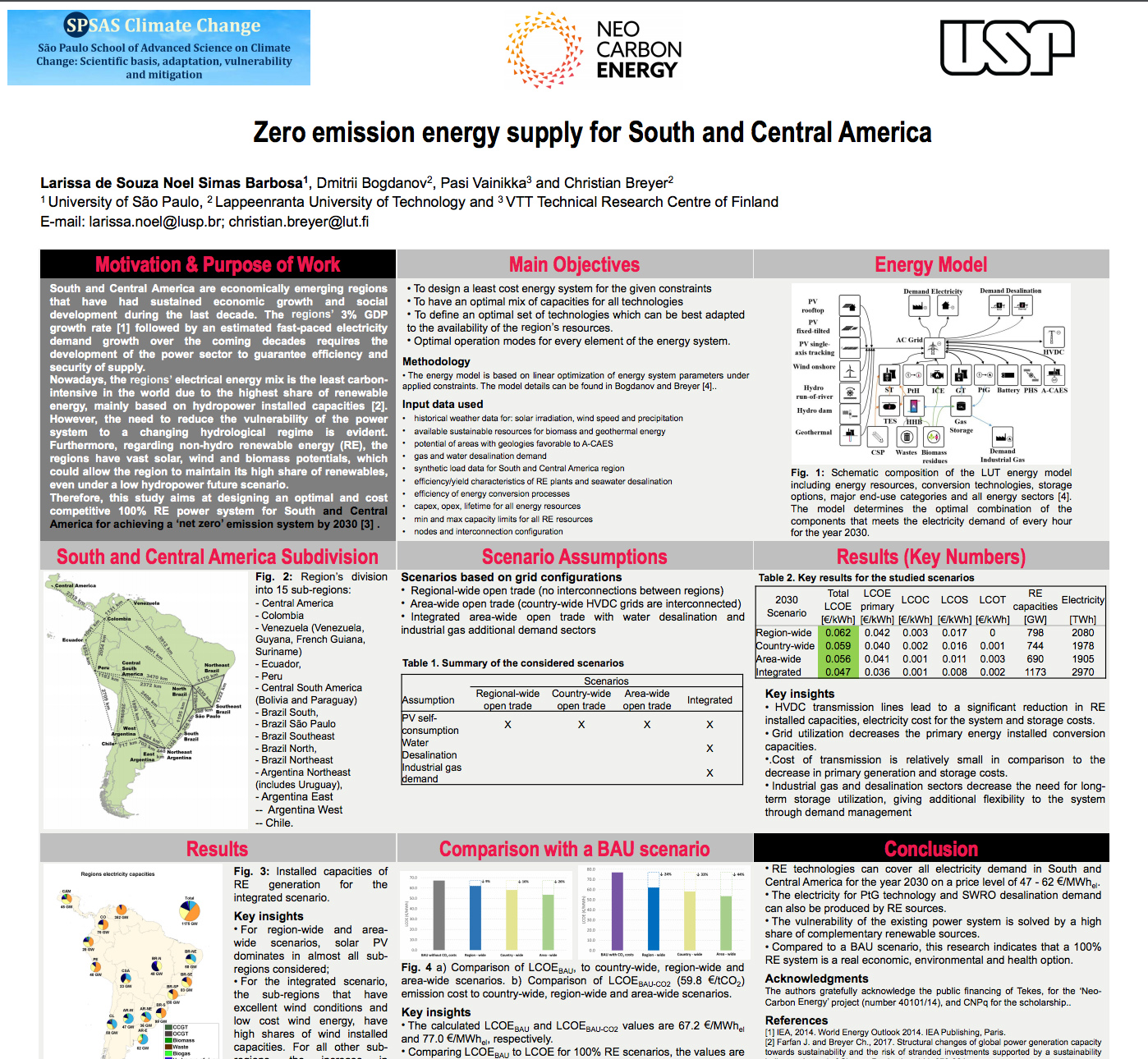
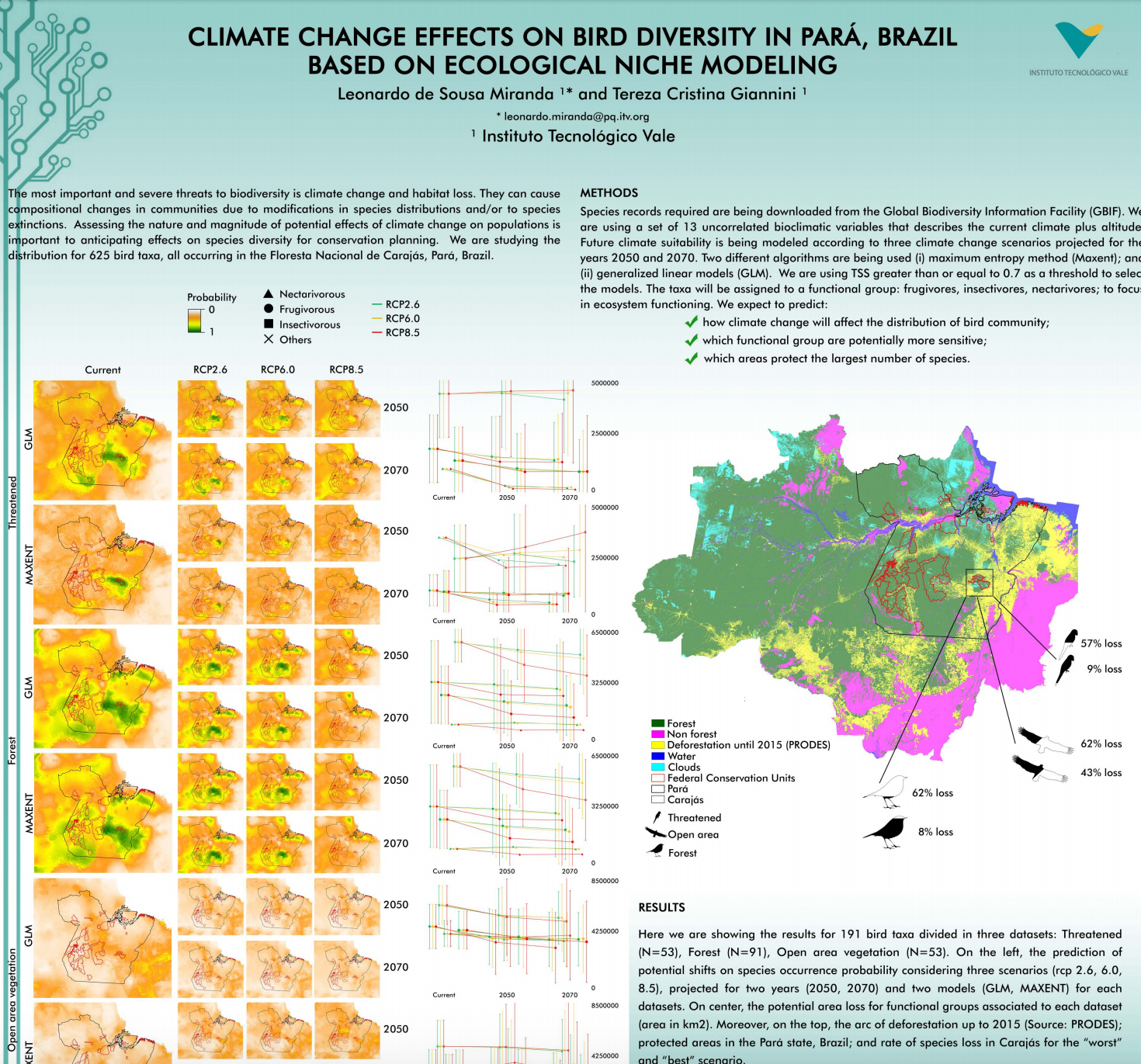 “Climate change effects on bird diversity in Pará, Brazil based on ecological niche modeling”
– Leonardo de Sousa Miranda
 “Water partitioning in a Cerrado area and its importance to the water resources maintenance”
– Lívia Malacarne Pinheiro Rosalem
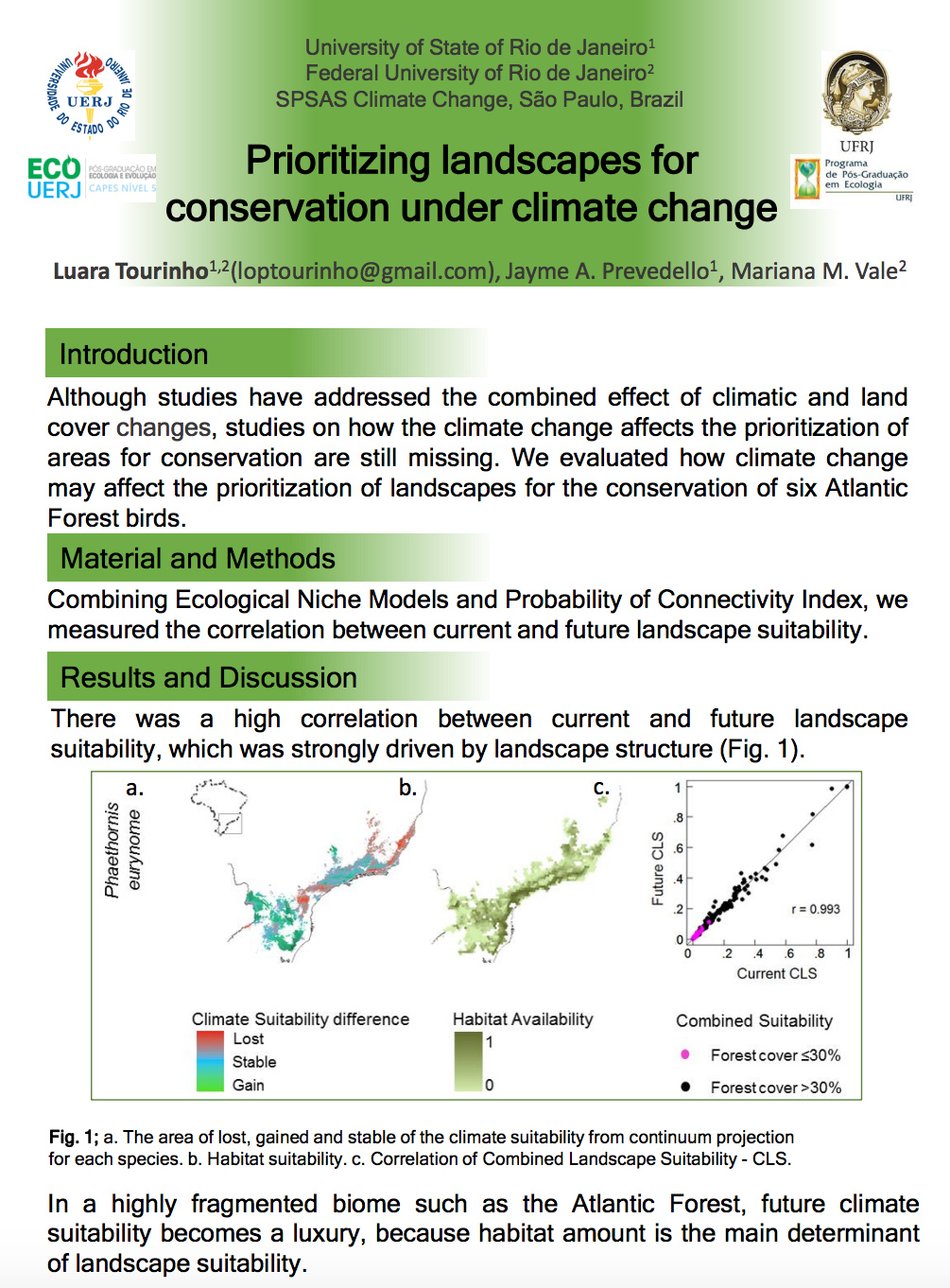 “Prioritizing landscapes for conservation under climate change”
– Luara Tourinho de Oliveira Pereira
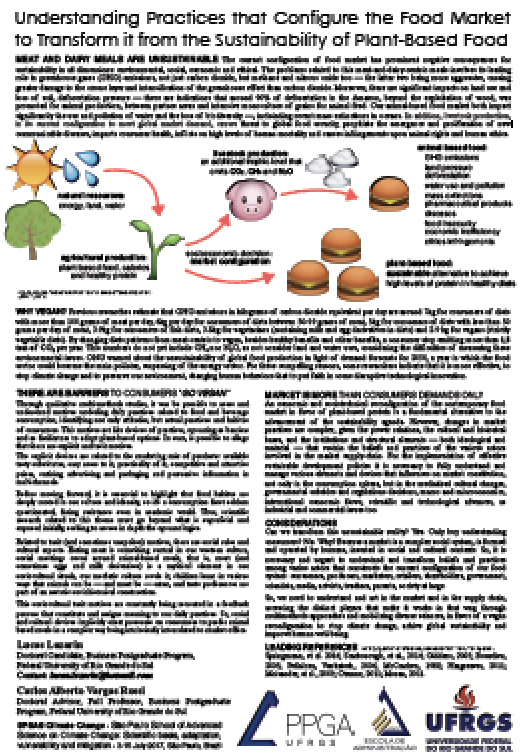
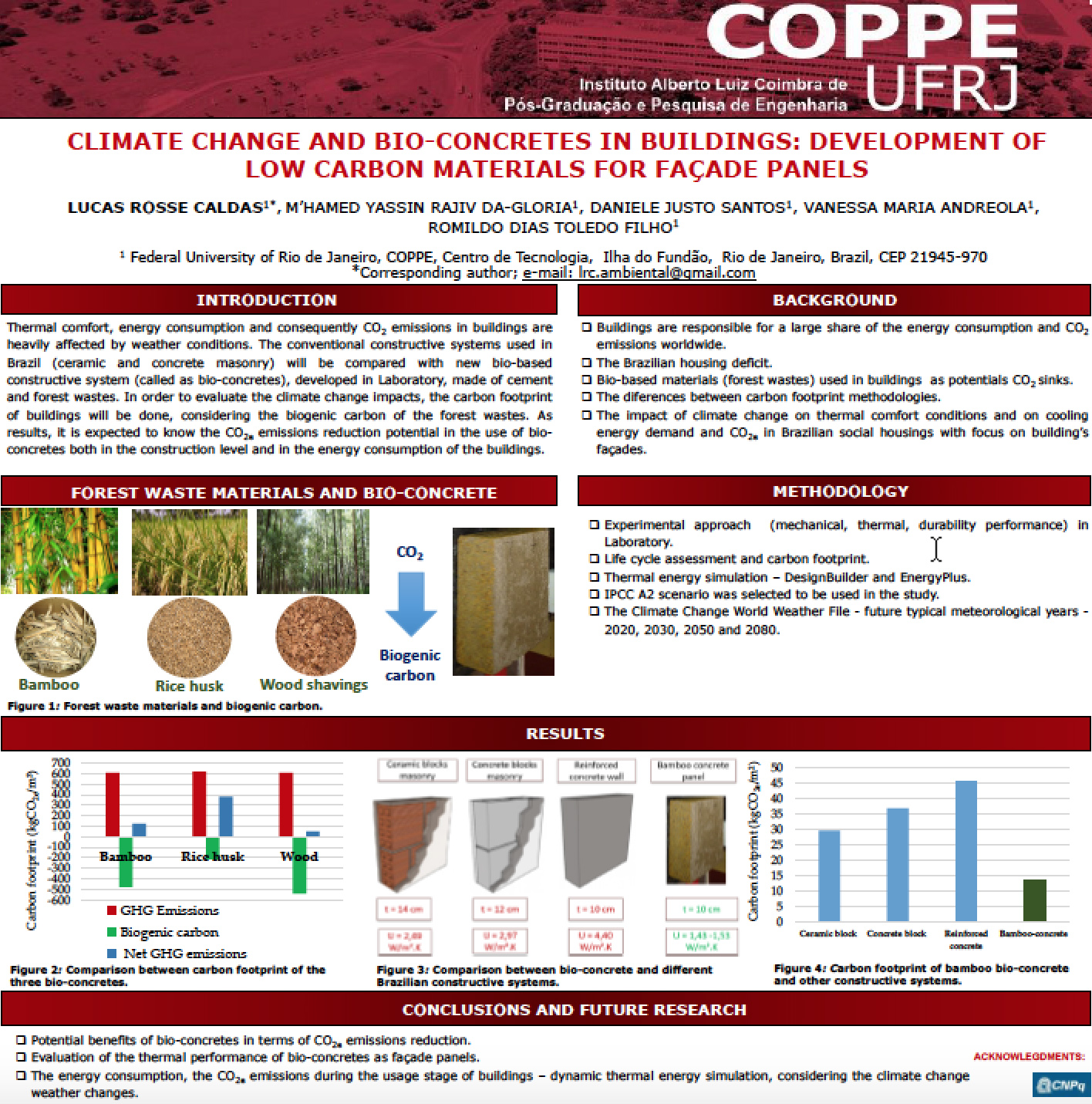 “Climate change and bio-concretes in buildings: development of low carbon materials for façade panels”
– Lucas Rosse Caldas
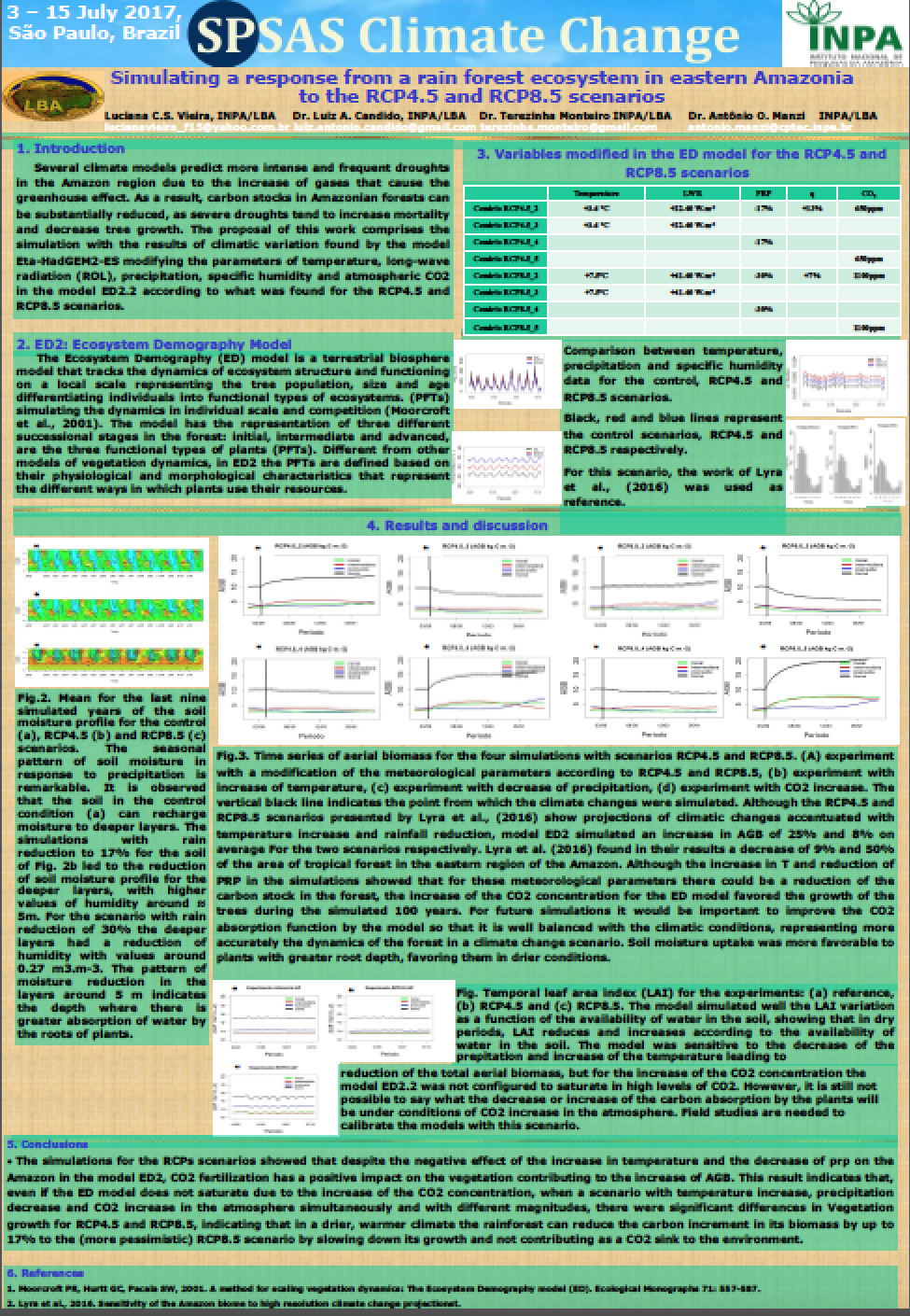 “Simulating a response from a rainforest ecosystem in eastern Amazonia to the RCP4.5 and RCP8.5 scenarios”
– Luciana Cristina de Sousa Vieira
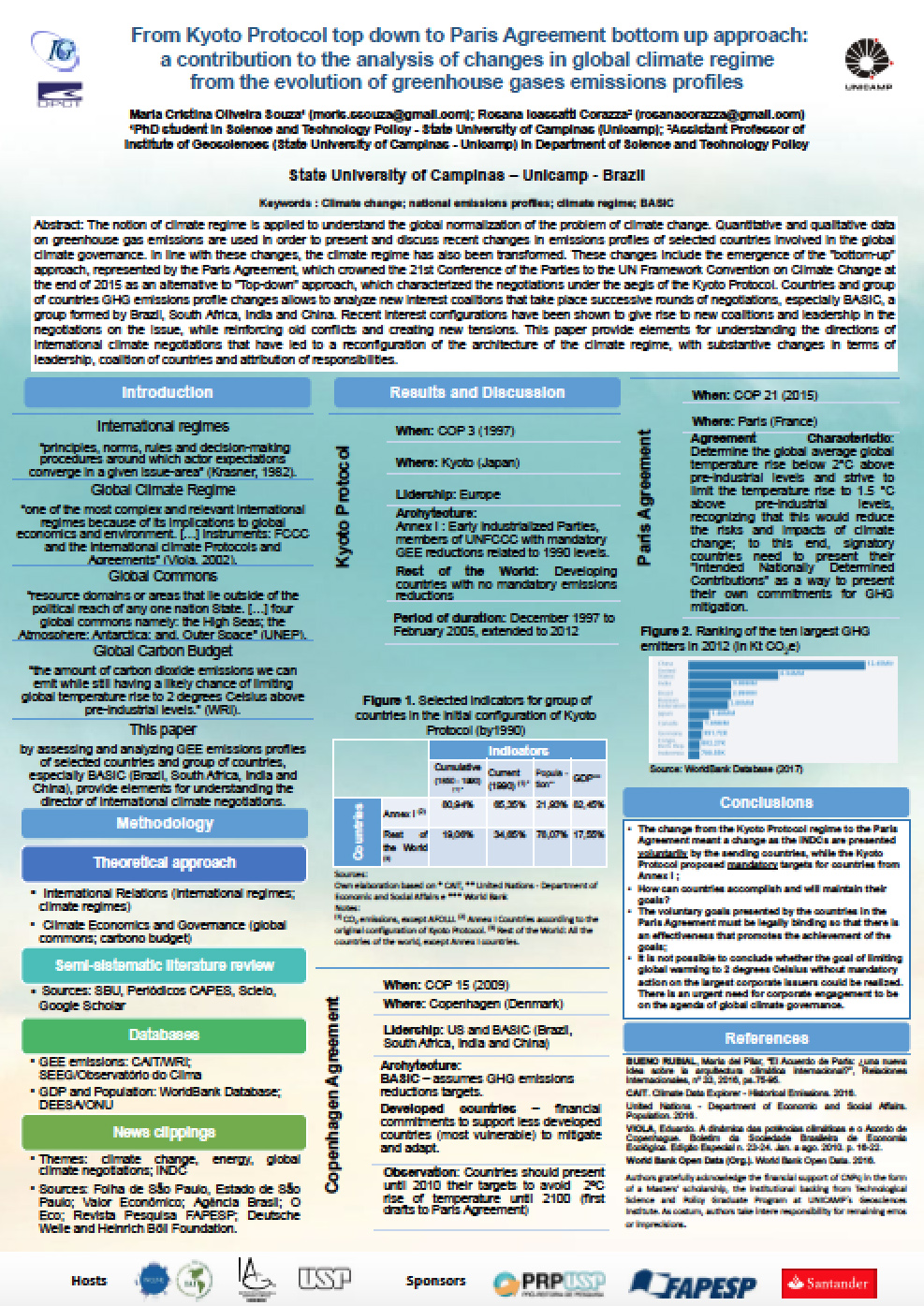
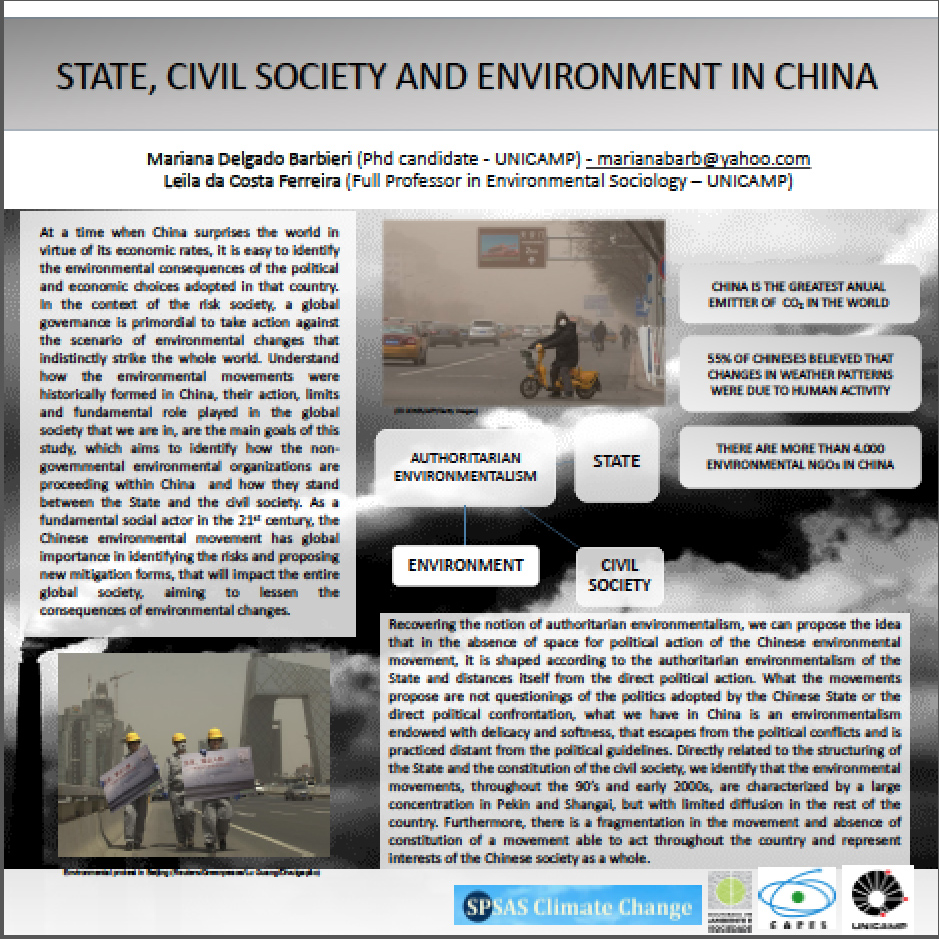
 “Future climate change scenarios and cultural landscapes in the mixed ombrophilous forest in southern Brazil. Different approaches targeting preservation of Araucaria angustifolia“
– Mário Sérgio Muniz Tagli
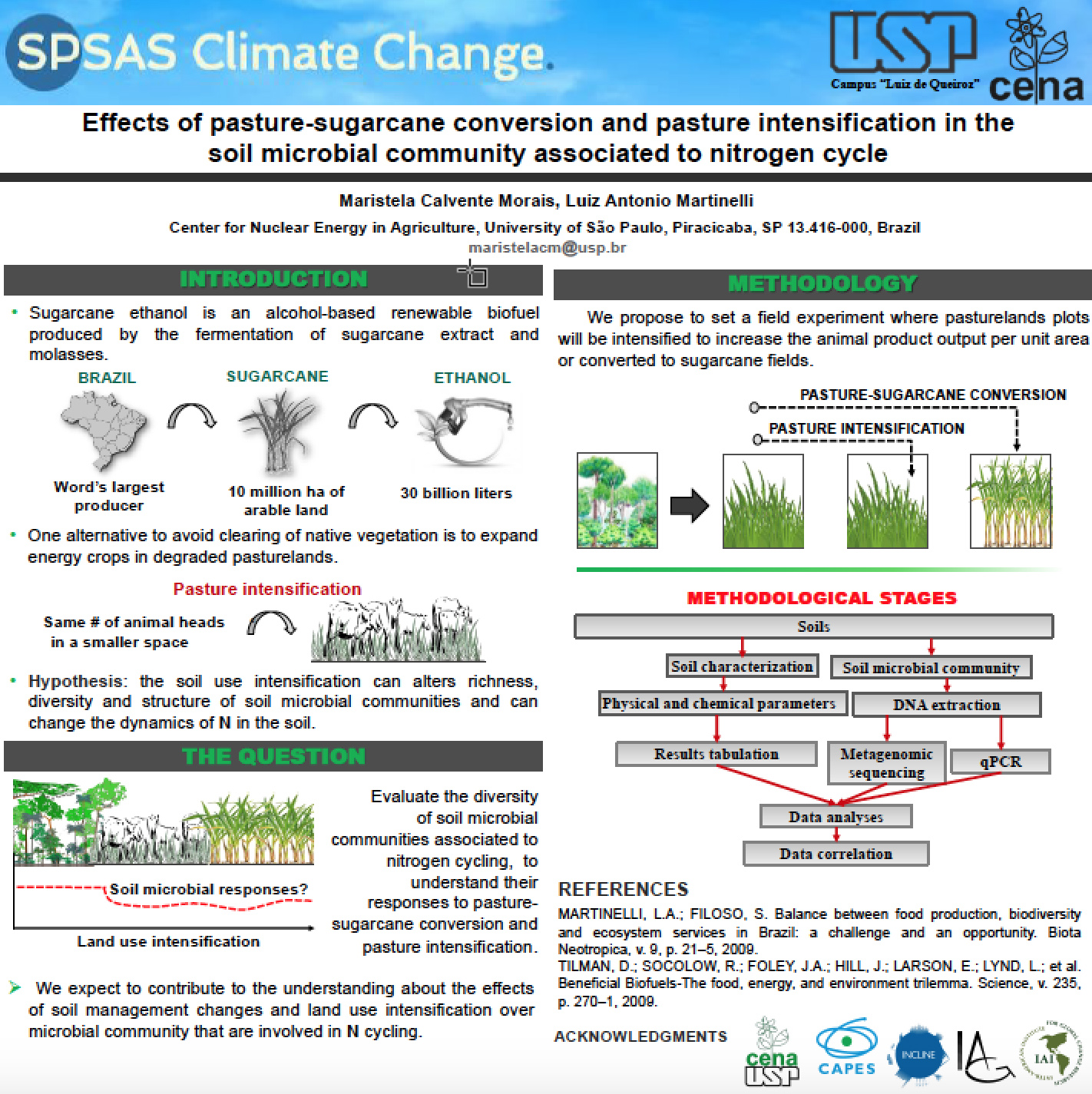 “Effects of pasture-sugarcane conversion and pasture intensification in the soil microbial community associated to nitrogen cycle”
– Maristela Calvente Morais
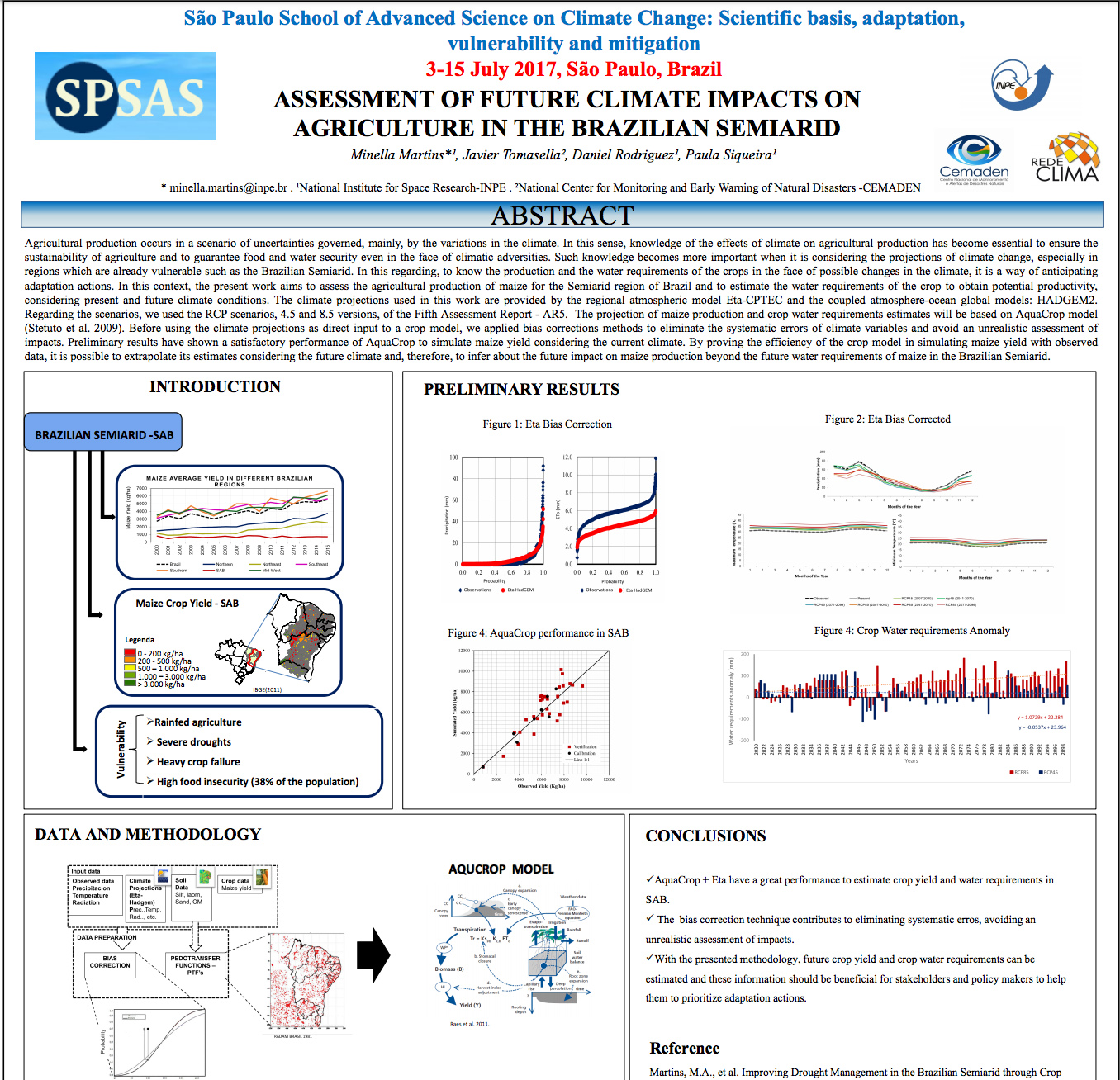 “Assessment of future climate impacts on agriculture in the Brazilian semiarid”
– Minella Alves Martins


 “Land use and land cover changes and its implications for local and regional climate change: perceptions and challenges for mitigation and adaptation actions”
– Nathália Cristina Costa do Nascimento
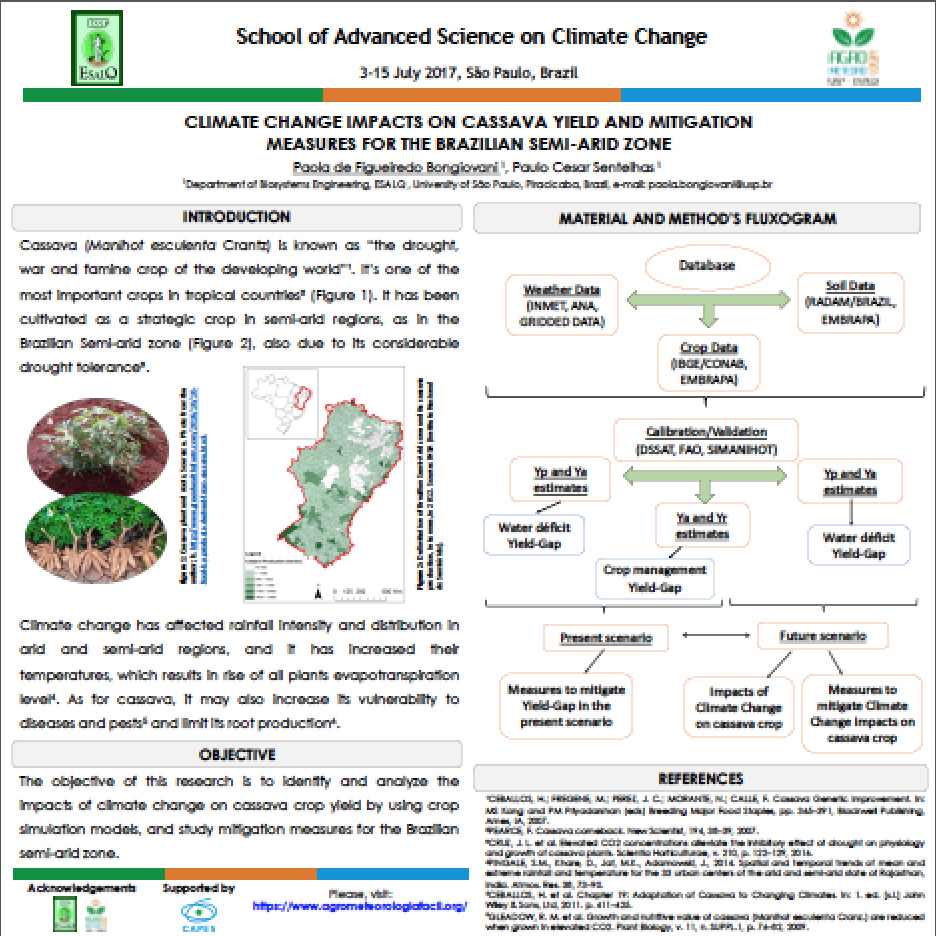 “Climate change impacts on Cassava yield and mitigation measures for the Brazilian semi-arid zone”
– Paola de Figueiredo Bongiovani
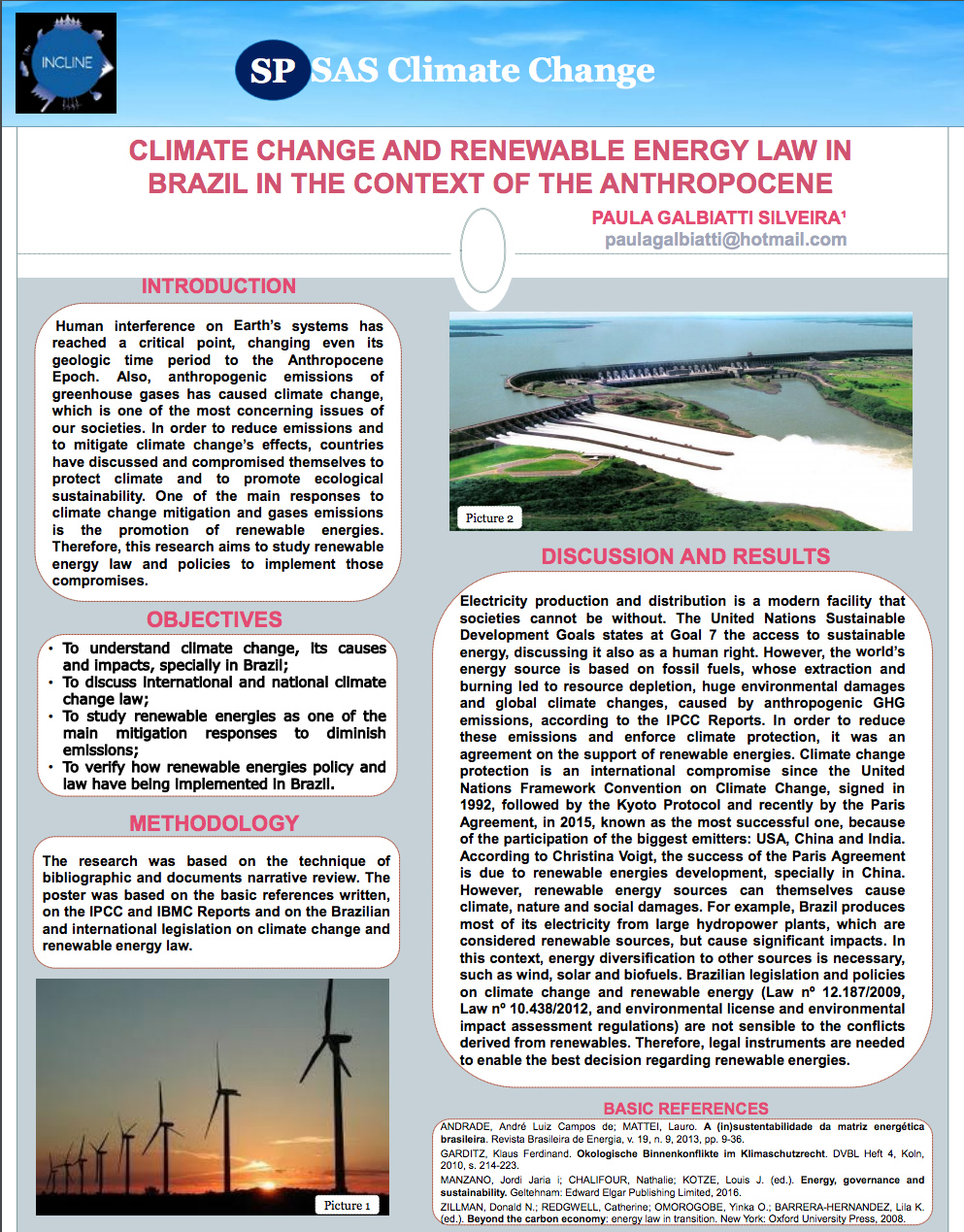 “Climate change and renewable energy law in Brazil in the context of the Anthropocene”
– Paula Galbiatti Silveira
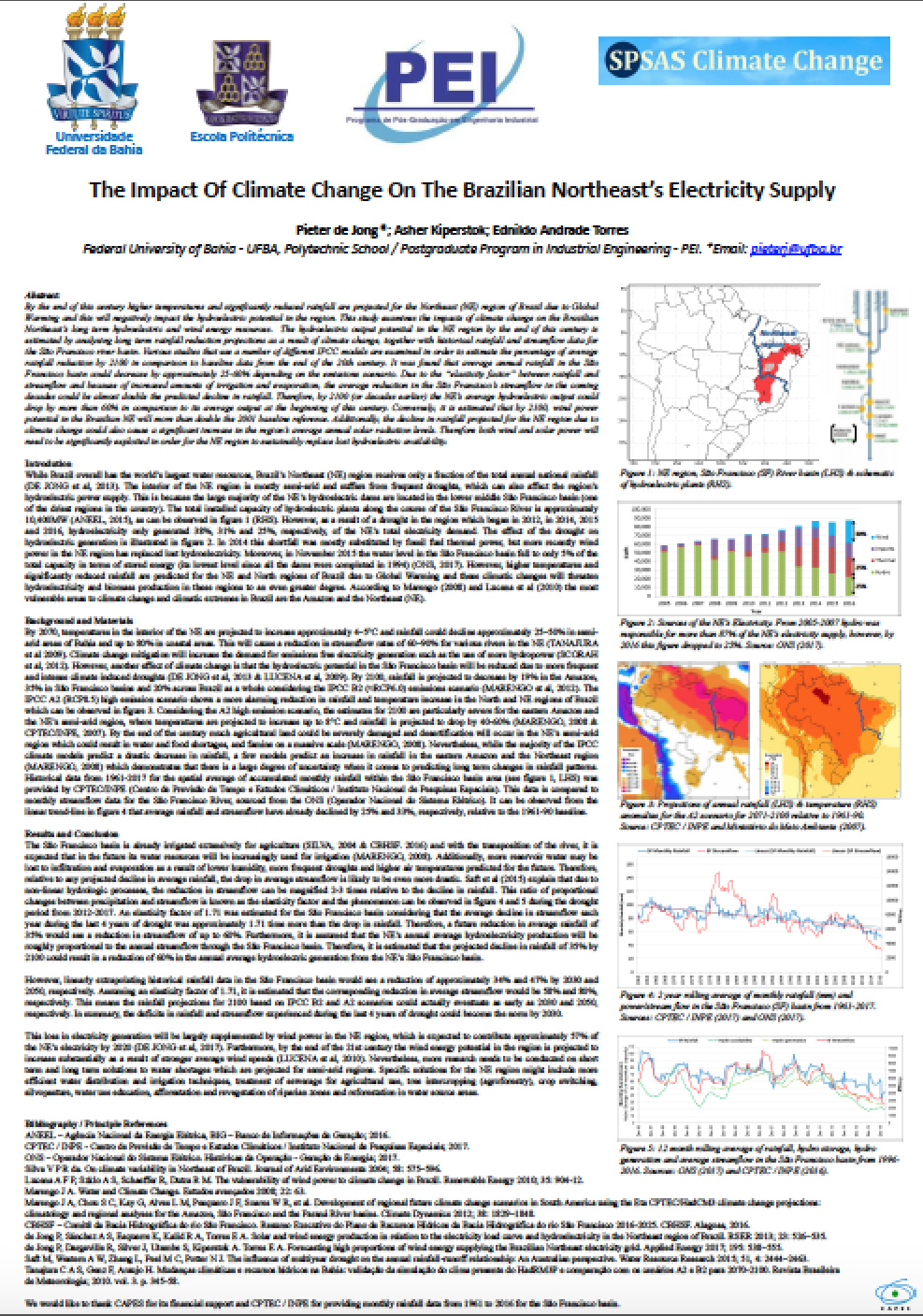
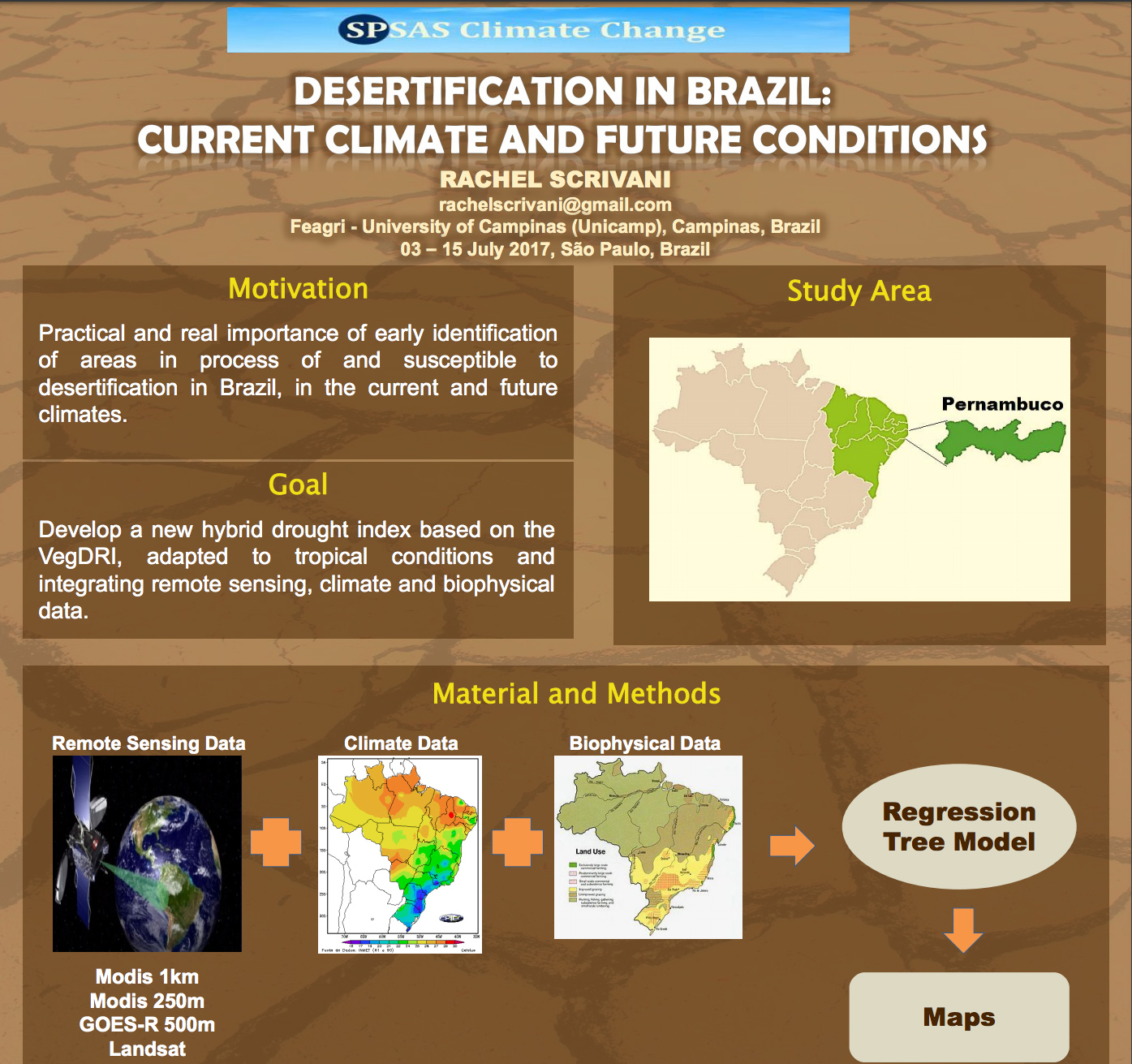
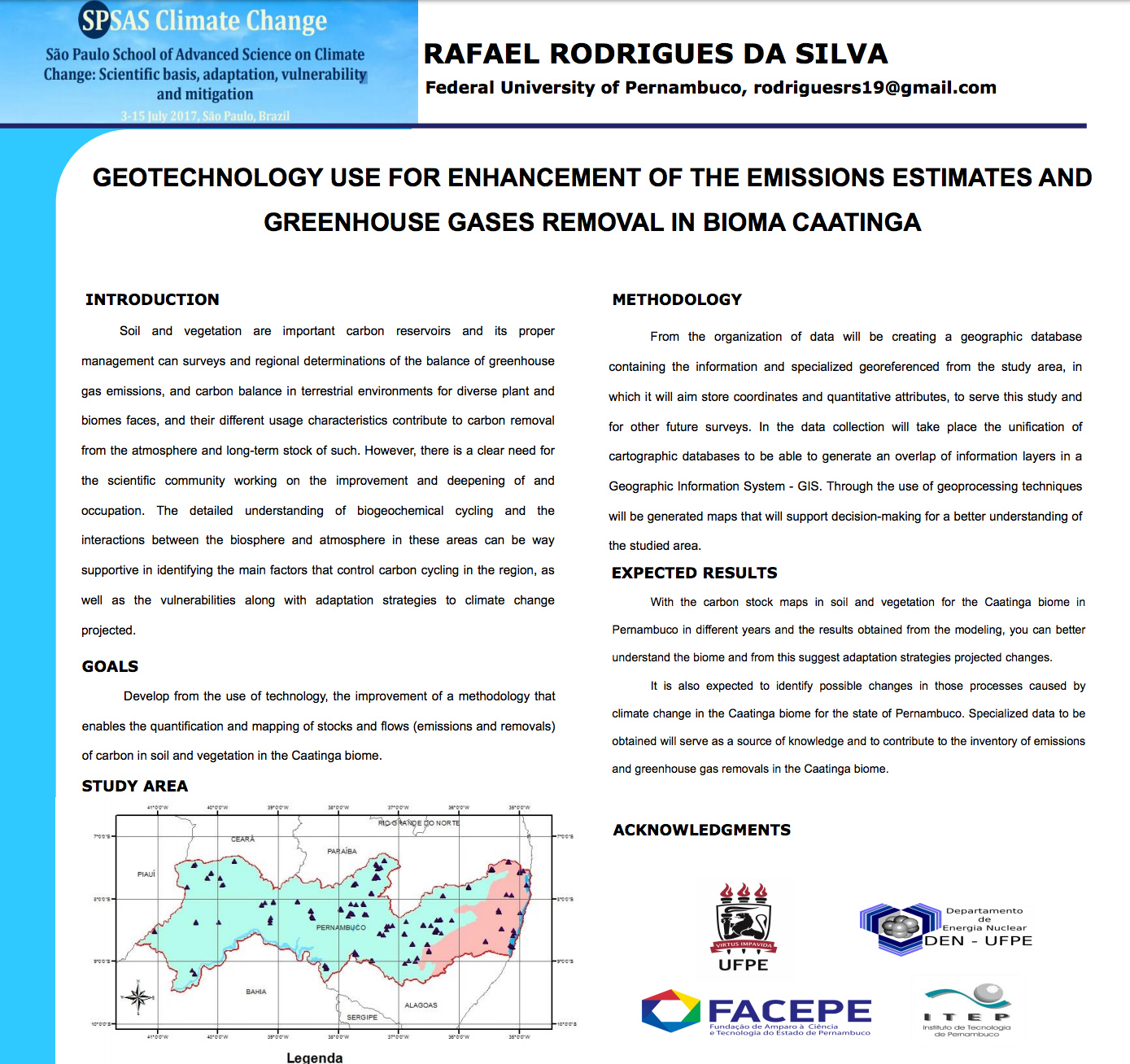 “Geotechnology use for enhancement of the emissions estimates and greenhouse gases removal in bioma Caatinga”
– Rafael Rodrigues da Silva
 “The feasibility of sustainable development and socioeconomic inclusion in watershed protection and restoration areas”
– Raquel Henriques Melo Santos
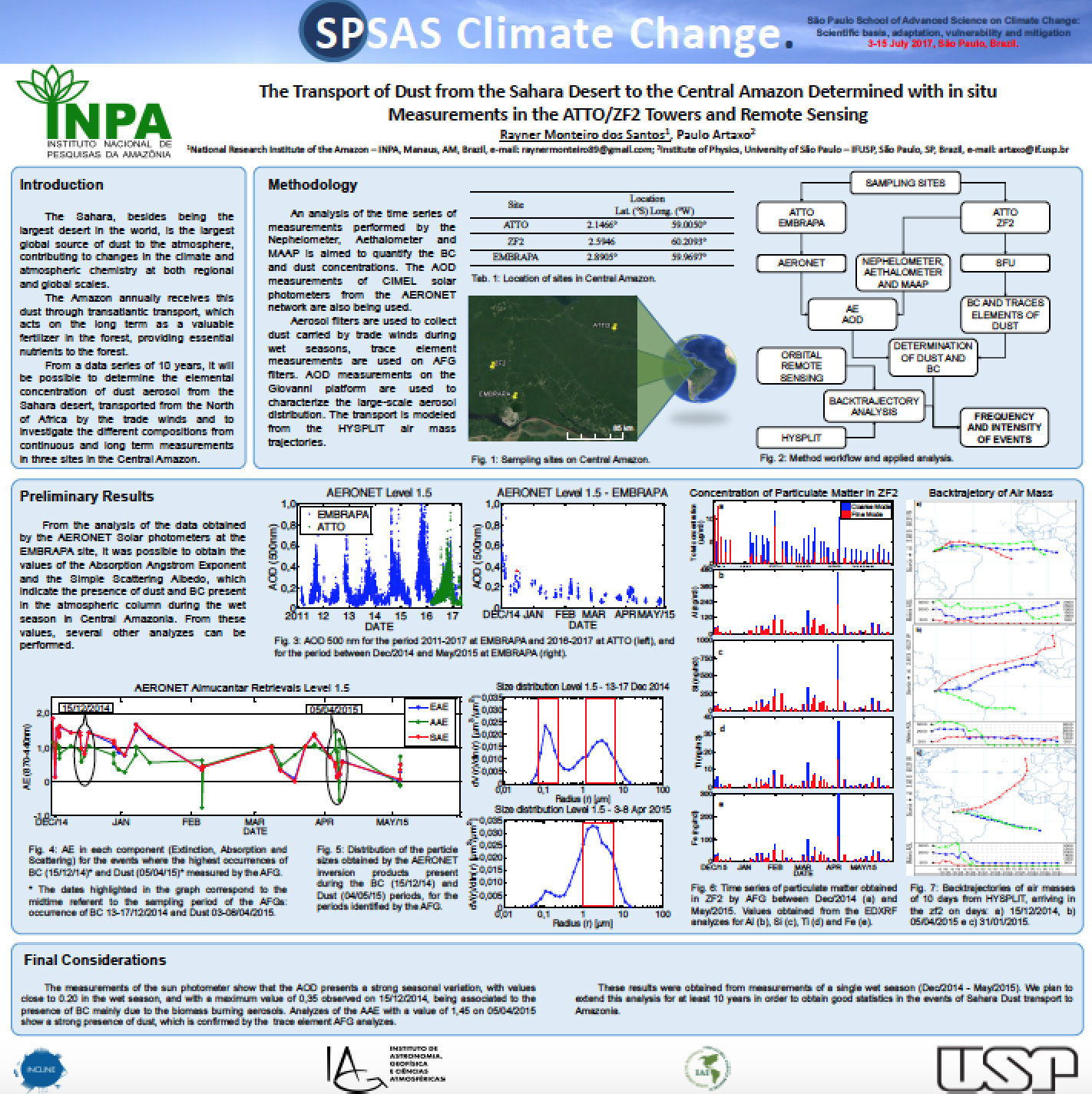 “The transport of dust from the Sahara desert to the central Amazon determined with in situ measurements in the ATTO/ZF2 towers and remote sensing”
– Rayner Monteiro dos Santos
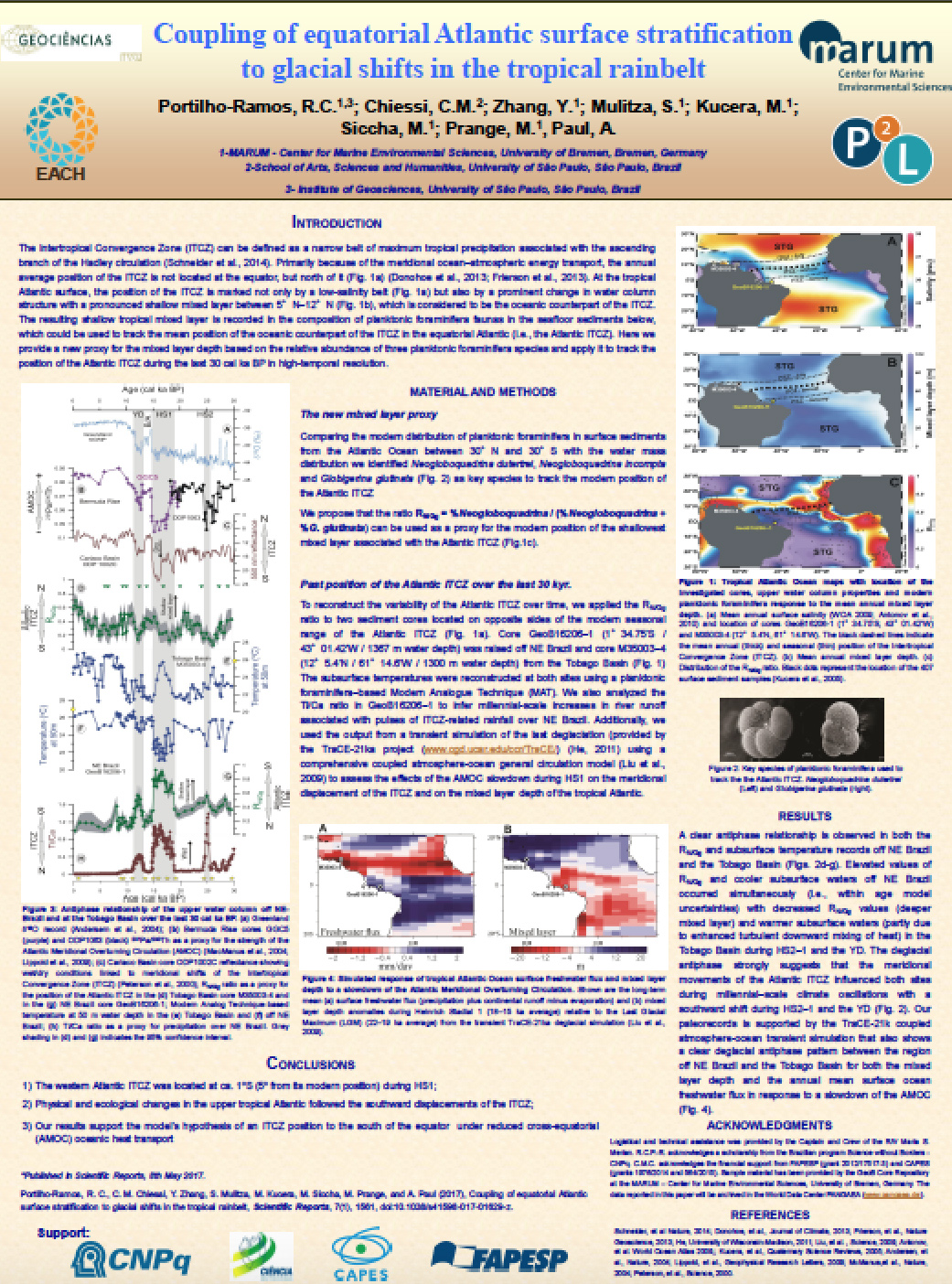 “Coupling of equatorial Atlantic surface stratification to glacial shifts in the tropical rain belt”
– Rodrigo da Costa Portilho Ramos
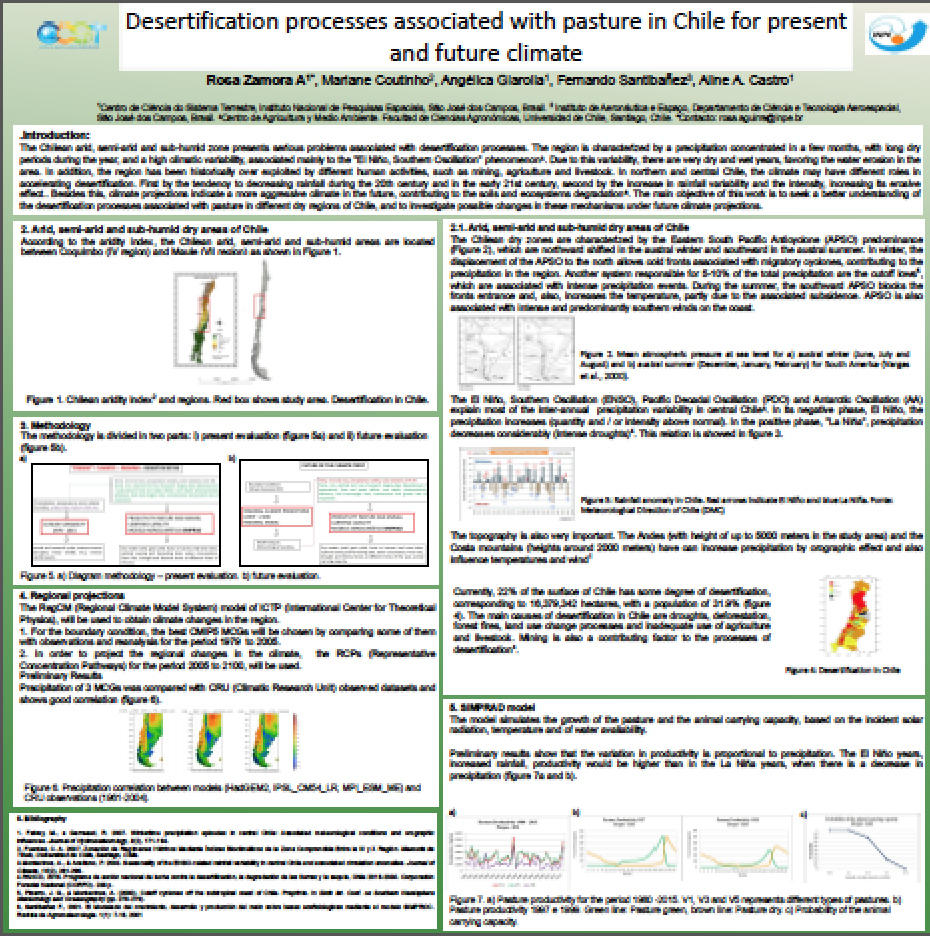 “Desertification processes associated with pasture in Chile for present and future climate”
– Rosa Carolina Zamora Aguirre
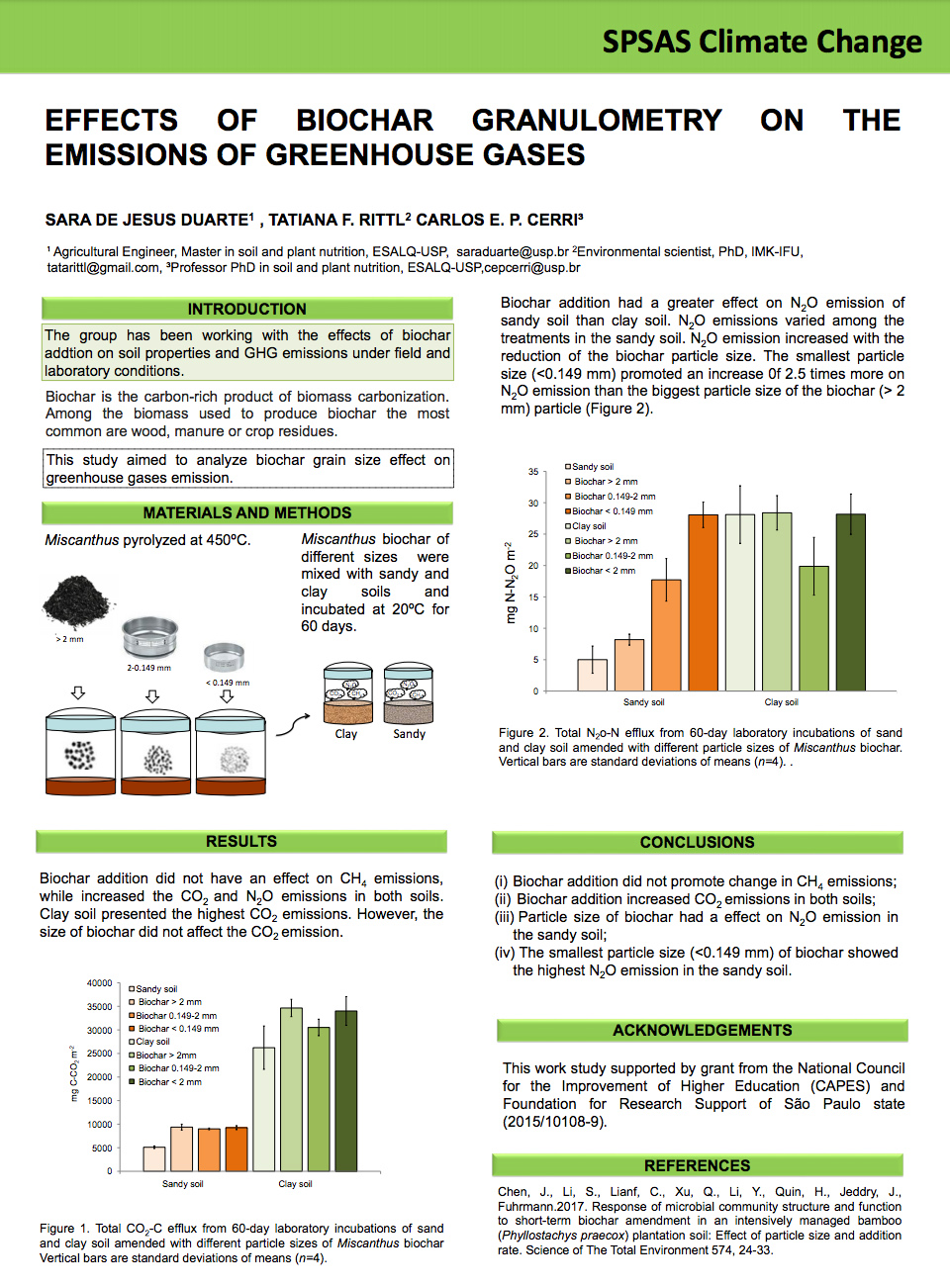
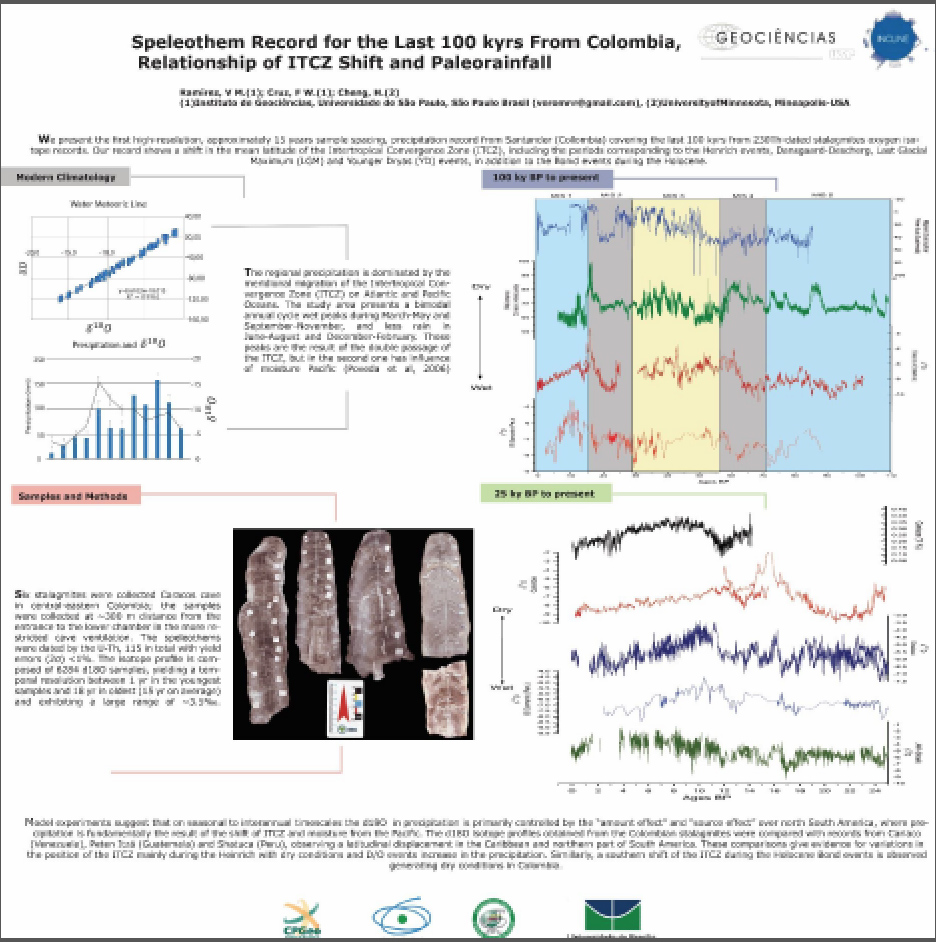 “Speleothem record for the last 100 kyr from Colombia, relationship of ITCZ Shift and Paleorainfall”
– Veronica Marcela Ramirez Ruiz
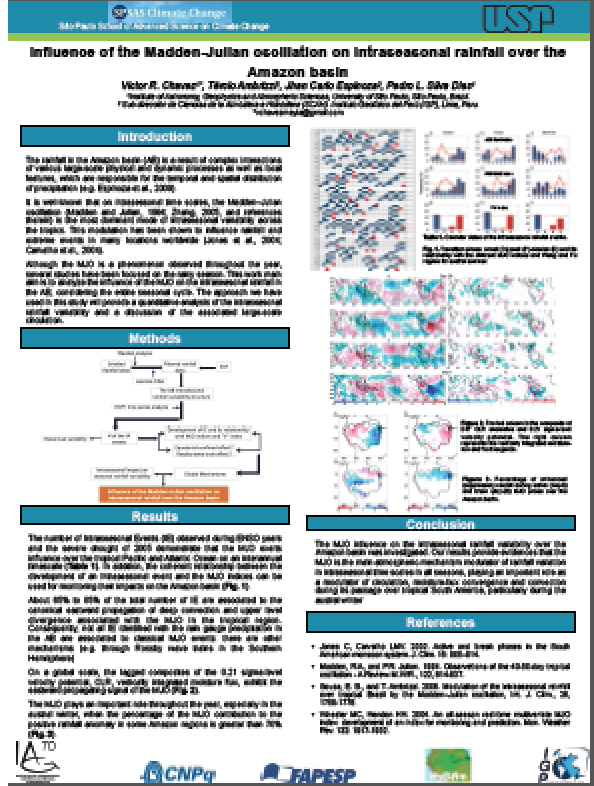 “Influence of the Madden-Julian Oscillation on intraseasonal rainfall over the Amazon basin”
– Victor Raul Chavez Mayta
 “Agriculture productivity, international trade and food security: some implications from a greater productivity in Brazil”
– Vinícius de Almeida Vale
 “Climate change impact over stock prices – does the relation exist and can it be smoothed by investments in innovation?”
– Vinícius Leonardo Loureiro Morrone

 Canada
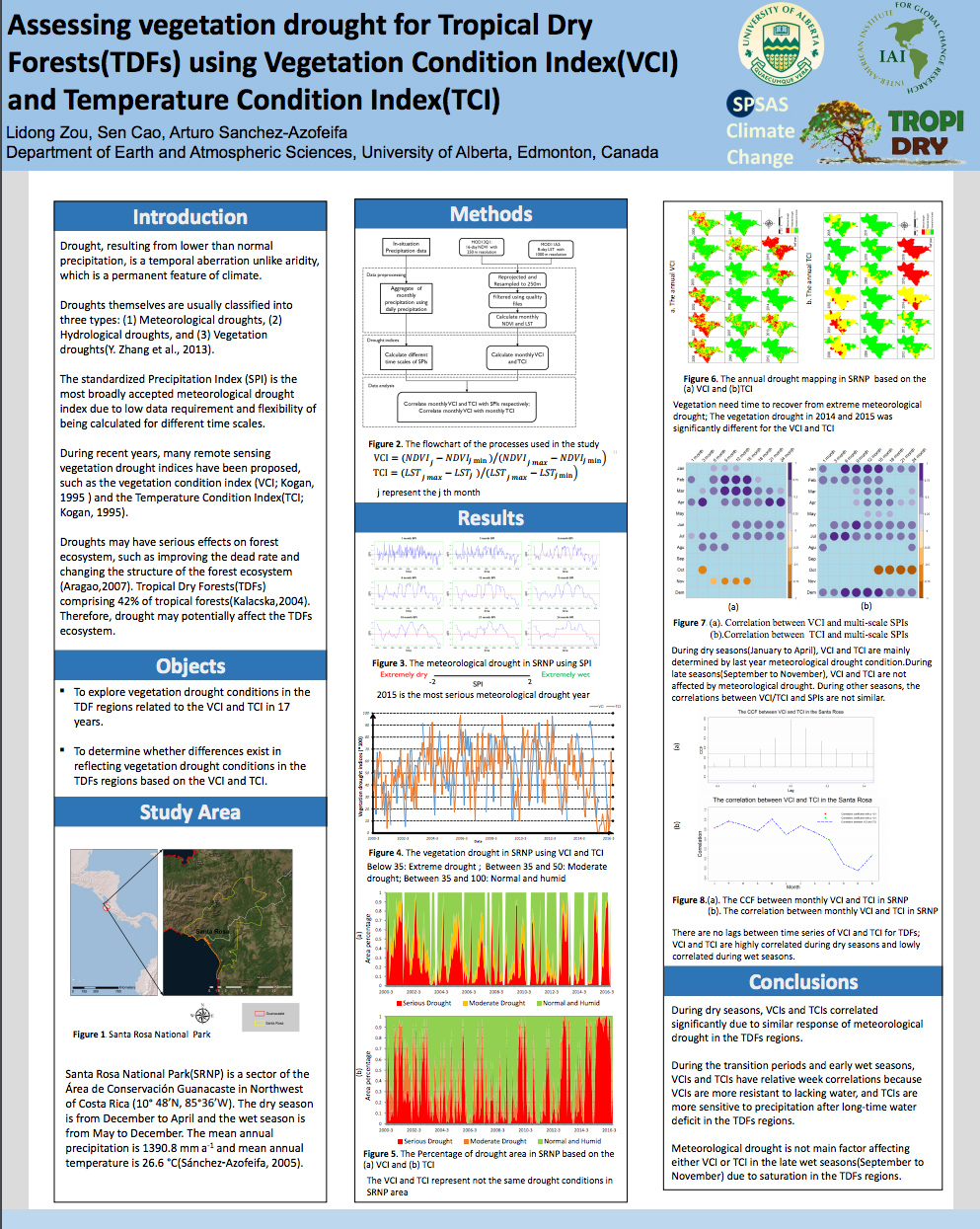
 “Assessing vegetation drought for Tropical Dry Forest (TDFs) using Vegetation Condition Index (VCI) and Temperature Condition Index (TCI)”
– Lidong Zou
 “Late Holocene limnological and environmental reconstruction of lake Siscunsí and its watershed, Colombia (South America)”
– Yunuén Temoltzin Loranca
 Chile
Chile “Filling gaps in meteorological data in a south-central Chilean region using two methods. Comparisons and analysis”
– Jenny Sofía Gómez Guerrero
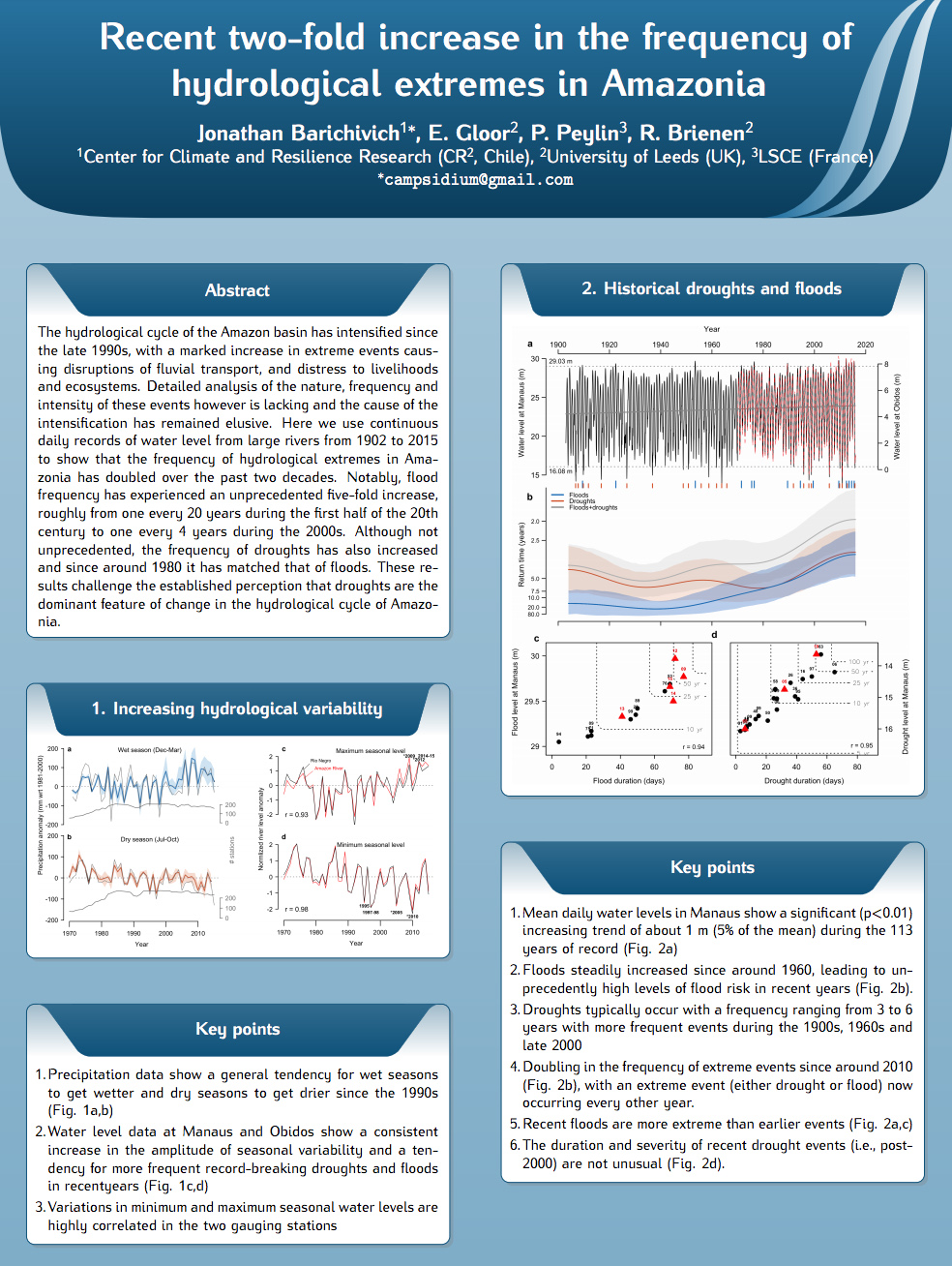 “Recent two-fold increase in the frequency of hydrological extremes in Amazonia”
– Jonathan Eligio Barichivich Henriquez
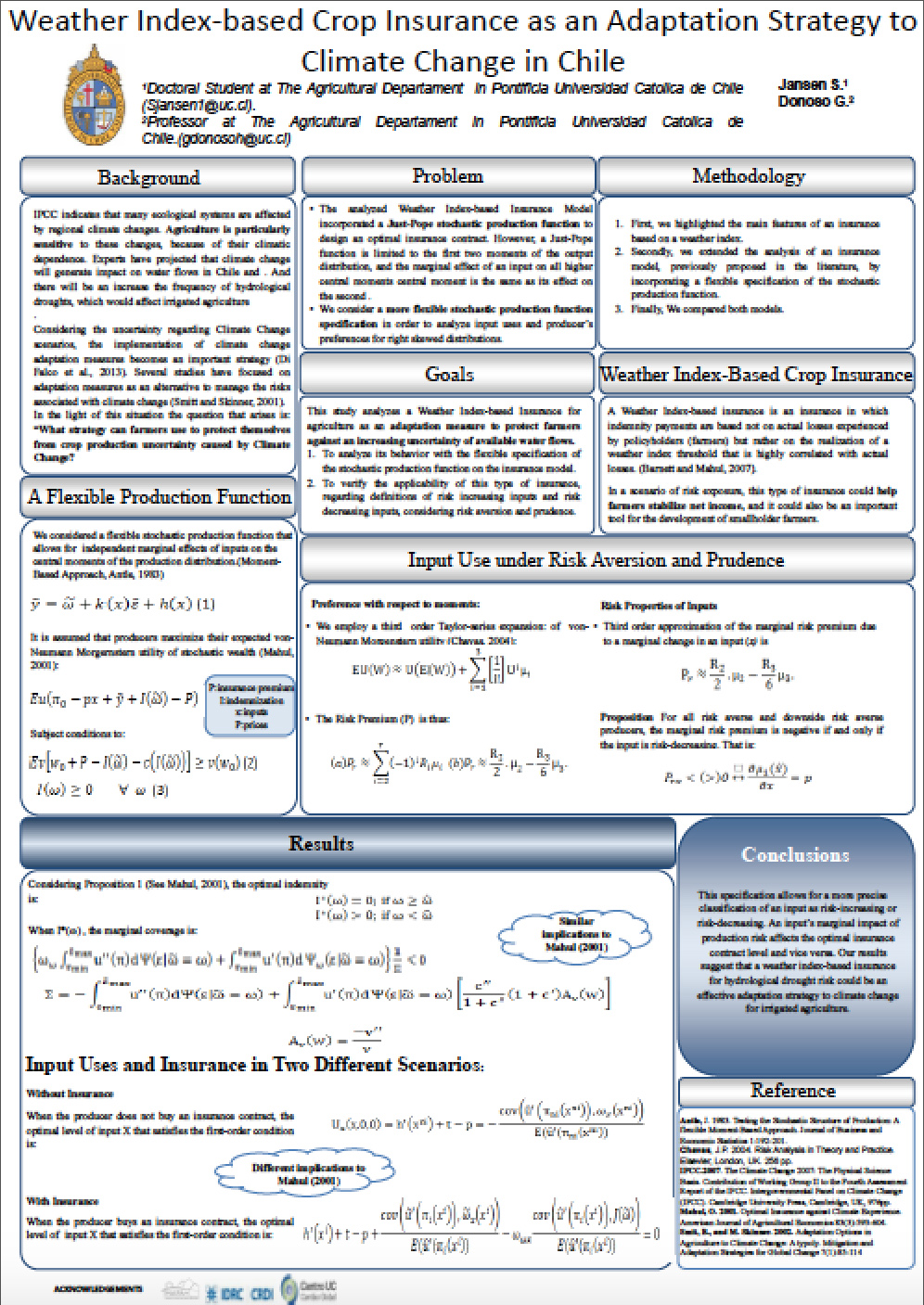 “Weather index-based crop insurance as an adaptation strategy to climate change in Chile”
– Sarah Nunes Jansen
 Colombia
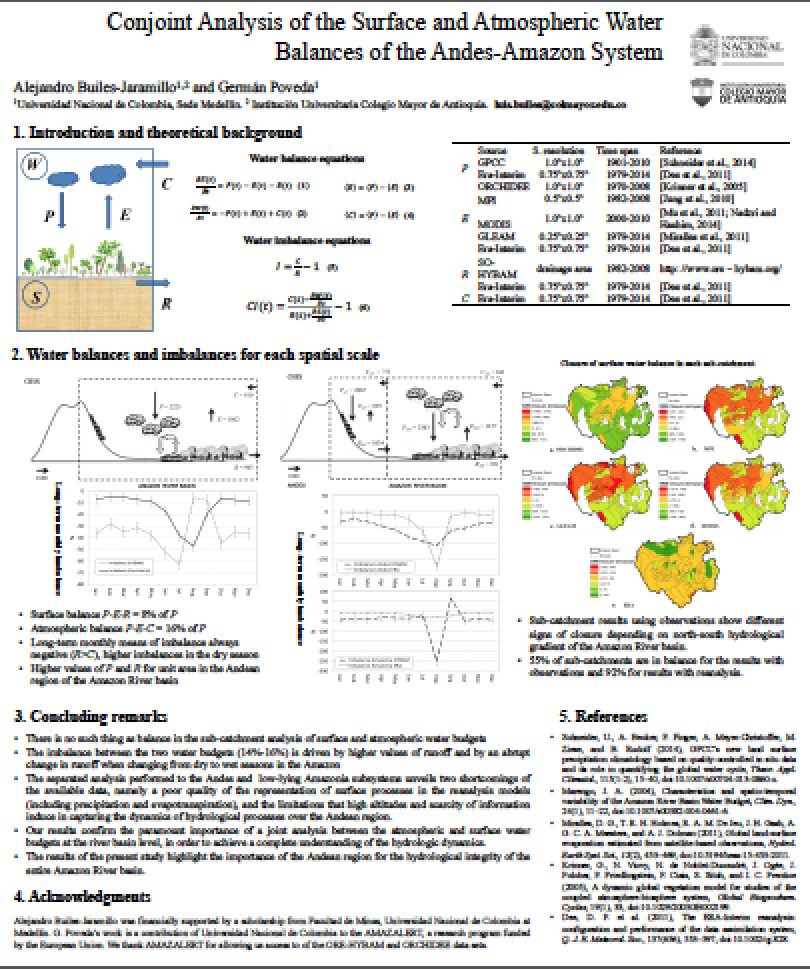
 “Conjoint analysis of the surface and atmospheric water balances of the Andes-Amazon system”
– Luis Alejandro Builes Jaramillo
 “Mathematical model for predicting the generation of methane and carbon dioxide in the Topocoro reservoir”
– Melissa Ruíz Vázquez
 Costa Rica
 “Costa Rica rainfall in future climate change scenarios”
– Rodrigo Alberto Castillo Rodríguez
 Cuba
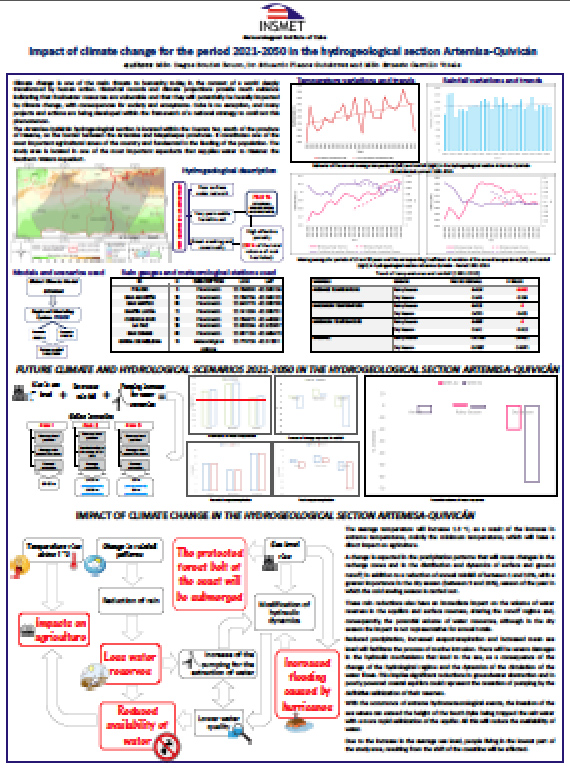
Cuba “Impact of climate change for the period 2021-2050 in the hydrogeological section Artemisa-Quivicán”
– Dagne Boudet Rouco
 “Application of the GFS/NCEP model outputs in agrometeorological prediction”
– Ismabel María Domínguez Hurtado
 EE.UU.
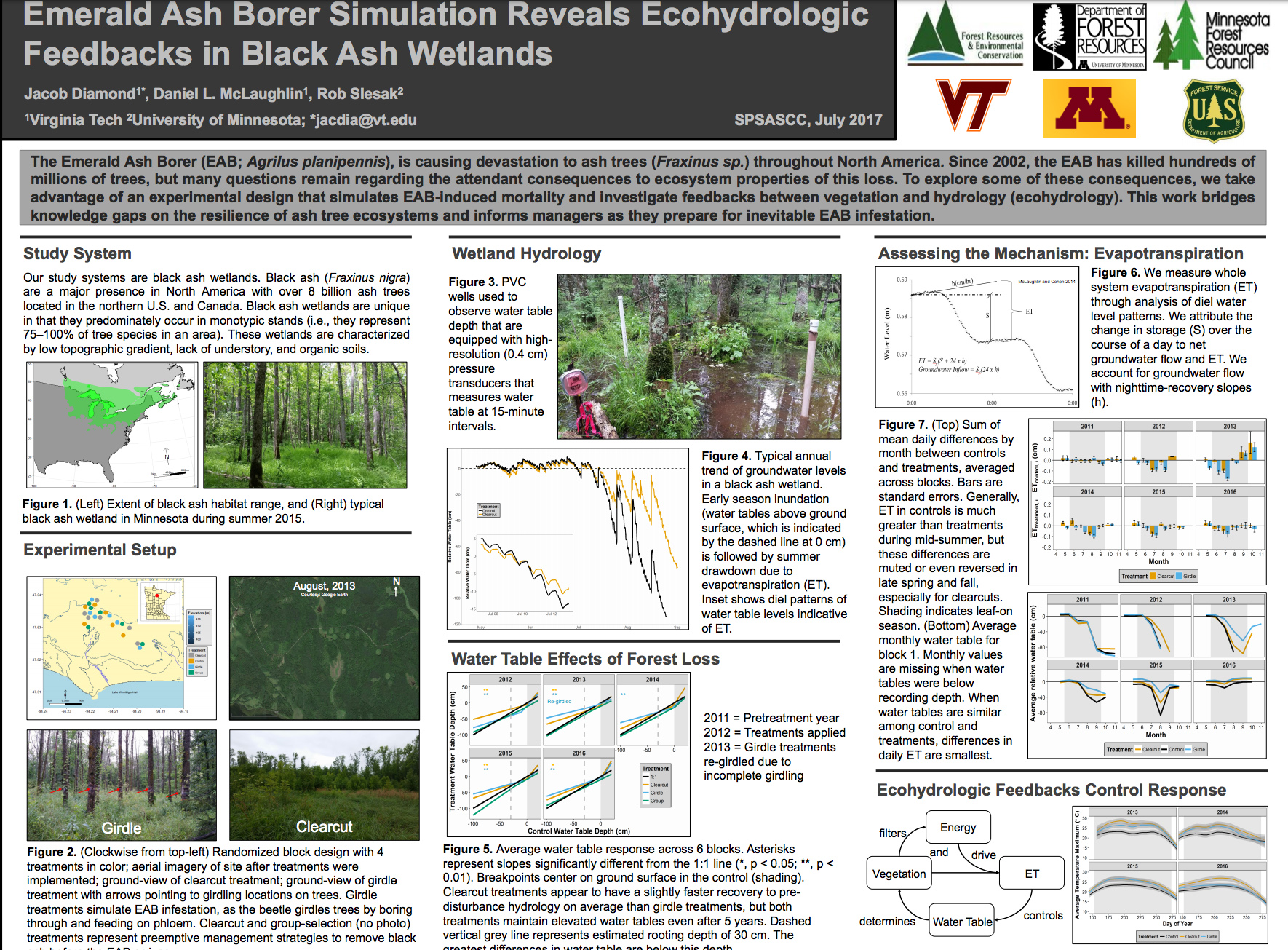
“Emerald ash borer simulation reveals ecohydrologic feedbacks in black ash Wetlands”
– Jacob Sullivan Diamond
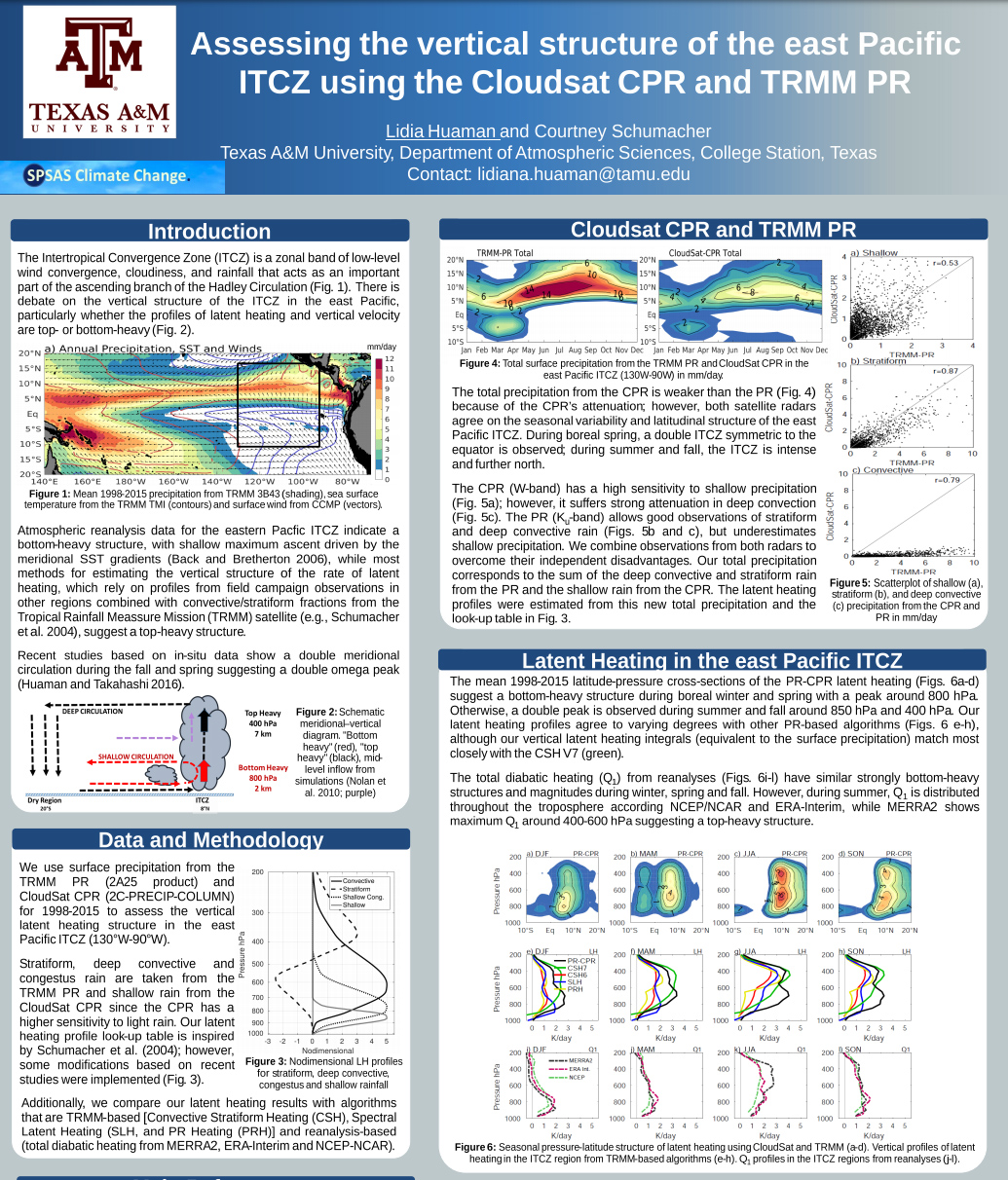 “Assessing the vertical structure of the east Pacific ITCZ using the Cloudsat CPR and TRMM PR”
– Lidia Huaman Chuquihuaccha
 Guatemala
 “Strategic evaluation of the restoration process of the forest ecosystem, Guatemala Central America”
– Fátima Antonethe Castaneda Mena
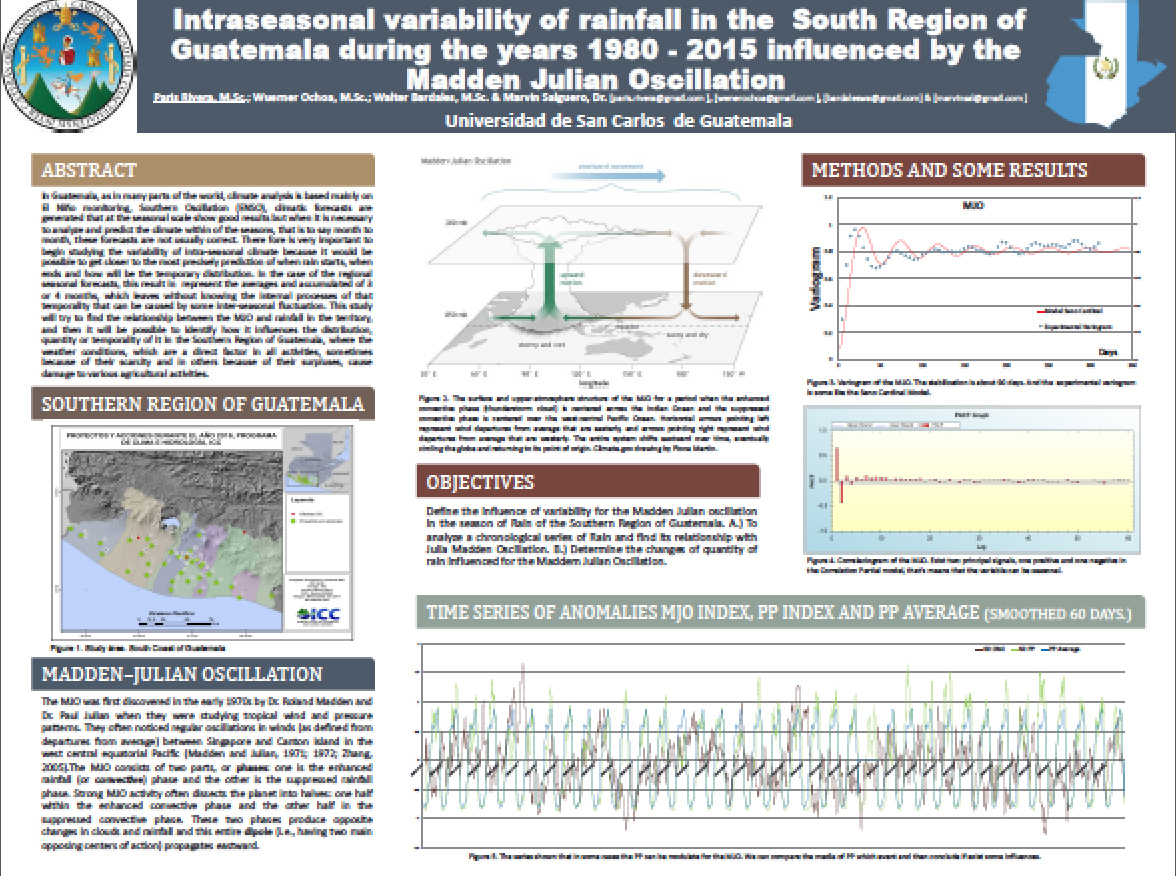 “Intraseasonal variability of rainfall in the South region of Guatemala during the years 1980 – 2015 influenced by the Madden-Julian Oscillation”
– Paris Francisco Rivera Ramos
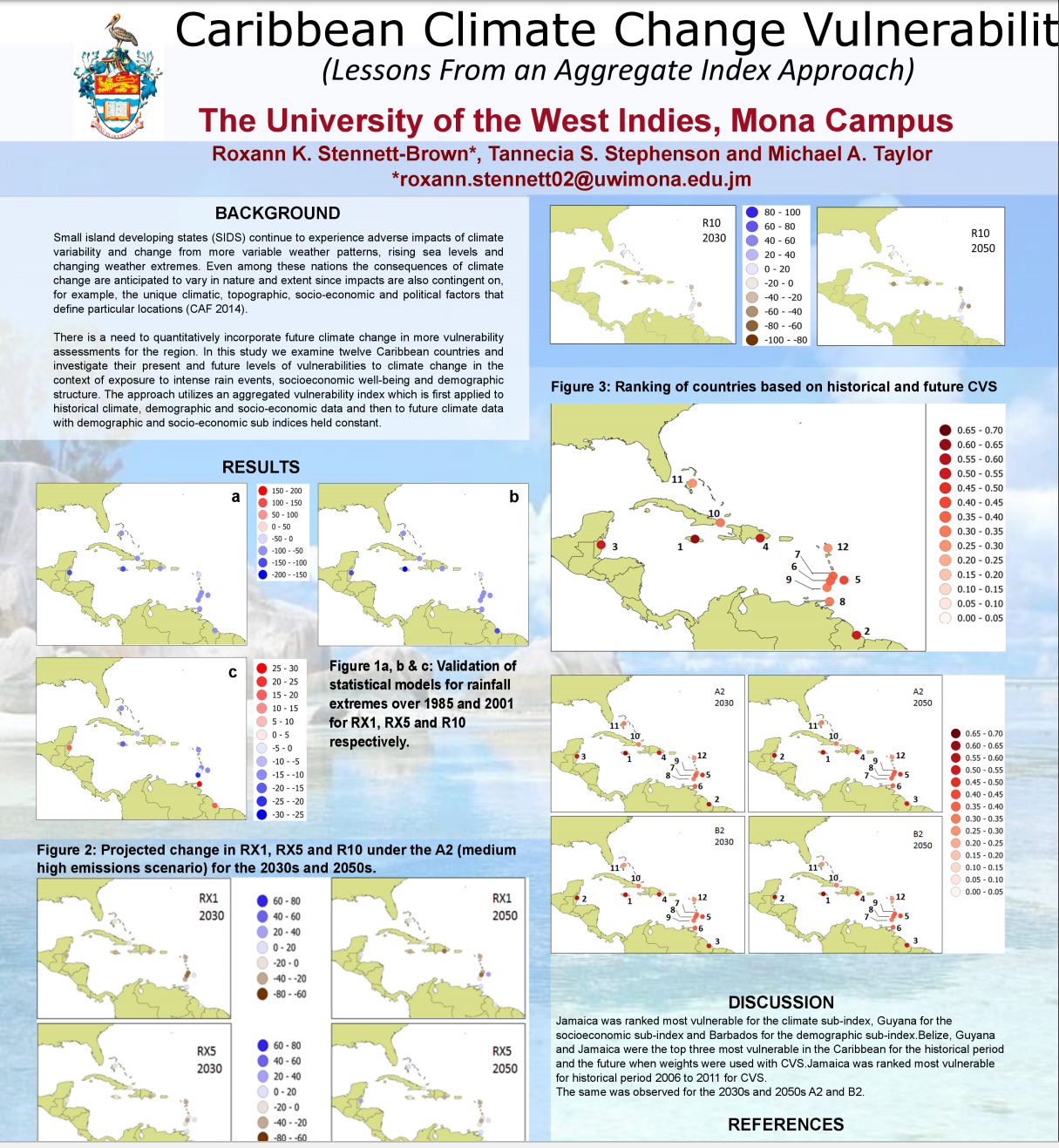 Jamaica
“Caribbean climate change vulnerability (lessons from an aggregate index approach)”
– Roxann Kato-neil Brown
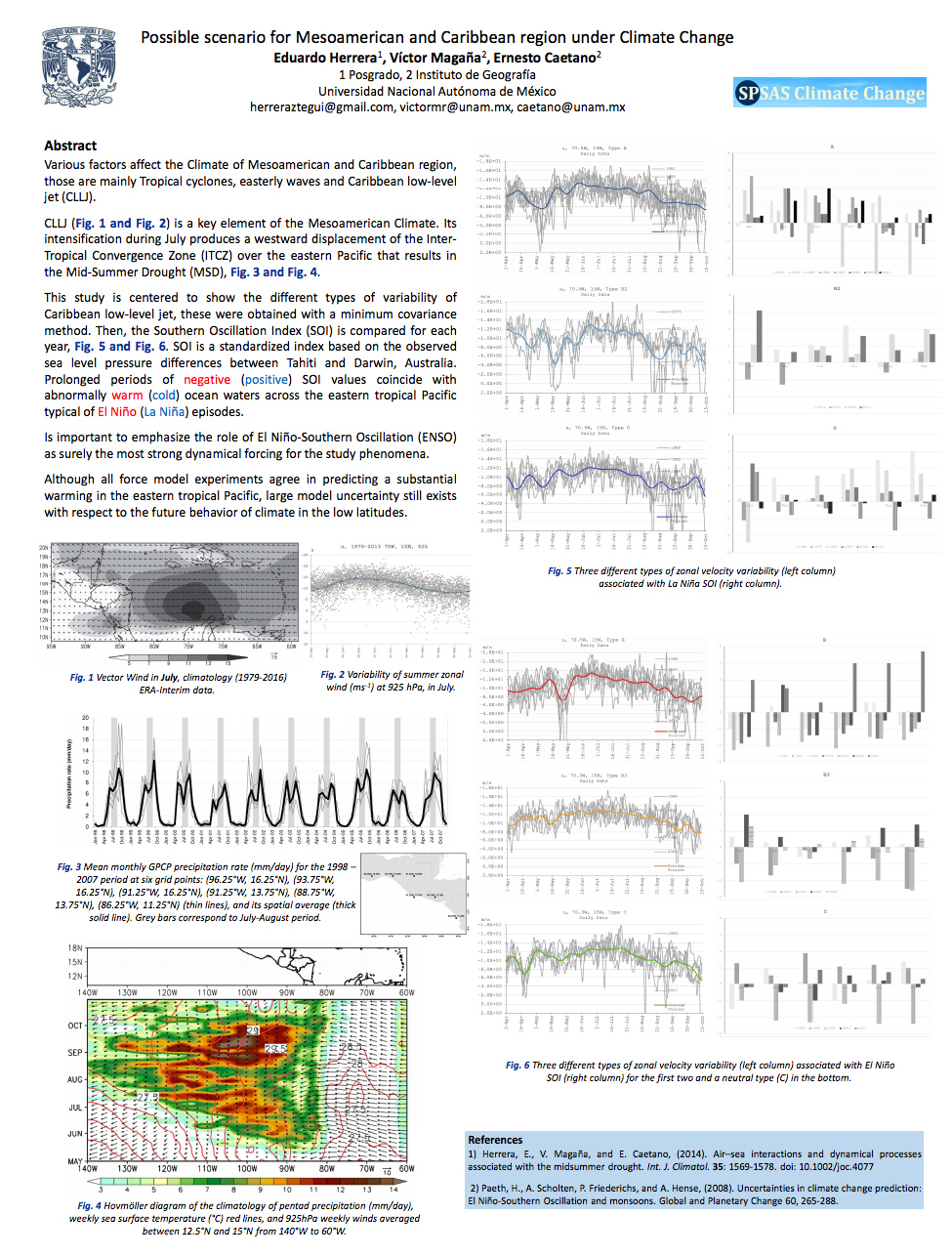 Mexico
“Possible scenario for Mesoamerican and Caribbean region under climate change”
– Luis Eduardo Herrera Aztegui

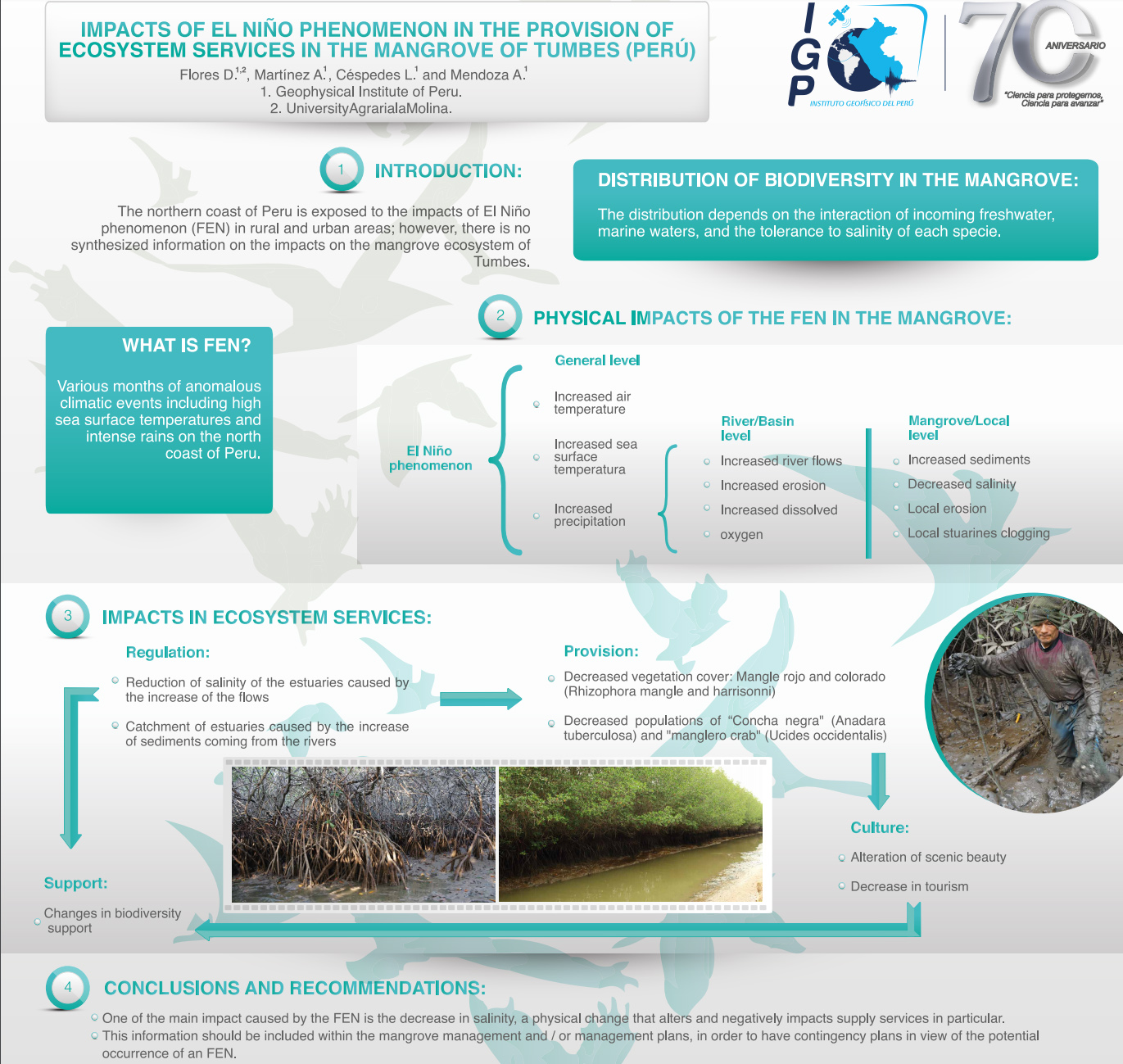 Peru
Peru“Impacts of El Niño phenomenon in the provision of ecosystem services in the Mangrove of Tumbes (Peru)”
– Daniel Hugo Flores Caballero
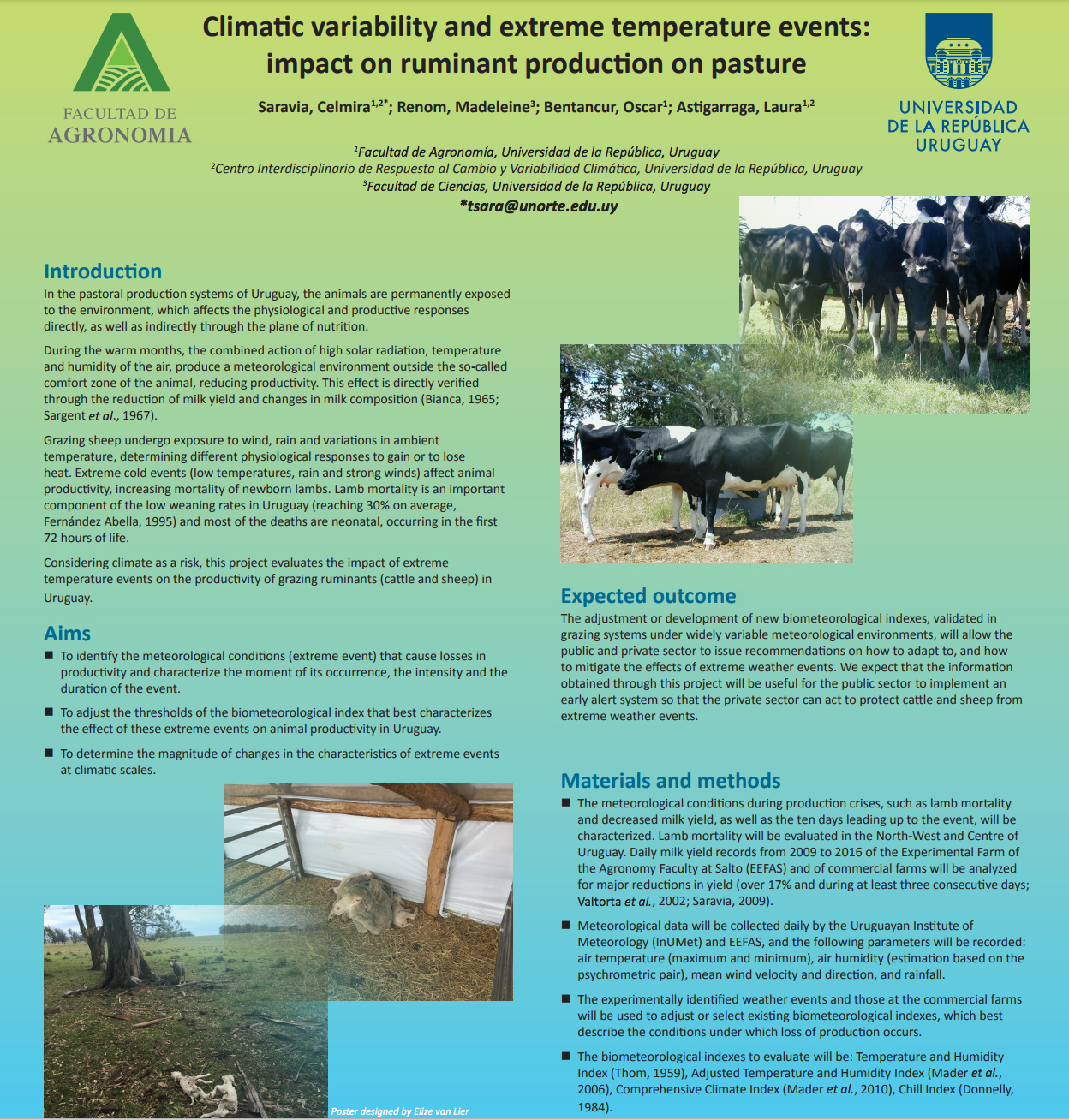 Uruguay
“Climatic variability and extreme temperature events: impact on ruminant production on pasture”
– Celmira Gabriela Saravia Tomasina
 “Energy and economic efficiency in pastoral milk production systems under alternative intensification strategies”
– Eduardo Enrique Llanos García
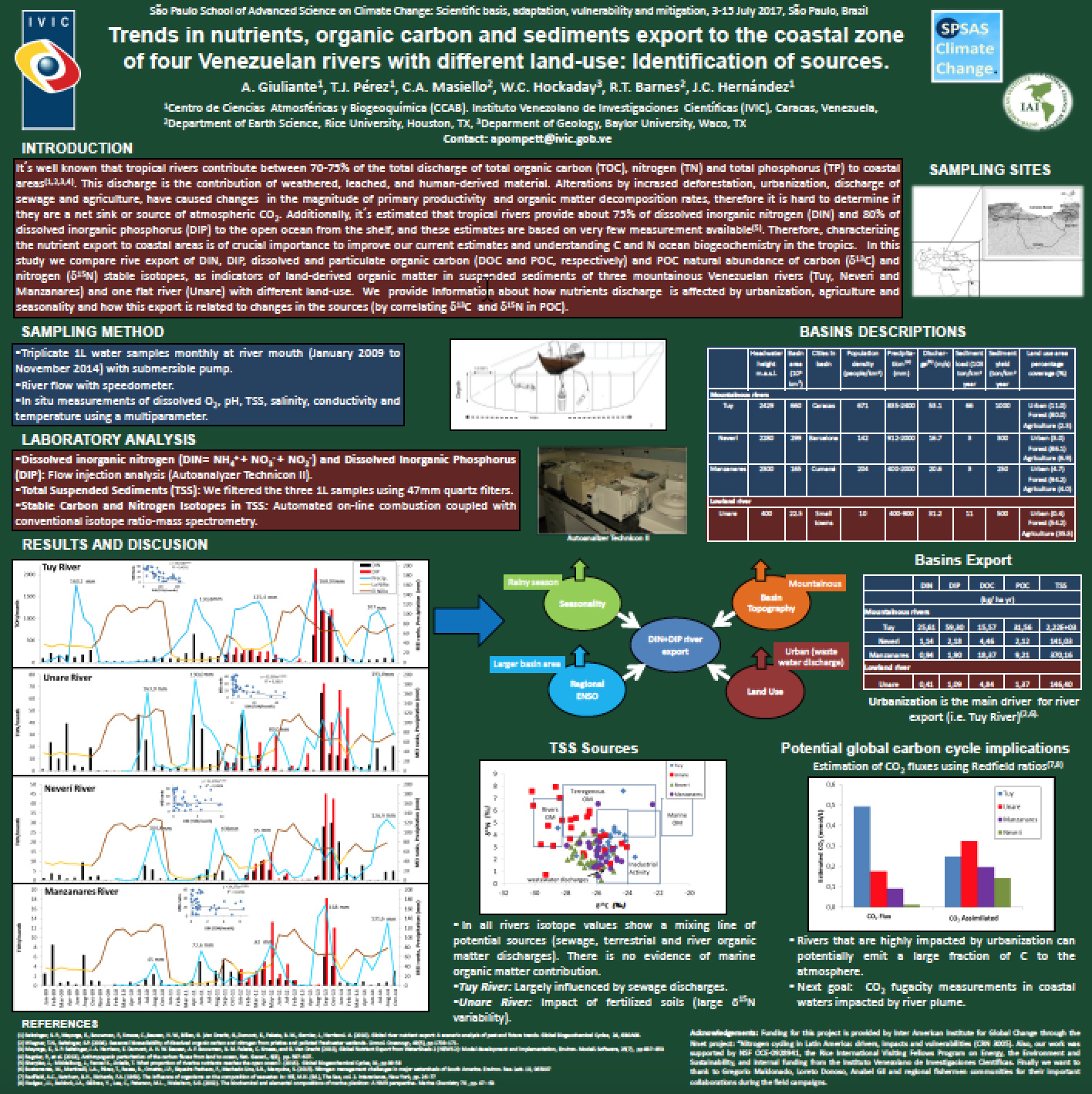 Venezuela
 “Trends in nutrients, organic carbon and sediments export to the coastal zone of four Venezuelan rivers with different land-use: Identification of sources”
– Adriana Giuliante Pompetti
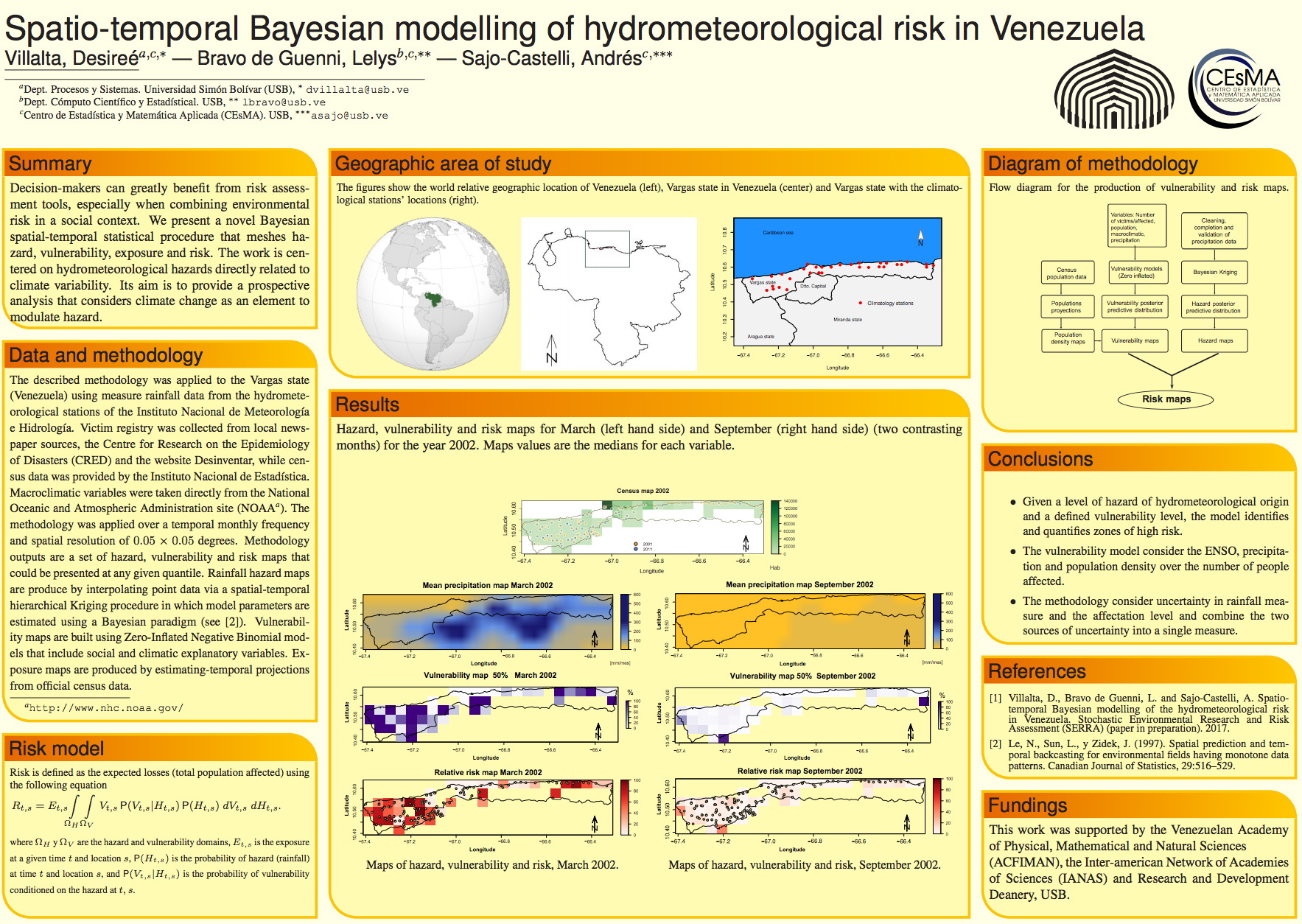 “Spatio-temporal Bayesian modelling of hydrometeorological risk in Venezuela”
– Desiree Eglee Villalta
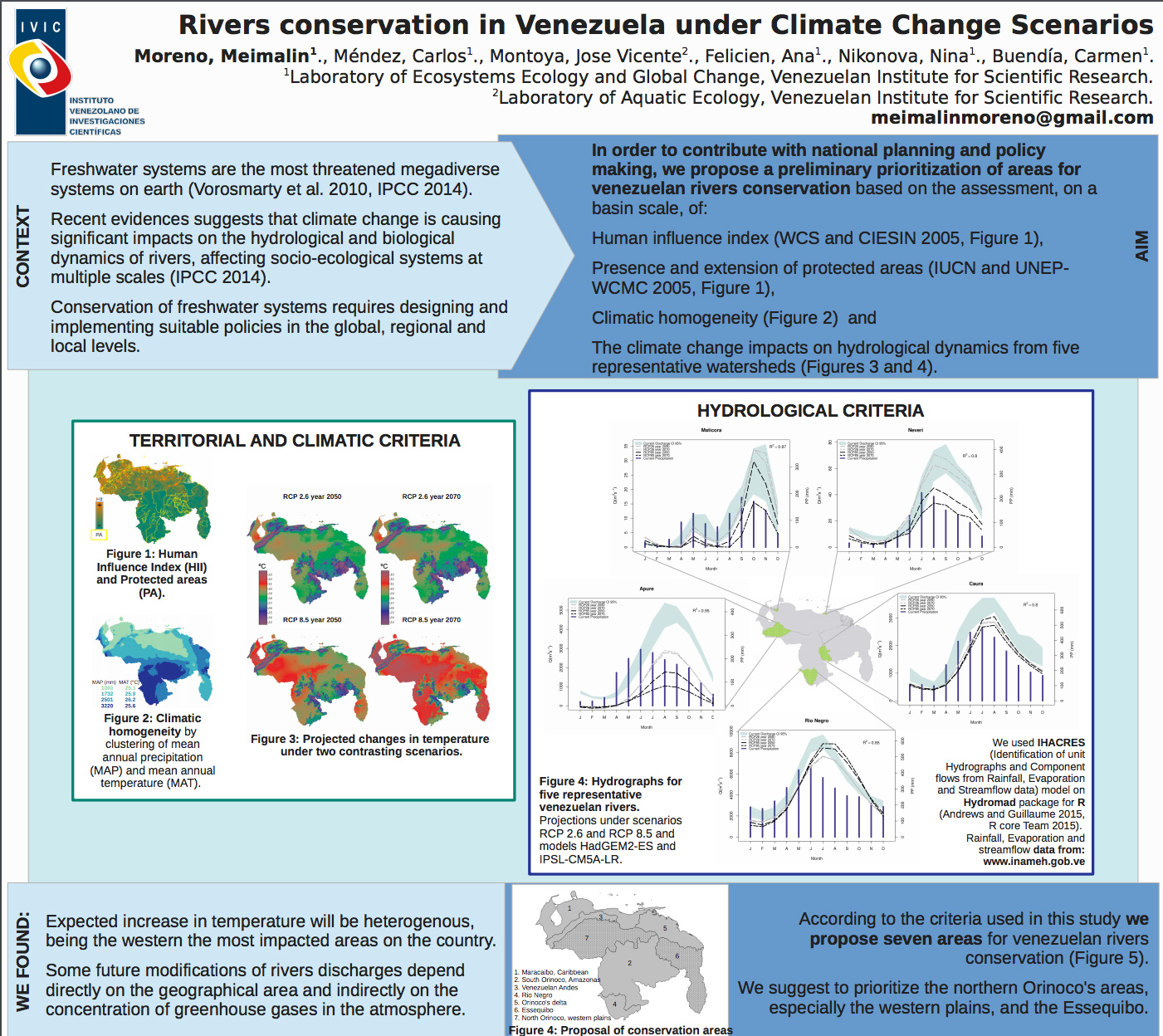 “Rivers conservation in Venezuela under climate change scenarios”
– Meimalin Caribay Moreno Villalobos
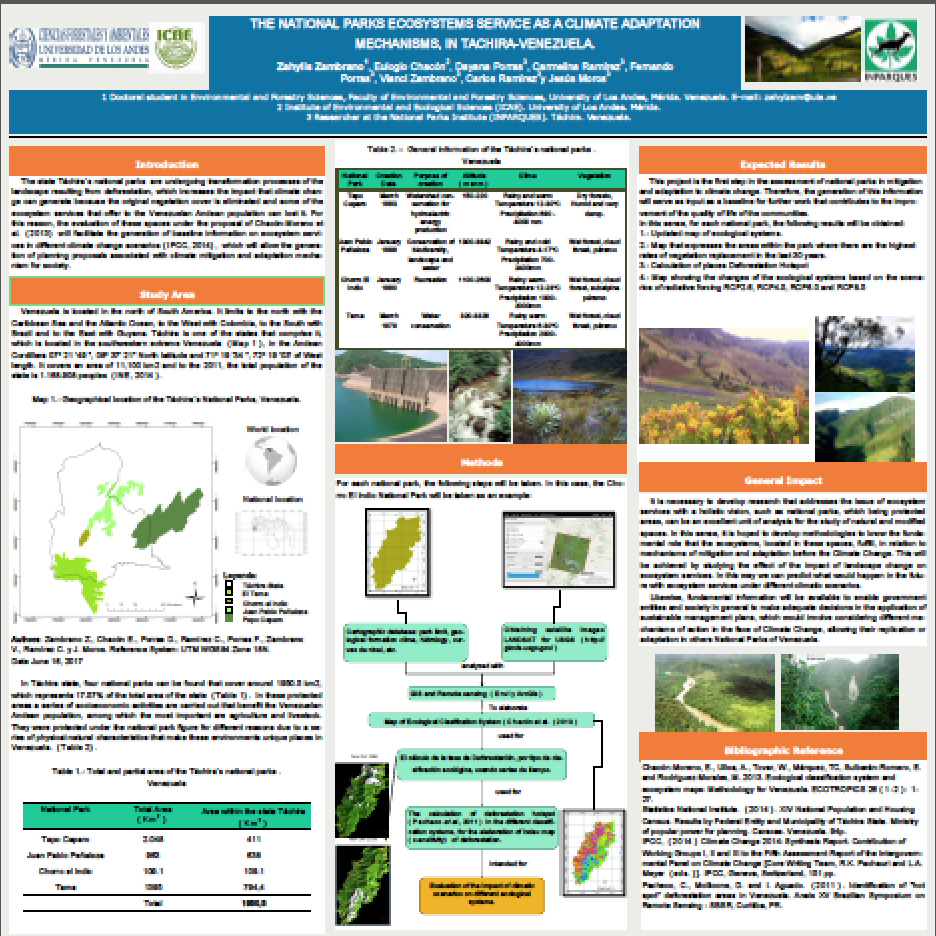
ASIA
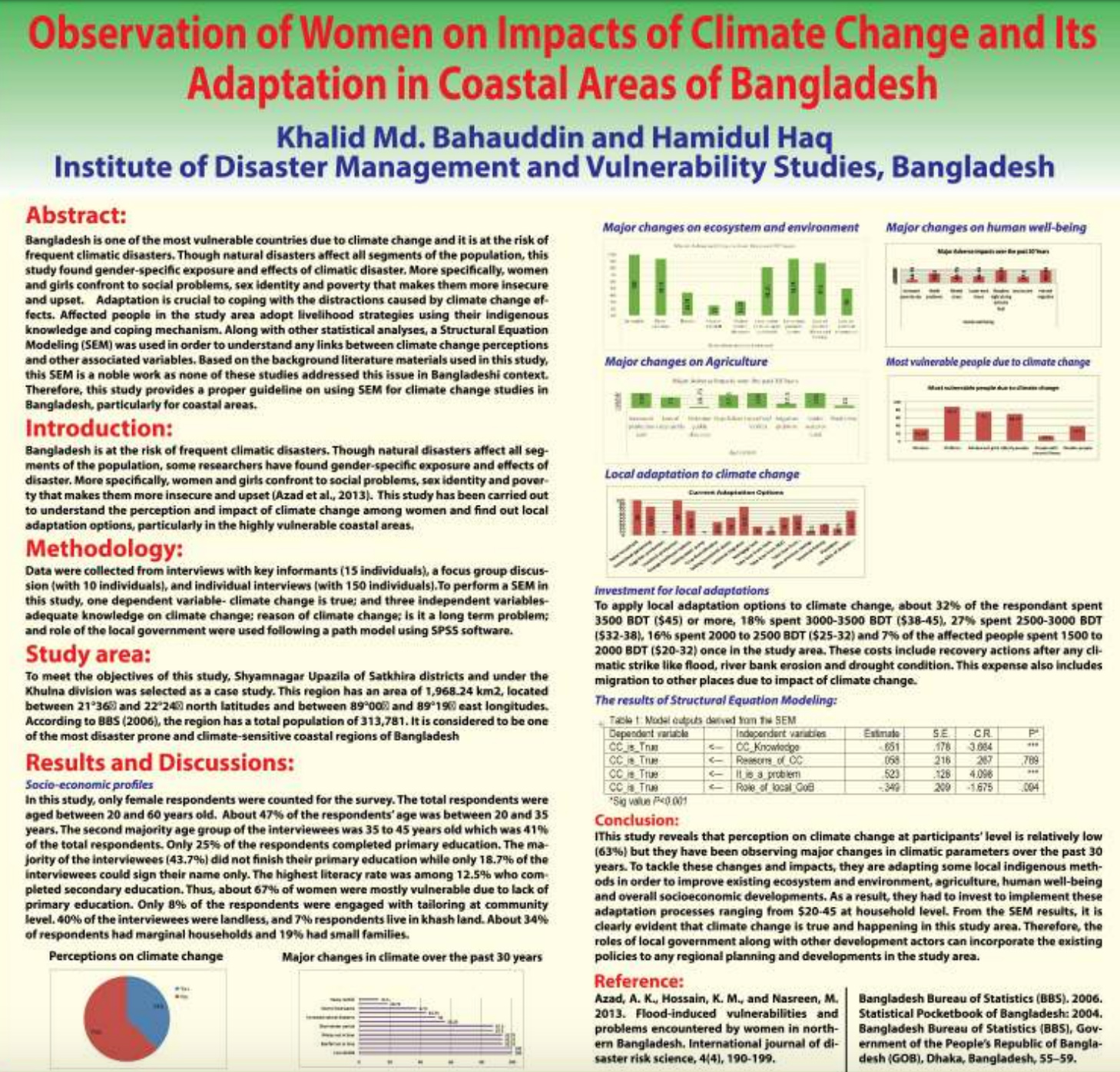 Bangladesh
“Observation of women on impacts of climate change and its adaptation in coastal areas of Bangladesh”
– Khalid Md Bahauddin
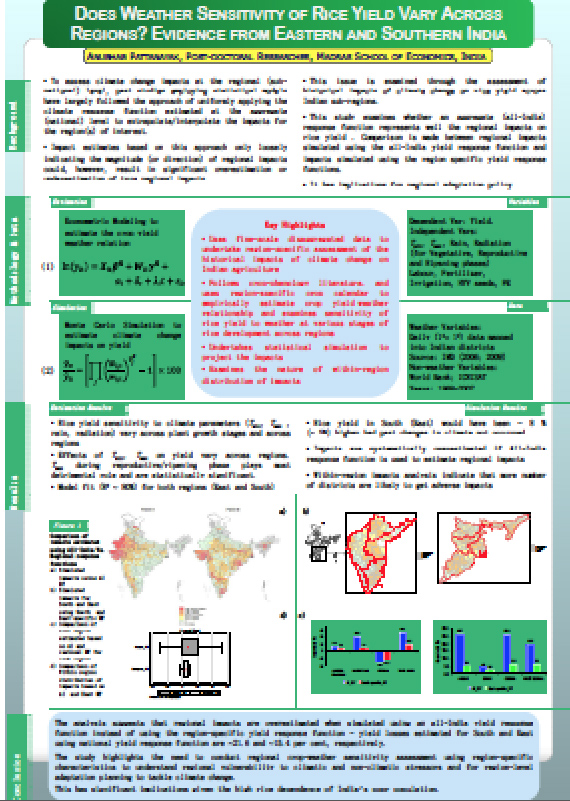 India
India“Does weather sensitivity of rice yield vary across regions? Evidence from eastern and southern India”
– Anubhab Pattanayak
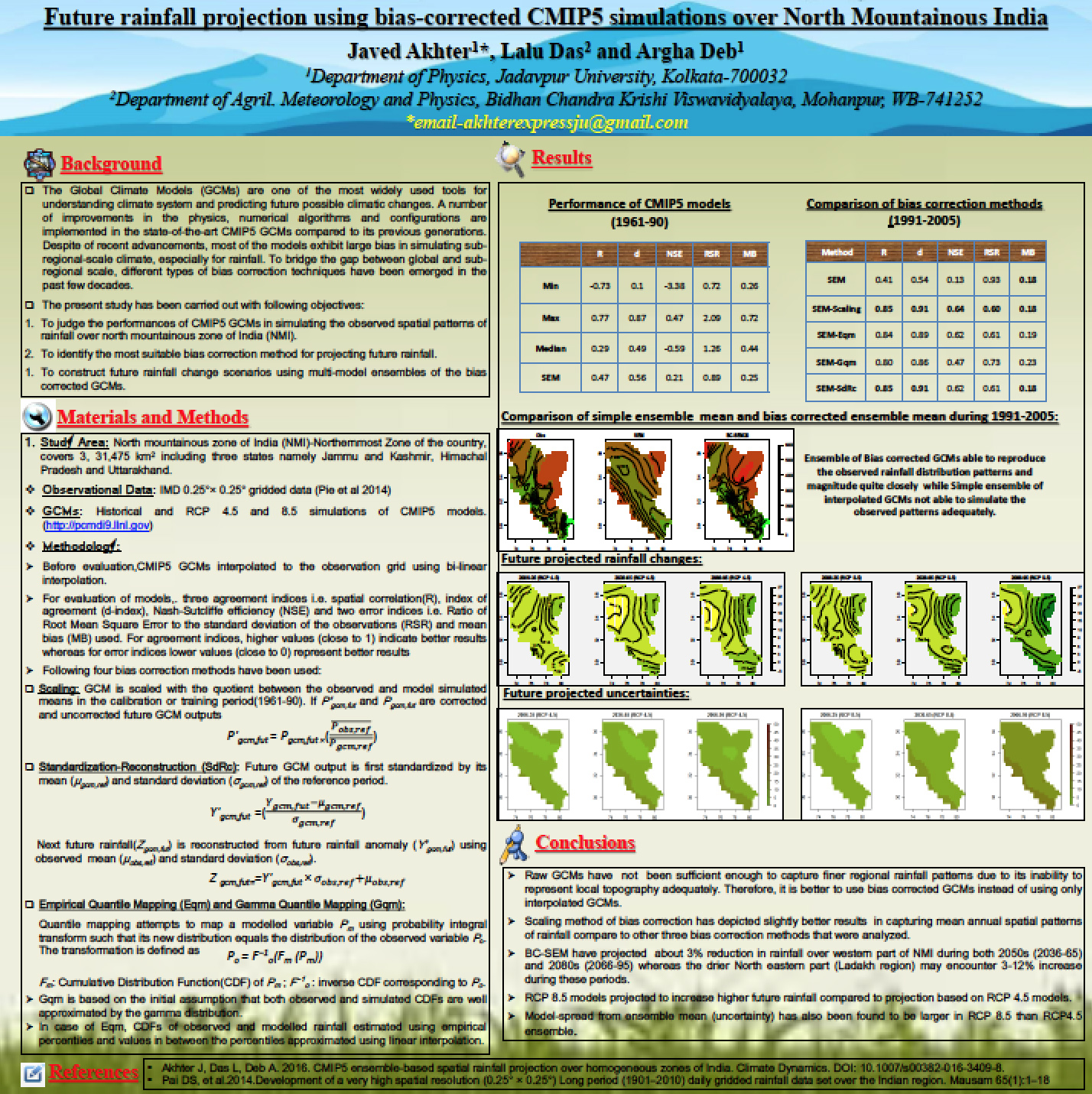
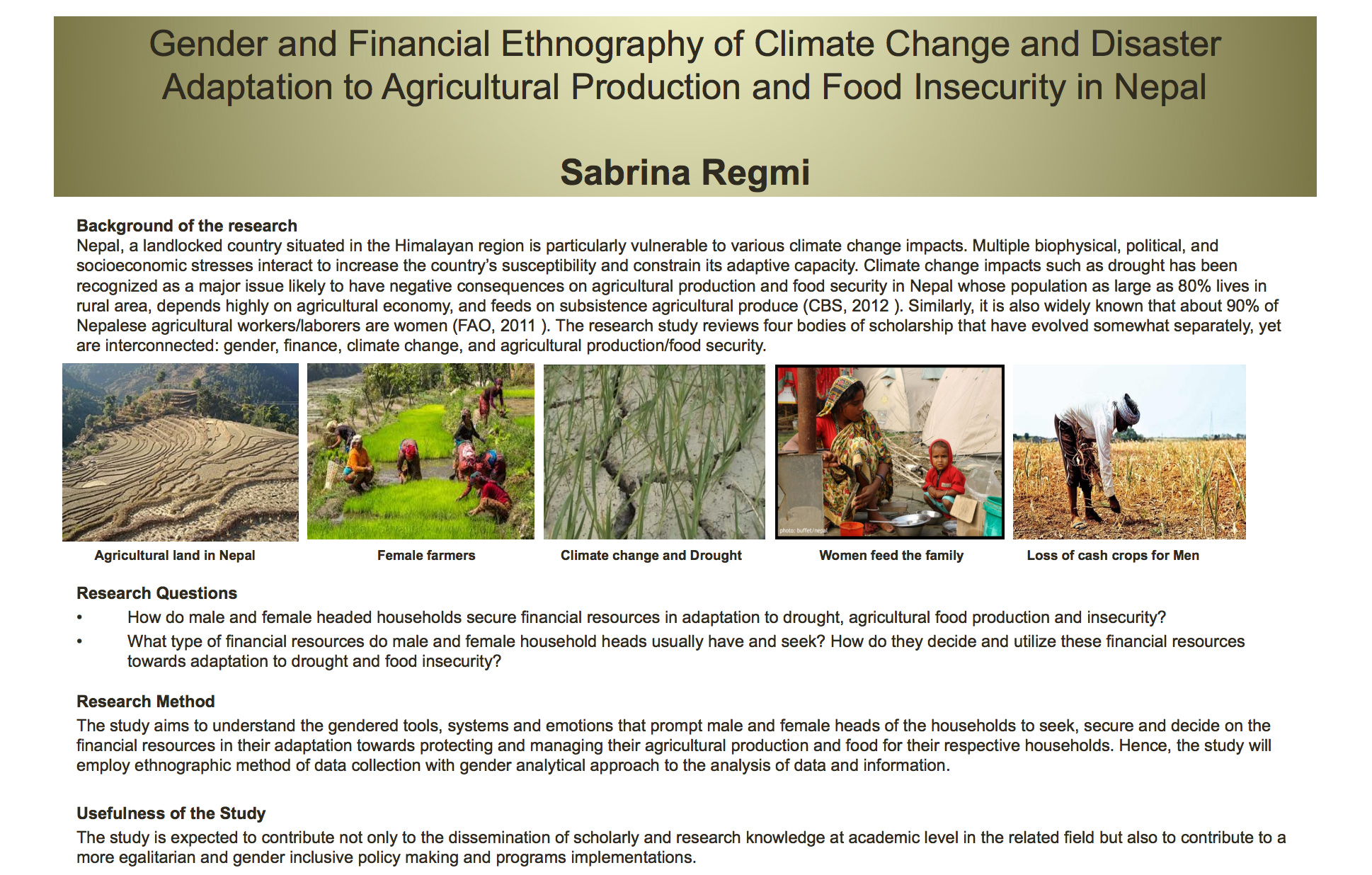
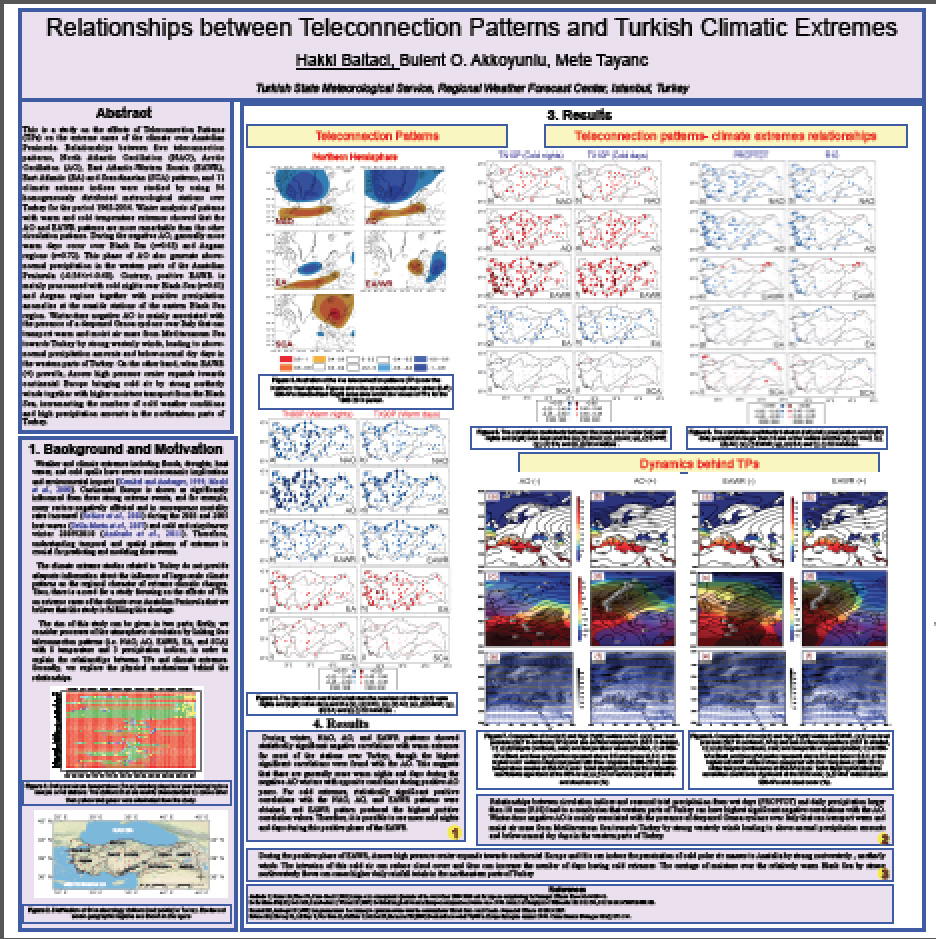 Turkey
“Relationships between teleconnection patterns and Turkish climatic extremes”
– Hakki Baltaci
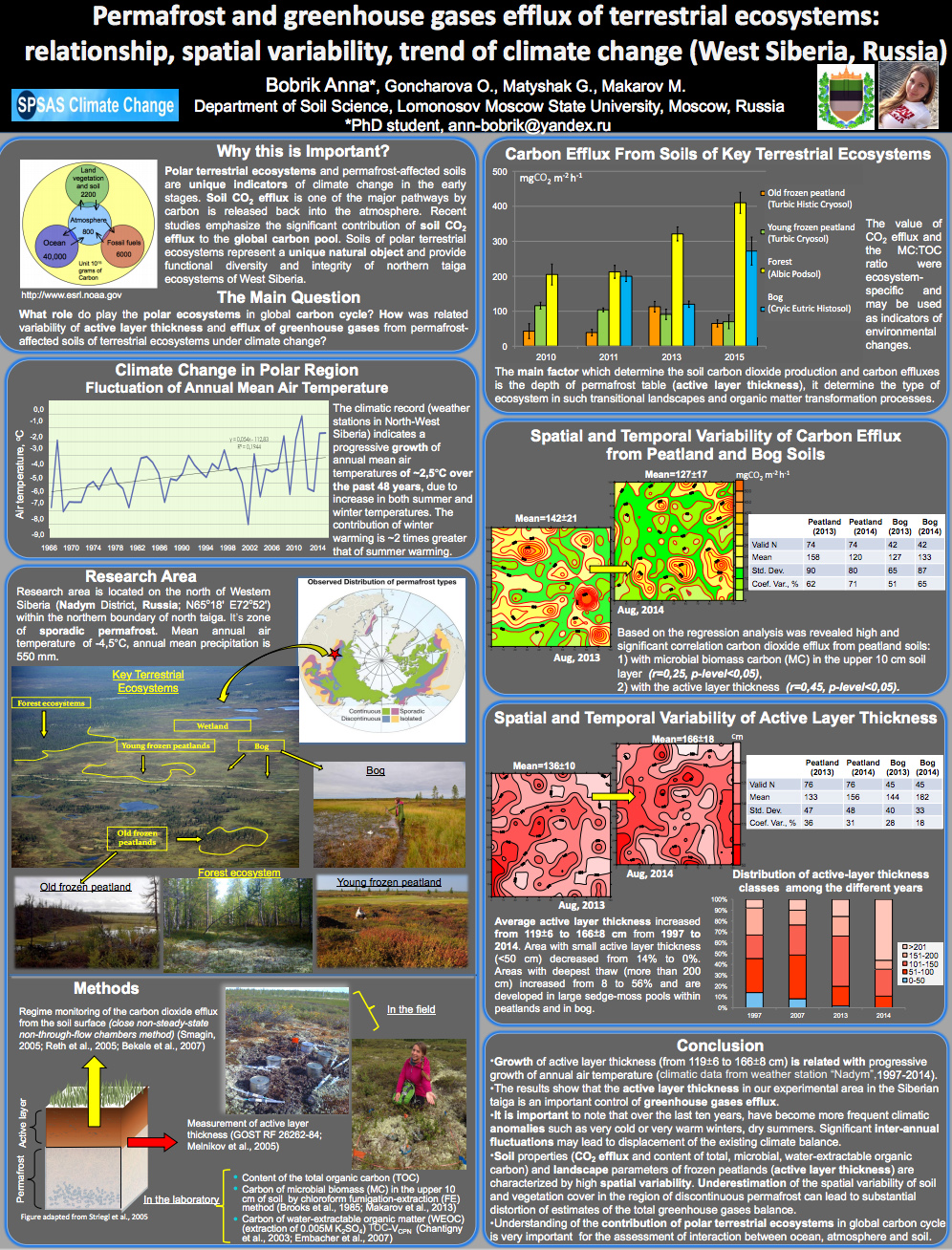
EUROPE

Presentations
Monday, July 3rd
 Tercio Ambrizzi
 Pedro Dias
 Newton La Scala Junior
 José A. Marengo
Tuesday, July 4th
 José A. Marengo
Wednesday, July 5th
 Cristiano M. Chiessi
 Iracema Cavalcanti
Thursday, July 6th
 Iracema Cavalcanti
 Maria de Fátima Andrade
Friday, July 7th
 Gerardo M. E. Perillo
 Gerardo M. E. Perillo
Monday, July 10th
<
 Weber A. N. Amaral
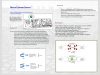 Maria Carmen Lemos
Tuesday, July 11th
 Edwin Castellanos
Thursday, July 13th
 José Maria Paruelo
Friday, July 14th
 Ines Angela Camilloni
Saturday, July 15th
 Holm Tiessen
Program and guidelines
General instructions and guide (logistic) – (PDF)
Complete information: the School, program, speakers, participants, local map (PDF)
The course was organized around five major themes:
(1) Observations and future projections (scientific basis);
(2) Impacts;
(3) Vulnerability;
(4) Adaptation and mitigation; and
(5) the Paris Agreement: Are 1.5 degrees a reasonable limit?
The 2-week course included theoretical classes, work in groups, a poster session, science-policy discussions, and visits to key institutions in the State of São Paulo conducting climate change research with policy applications.
Specific topics:
– Introduction: indicators of climate change and treatment of uncertainties;
– Observations: atmosphere, ocean and surface;
– Detection and attribution of climate change: from global to regional;
– Information from paleoclimate archives;
– Evaluation of climate models & tendencies;
– Impacts of modes of climate variability: monsoon, ENSO, annular modes;
– Urban areas in the global change context;
– Natural and managed resources and systems, and their uses (freshwater resources; coastal systems and low-lying areas; food security and food production systems);
– Human health, well-being, and security (human health: impacts, adaptation, and co-benefits; human security; livelihoods and poverty);
– Adaptation (adaptation needs and options; adaptation planning and implementation; adaptation opportunities, constraints, and limits; economics of adaptation);
– Agriculture, forests and other land uses;
– Consequences on ecosystem functioning and ecosystem services provision;
– Drivers, trends, and mitigation;
– Energy systems;
– The Paris Agreement: Are 1.5°C a reasonable limit? – a debate.
Participants
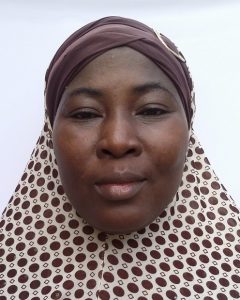 Adefunke Fadilat Olawunmi Ayinde
University of Cape Town (UCT) – Nigeria
 Adriana Ferrer Martins
Faculdade de Jaguariúna – Brazil
 Adriana Giuliante Pompetti
Venezuelan Institute for Scientific Research – Venezuela
 Alex Zizinga
Makerere University – Uganda
 Alexandre do Nascimento Souza
Instituto de Energia e Ambiente da Universidade de São Paulo (IEE/USP) – Brazil
 Allan Sandes de Oliveira
Universidade Federal Fluminense (UFF) – Brazil
 Álvaro Javier Ávila Díaz
Universidade Federal de Viçosa (UFV) – Brazil
 Amanda Gerotto
Universidade Federal do Paraná (UFPR) – Brazil
 Amanda Rehbein
Instituto de Astronomia, Geofísica e Ciências Atmosféricas da Universidade de São Paulo (IAG/USP) – Brazil
 André Araújo Bürger
Instituto de Física da Universidade de São Paulo (IF/USP) – Brazil
 Andrea Soledad Enriquez
Instituto Nacional de Tecnología Agropecuaria – Consejo Nacional de Investigaciones Científicas y Técnicas (INTA – CONICET) – Argentina
 Anna Bobrik
Department of Soil Science, Lomonosov Moscow State University – Russia
 Anthony Andre Victor Schrapffer
Centro de Investigaciones del Mar y la Atmosfera, Universidad de Buenos Aires (CNRS – CONICET – UBA) – Argentina
 Anubhab Pattanayak
Madras School of Economics – India
 Befikadu Esayas Amphune
Addis Ababa University – Ethiopia
 Bruno Santos de Souza
Faculdade de Economia, Administração e Contabilidade da Universidade de São Paulo (FEA/USP) – Brazil
 Carlos Eduardo Menezes da Silva
Instituto Federal de Pernambuco (IFPE) / Universidade de Brasília (UnB) – Brazil
 Carolina Gomes da Rocha
Universidade Estadual Paulista (UNESP), Instituto de Química, Campus Araraquara – Brazil
 Cauê Dias Carrilho
Instituto de Energia e Ambiente da Universidade de São Paulo (IEE/USP) – Brazil
 Celmira Gabriela Saravia Tomasina
Universidad de la República – Uruguay
 Cíntia Alvim Lage
Universidade de Brasília (UnB) – Brazil
 Claudio Roberto Anholetto Junior
Universidade de São Paulo (IEE/USP) / Instituto Mamirauá – Brazil
 Dagne Boudet Rouco
Instituto de Meteorología (INSMET) – Cuba
 Daniel Hugo Flores Caballero
Instituto Geofísico del Perú – Peru
 Danielle Almeida de Carvalho
Universidade Estadual Paulista (UNESP) – Brazil
 Débora Souza Alvim
Instituto Nacional de Pesquisas Espaciais – Centro de Previsão de Tempo e Estudos Climáticos (INPE – CPTEC) – Brazil
 Decker Guzmán Zabalaga
Instituto de Astronomia, Geofísica e Ciências Atmosféricas da Universidade de São Paulo (IAG/USP) – Brazil
 Denis Dorighello Tomás
Instituto de Geociências e Ciências Exatas da Universidade Estadual Paulista (UNESP) – Brazil
 Desiree Eglee Villalta
Universidad Simón Bolívar – Venezuela
 Diego Alejandro Guzmán Arias
Escola de Engenharia de São Carlos da Universidade de São Paulo (EESC/USP) – Brazil
 Doris Jimena Roncancio Benitez
Faculdade de Saúde Pública da Universidade de São Paulo (FSP/USP) – Brazil
 Eduardo Enrique Llanos García
Universidad de la República (UDELAR) – Uruguay
 Ewerton Bruno Brito de Araújo
Universidade Federal do Rio Grande do Norte (UFRN) – Brazil
 Ezequiel Martín Arrieta
Instituto Multidisciplinario de Biología Vegetal, Consejo Nacional de Investigaciones Científicas y Técnicas (CONICET) – Argentina
 Fabiana Rita do Couto Santos
Universidade Federal de Viçosa (UFV) – Brazil
 Fabiani Denise Bender
Escola Superior de Agricultura Luiz de Queiroz da Universidade de São Paulo (ESALQ/USP) – Brazil
 Farirai Rusere
Climate System Analysis Group (CSAG), University of Cape Town (UCT) – South Africa
 Fátima Antonethe Castaneda Mena
Instituto de Desarrollo Sostenible, Universidad Galileo – Guatemala
 Fernando Gonçalves Morais
Instituto de Física da Universidade de São Paulo (IF/USP) – Brazil
 Florencia Rositano
Faculdade de Agronomía, Universidad de Buenos Aires (UBA) – Argentina
 Gabriel Martins Palma Perez
Instituto de Astronomia, Geofísica e Ciências Atmosféricas da Universidade de São Paulo (IAG/USP) – Brazil
 Gabriela Chiquito Gesualdo
Universidade Federal de Mato Grosso do Sul (UFMS) – Brazil
 Gabrielle Rabelo Quadra
Universidade Federal de Juiz de Fora (UFJF) – Brazil
 Gustavo Adolfo Agudelo Cantero
Instituto de Biociências da Universidade de São Paulo (IB/USP) – Brazil
 Hakki Baltaci
Turkish State Meteorological Service – Turkey
 Haytham Mohamed Salem Mohamed
Desert Research Center (DRC) – Egypt
 Heloisa Ramos Pereira
Instituto Agronômico (IAC/APTA/SAA-SP) – Brazil
 Isabel Marques da Silva
Faculdade de Ciencias Naturais, Universidade Lúrio (FCN, UniLúrio) – Mozambique
 Ismabel María Domínguez Hurtado
Meteorological Center of Villa Clara, Institute of Meteorology – Cuba
 Jacob Sullivan Diamond
Virginia Tech – USA
 Javed Akhter
Jadavpur University – India
 Jenny Sofía Gómez Guerrero
Universidad de Concepción (UdeC) – Chile
 João Francisco Ferreira Sobreiro
Universidade Estadual Paulista (UNESP) – Brazil
 Jonathan Eligio Barichivich Henriquez
Universidad Austral de Chile (UACh) – Chile
 José Reinaldo Paranaíba Vilela Alves Teixeira
Universidade Federal de Juiz de Fora (UFJF) – Brazil
 José Vitor Pereira Miguel
Instituto de Energia e Ambiente da Universidade de São Paulo (IEE/USP) – Brazil
 Juan Carlos Farias Pardo
Universidade Estadual Paulista (UNESP) – Brazil
 Juan Marcos Calle Fernandez
Laboratory for Atmospheric Physics, Universidad Mayor de San Andres (LFA, UMSA) – Bolivia
 Katharyn Helen Duffy
Northern Arizona University (NAU) – USA
 Khalid Md Bahauddin
Institute of Disaster Management and Vulnerability Studies – Bangladesh
 Larissa de Souza Noel Simas
Escola Superior de Agricultura Luiz de Queiroz da Universidade de São Paulo (ESALQ/USP) – Brazil
 Leonardo de Sousa Miranda
Instituto Tecnológico Vale (ITV) – Brazil
 Lidia Huaman Chuquihuaccha
Texas A&M University – USA
 Lidong Zou
Department of Earth and Atmospheric Sciences, University of Alberta – Canada
 Lívia Malacarne Pinheiro Rosalem
Instituto de Energia e Ambiente da Universidade de São Paulo (IEE/USP) – Brazil
 Luara Tourinho de Oliveira Pereira
Universidade Federal do Rio de Janeiro (UFRJ) – Brazil
 Lucas Roecker Lazarin
Universidade Federal do Rio Grande do Sul (UFRGS) – Brazil
 Lucas Rosse Caldas
Universidade Federal do Rio de Janeiro (UFRJ), COPPE – Brazil
 Luciana Cristina de Sousa Vieira
Instituto Nacional de Pesquisas da Amazônia (INPA) – Brazil
 Luis Alejandro Builes Jaramillo
Universidad Nacional de Colombia, Sede Medellín – Colombia
 Luis Eduardo Herrera Aztegui
Universidad Nacional Autonoma de Mexico (UNAM) – Mexico
 Malan Ketcha Armand Kablan
Université Félix Houphouët-Boigny – Côte d’Ivoire
 María Agostina Bracalenti
Center of Studies on Variability and Climate Change (CEVARCAM) of Faculty of Engineering and Hydric Sciences, Litoral National University – Argentina
 Maria Cristina Oliveira Souza
Departamento de Política Científica e Tecnológica, Instituto de Geociências da Universidade Estadual de Campinas (UNICAMP) – Brazil
 Mariana Delgado Barbieri
Universidade Estadual de Campinas (UNICAMP) – Brazil
 Mário Sérgio Muniz Tagliari
Universidade Federal de Santa Catarina (UFSC) – Brazil
 Maristela Calvente Morais
Centro de Energia Nuclear na Agricultura da Universidade de São Paulo (CENA/USP) – Brazil
 Mary Omolara Oloyede
Covenant University – Nigeria
 Meimalin Caribay Moreno Villalobos
Instituto Venezolano de Investigaciones Cientificas (IVIC) – Venezuela
 Melissa Ruíz Vázquez
University of Antioqua – Colombia
 Michelle Simões Reboita
Universidade Federal de Itajubá (UNIFEI) – Brazil
 Minella Alves Martins
Instituto Nacional de Pesquisas Espaciais (INPE) – Brazil
 Mohamed Farig Saad Ragab
Water Management Research Institute – Egypt
 Mônica de Andrade
Universidade de Franca (UNIFRAN) – Brazil
 Nádia Costa Pontes
Instituto de Energia e Ambiente da Universidade de São Paulo (IEE/USP) – Brazil
 Nathália Cristina Costa do Nascimento
Instituto Nacional de Pesquisas Espaciais (INPE) – Brazil
 Nathália Duarte Braz Vieira
Universidade Estadual de Campinas (UNICAMP) – Brazil
 Paola de Figueiredo Bongiovani
Escola Superior de Agricultura Luiz de Queiroz da Universidade de São Paulo (ESALQ/USP) – Brazil
 Paola Gimenes Bueno
Instituto de Astronomia, Geofísica e Ciências Atmosféricas da Universidade de São Paulo (IAG/USP) – Brazil
 Paris Francisco Rivera Ramos
Universidad de San Carlos de Guatemala – Guatemala
 Paula Galbiatti Silveira
Universidade Federal de Santa Catarina (UFSC) – Brazil
 Pieter de Jong
Universidade Federal da Bahia (UFBA) – Brazil
 Portia Adade Williams
University of Cape Town (UCT) – South Africa
 Rachel Scrivani da Silva
Faculdade de Engenharia Agrícola da Universidade Estadual de Campinas (UNICAMP) – Brazil
 Rafael Gonçalves Santos
Universidade de Lisboa (ULISBOA) – Portugal
 Rafael Rodrigues da Silva
Universidade Federal de Pernambuco (UFPE) – Brazil
 Raquel Henriques Melo Santos
Instituto Nacional de Pesquisas Espaciais (INPE) – Brazil
 Rayner Monteiro dos Santos
Instituto Nacional de Pesquisas da Amazônia (INPA) – Brazil
 Rodrigo Alberto Castillo Rodríguez
University of Costa Rica – Costa Rica
 Rodrigo da Costa Portilho Ramos
Instituto de Geosciências da Universidade de São Paulo (IGc/USP) – Brazil
 Rosa Carolina Zamora Aguirre
Instituto Nacional de Pesquisas Espaciais (INPE) – Brazil
 Roxann Kato-neil Brown
The University of the West Indies (UWI) – Jamaica
 Sabrina Regmi
University of Basel – Nepal
 Sara de Jesus Duarte
Escola Superior de Agricultura Luiz de Queiroz (ESALQ/USP) – Brazil
 Sarah Nunes Jansen
Pontificia Universidad Católica de Chile (UC) – Chile
 Sebastián Cesar Diez
Universidad Tecnológica Nacional, Facultad Regional Córdoba – Argentina
 Sergio Alejandro Ibarra Espinosa
Instituto de Astronomia, Geofísica e Ciências Atmosféricas da Universidade de São Paulo (IAG/USP) – Brazil
 Vanesa Cristina Pántano
Departamento de Ciencias de la Atmosfera y los Oceanos, Universidad de Buenos Aires (UBA) – Argentina
 Veronica Marcela Ramirez Ruiz
Instituto de Geosciências da Universidade de São Paulo (IGc/USP) – Brazil
 Victor Ongoma Nanjing
University Of Information Science And Technology – Kenya
 Victor Raul Chavez Mayta
Instituto de Astronomia, Geofísica e Ciências Atmosféricas da Universidade de São Paulo (IAG/USP) – Brazil
 Vinícius de Almeida Vale
Universidade Federal de Juiz de Fora (UFJF) – Brazil
 Vinícius Leonardo Loureiro Morrone
Faculdade de Economia, Administração e Contabilidade da Universidade de São Paulo (FEA/USP) – Brazil
 Walter Hugo Diaz Pinaya
Instituto Nacional de Pesquisas Espaciais (INPE) – Brazil
 Wilian França Costa
Escola Politécnica da Universidade de São Paulo (POLI/USP) – Brazil
 Yanet Díaz Esteban
Universidad Nacional Autónoma de México (UNAM) – Mexico
 Yawovi Séna Koglo
West African Science Service Center on Climate Change and Adapted Land Use (WASCAL) – Togo
 Yunuén Temoltzin Loranca
University of Regina – Canada
 Zahylis Zambrano
Instituto de Ciencias Ambientales y Ecológicas (ICAE), Universidad de Los Andes (ULA) – Venezuela
Speakers
 Christopher Kutarna
Oxford Martin School
United Kingdom
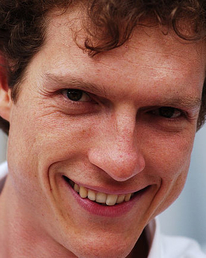 Cristiano Mazur Chiessi
Universidade de São Paulo
Brazil
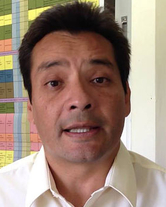 Edwin Castellanos
Universidad del Valle de Guatemala
Guatemala
 Gerardo Perillo
 Universidad Nacional del Sur
Argentina
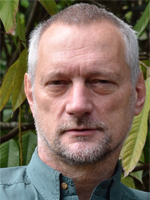 Holm Tiessen
 Inés Camilloni
Universidad de Buenos Aires
Argentina
 Iracema F. A. Cavalcanti
Instituto Nacional de Pesquisas Espaciais
Brazil
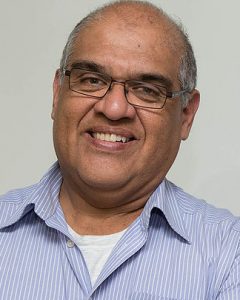 José A. Marengo
Centro Nacional de Monitoramento e Alertas de Desastres Naturais (CEMADEN)
Brazil
 José Paruelo
Universidad de Buenos Aires
Argentina
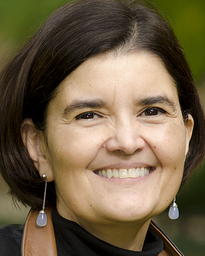 Maria Carmen Lemos
University of Michigan
USA
 Maria de Fatima Andrade
Universidade de São Paulo
Brazil
 Stefan Uhlenbrook
UNESCO
Italy
 Weber Antônio Neves do Amaral
Universidade de São Paulo
Brazil
Suggested readings
Jose Marengo
– The IPCC’s Fifth Assessment Report: What’s in it for Latin America?
– Turn down the heat: climate extremes, regional impacts, and the case for resilience (Potsdam Institute for Climate Impact Research and Climate Analytics, 2013)
– Herring, S. C., M. P. Hoerling, T. C. Peterson, and P. A. Stott, Eds., 2014: Explaining Extreme Events of 2013 from a Climate Perspective. Bull. Amer. Meteor. Soc., 95 (9), S1–S96.
– Herring, S. C., M. P. Hoerling, J. P. Kossin, T. C. Peterson, and P. A. Stott, Eds., 2015: Explaining Extreme Events of 2014 from a Climate Perspective. Bull. Amer. Meteor. Soc., 96 (12), S1–S172.
– Herring, S. C., A. Hoell, M. P. Hoerling, J. P. Kossin, C. J. Schreck III, and P. A. Stott, Eds., 2016: Explaining Extreme Events of 2015 from a Climate Perspective. Bull. Amer. Meteor. Soc., 97 (12), S1–S145.
Cristiano M. Chiessi
– Understanding Quaternary climatic change (Lowe et al. 2017)
– Information from Paleoclimate Archives (Masson-Delmotte et al. 2013)
Iracema F. de Albuquerque Cavalcanti
– Collins, W. J., Bellouin, N., Doutriaux-Boucher, M., Gedney, N., Halloran, P., Hinton, T., Hughes, J., Jones, C. D., Joshi, M., Liddicoat, S., Martin, G., O’Connor, F., Rae, J., Senior, C., Sitch, S., Totterdell, I., Wiltshire, A., and Woodward, S.: Development and evaluation of an Earth-System model – HadGEM2, Geosci. Model Dev., 4, 1051-1075.
– Jiang, J. H., et al. (2012), Evaluation of cloud and water vapor simulations in CMIP5 climate models using NASA “A-Train” satellite observations, J. Geophys. Res., 117, D14105, doi:10.1029/2011JD017237.
– Mehran, A., A. AghaKouchak, and T. J. Phillips (2014), Evaluation of CMIP5 continental precipitation simulations relative to satellite-based gauge-adjusted observations, J. Geophys. Res. Atmos., 119, 1695–1707, doi:10.1002/2013JD021152.
– Sillmann, J., V. V. Kharin, X. Zhang, F. W. Zwiers, and D. Bronaugh (2013), Climate extremes indices in the CMIP5 multimodel ensemble: Part 1. Model evaluation in the present climate, J. Geophys. Res. Atmos., 118, 1716–1733, doi:10.1002/jgrd.50203.
– Voldoire, A., Sanchez-Gomez, E., Salas y Mélia, D. et al. Clim Dyn (2013) 40: 2091. doi:10.1007/s00382-011-1259-y
– IPCC, 2013: Annex I: Atlas of Global and Regional Climate Projections Supplementary Material RCP8.5 [van Oldenborgh, G.J., M. Collins, J. Arblaster, J.H. Christensen, J. Marotzke, S.B. Power, M. Rummukainen and T. Zhou (eds.)]. In: Climate Change 2013: The Physical Science Basis. Contribution of Working Group I to the Fifth Assessment Report of the Intergovernmental Panel on Climate Change [Stocker, T.F., D. Qin, G.-K. Plattner, M. Tignor, S.K. Allen, J. Boschung, A. Nauels, Y. Xia, V. Bex and P.M. Midgley (eds.)]. Available from www.climatechange2013.org and www.ipcc.ch.
– Flato, G., J. Marotzke, B. Abiodun, P. Braconnot, S.C. Chou, W. Collins, P. Cox, F. Driouech, S. Emori, V. Eyring, C. Forest, P. Gleckler, E. Guilyardi, C. Jakob, V. Kattsov, C. Reason and M. Rummukainen, 2013: Evaluation of Climate Models. In: Climate Change 2013: The Physical Science Basis. Contribution of Working Group I to the Fifth Assessment Report of the Intergovernmental Panel on Climate Change [Stocker, T.F., D. Qin, G.-K. Plattner, M. Tignor, S.K. Allen, J. Boschung, A. Nauels, Y. Xia, V. Bex and P.M. Midgley (eds.)]. Cambridge University Press, Cambridge, United Kingdom and New York, NY, USA.
– Collins, M., R. Knutti, J. Arblaster, J.-L. Dufresne, T. Fichefet, P. Friedlingstein, X. Gao, W.J. Gutowski, T. Johns, G. Krinner, M. Shongwe, C. Tebaldi, A.J. Weaver and M. Wehner, 2013: Long-term Climate Change: Projections, Commitments and Irreversibility. In: Climate Change 2013: The Physical Science Basis. Contribution of Working Group I to the Fifth Assessment Report of the Intergovernmental Panel on Climate Change [Stocker, T.F., D. Qin, G.-K. Plattner, M. Tignor, S.K. Allen, J. Boschung, A. Nauels, Y. Xia, V. Bex and P.M. Midgley (eds.)]. Cambridge University Press, Cambridge, United Kingdom and New York, NY, USA.
– Christensen, J.H., K. Krishna Kumar, E. Aldrian, S.-I. An, I.F.A. Cavalcanti, M. de Castro, W. Dong, P. Goswami, A. Hall, J.K. Kanyanga, A. Kitoh, J. Kossin, N.-C. Lau, J. Renwick, D.B. Stephenson, S.-P. Xie and T. Zhou, 2013: Climate Phenomena and their Relevance for Future Regional Climate Change. In: Climate Change 2013: The Physical Science Basis. Contribution of Working Group I to the Fifth Assessment Report of the Intergovernmental Panel on Climate Change [Stocker, T.F., D. Qin, G.-K. Plattner, M. Tignor, S.K. Allen, J. Boschung, A. Nauels, Y. Xia, V. Bex and P.M. Midgley (eds.)]. Cambridge University Press, Cambridge, United Kingdom and New York, NY, USA.
Maria de Fatima Andrade
– Hoornweg, D., Sugar, L. Trejos Gomez, C.L. 2011. Cities and greenhouse gas emissions: moving forward. Environment and Urbanization. Vol 23(2). doi:10.1177/0956247810392270
– Lamarque, J.-F., Bond, T. C., Eyring, V., Granier, C., Heil, A., Klimont, Z., Lee, D., Liousse, C., Mieville, A., Owen, B., Schultz, M. G., Shindell, D., Smith, S. J., Stehfest, E., Van Aardenne, J., Cooper, O. R., Kainuma, M., Mahowald, N., McConnell, J. R., Naik, V., Riahi, K., and van Vuuren, D. P.: Historical (1850–2000) gridded anthropogenic and biomass burning emissions of reactive gases and aerosols: methodology and application, Atmos. Chem. Phys., 10, 7017-7039, doi:10.5194/acp-10-7017-2010, 2010.
– B.R. Gurjar, T.M. Butler, M.G. Lawrence, J. Lelieveld, Evaluation of emissions and air quality in megacities, Atmospheric Environment, Volume 42, Issue 7, 2008, Pages 1593-1606, ISSN 1352-2310.
– Janusz Cofala, Markus Amann, Zbigniew Klimont, Kaarle Kupiainen, Lena Höglund-Isaksson, Scenarios of global anthropogenic emissions of air pollutants and methane until 2030, Atmospheric Environment, Volume 41, Issue 38, 2007, Pages 8486-8499, ISSN 1352-2310.
– Butler Timothy M., Lawrence Mark G. (2009) The influence of megacities on global atmospheric chemistry: a modelling study. Environmental Chemistry 6, 219-225.Butler Timothy M., Lawrence Mark G. (2009) The influence of megacities on global atmospheric chemistry: a modelling study. Environmental Chemistry 6, 219-225.
– J. Jason West , Steven J. Smith ,Raquel A. Silva Vaishali Naik Yuqiang Zhang Zachariah Adelman Meridith M. Fry Susan Anenberg Larry W. Horowitz Jean-Francois Lamarque. Co-benefits of mitigating global greenhouse gas emissions for future air quality and human health. Nature Climate Change 3, 885–889 (2013) doi:10.1038/nclimate2009.
– V.Ramanathan, G. Carmichael. Global and regional climate changes due to black carbono. Nature Geoscience 1, 221 – 227 (2008). doi:10.1038/ngeo156.
– Bond, T. C., et al. (2013), Bounding the role of black carbon in the climate system: A scientific assessment, J. Geophys. Res. Atmos., 118, 5380–5552, doi:10.1002/jgrd.50171.
– www.c40cities.org/cities
– http://www.wri.org/our-work/project/world-resources-report
– http://edgar.jrc.ec.europa.eu/htap.php
– https://earthobservatory.nasa.gov
– http://www.who.int/sustainable-development/cities/health-risks/air-pollution/en/
Gerardo M. E. Perillo
– Perillo, G. M.E. 1995. Definitions and geomorphologic classifications of estuaries. In Geomorphology and Sedimentology of Estuaries, G. M. E. Perillo (ed.). Amsterdam: Elsevier, 17-47.
– Coastal Wetlands: A Synthesis
– Perillo G. M.E. and Piccolo M. C. 2011. Global Variability in Estuaries and Coastal Settings. In Treatise on Estuarine and Coastal Science. Waltham: Academic Press, 7–36.
– Syvitski, J., et al. 2005. Dynamics of the coastal zone. Coastal Fluxes in the anthropocene, 39-94.
– Zilio, M. I., London, S., Perillo, G. M., & Piccolo, M. C. 2013. The social cost of dredging: the Bahia Blanca Estuary case. Ocean & coastal management, 71, 195-202.xxxxxx
– Zilio, M. I., Alfonso, M. B., Ferrelli, F., Perillo, G. M., & Piccolo, M. C. 2017. Ecosystem services provision, tourism and climate variability in shallow lakes: The case of La Salada, Buenos Aires, Argentina. Tourism Management, 62, 208-217.
– London, S., et al. 2017. Characterization of an artisanal fishery SES in Argentina using the Ostrom’s framework. International Journal of the Commons, 11, 1-69.
– Cisneros, M. A. H., Sarmiento, N. V. R., Delrieux, C. A., Piccolo, M. C., & Perillo, G. M. 2016. Beach carrying capacity assessment through image processing tools for coastal management. Ocean & Coastal Management, 130, 138-147.
– Waylen, K. 2015. Can scenario-planning support community-based natural resource management? Experiences from three countries in Latin America. Ecology and Society, 20.
Stefan Uhlenbrook
– 2016 UN World water development report, water and jobs
– 2017 UN world water development report, wastewater: The untapped resource
Maria Carmen Lemos
– Differentiating capacities as a means to sustainable climate change adaptation (Eakin et al. 2014)
– Case Study and Analogue Methodologies in Climate Change Vulnerability Research (Ford et al. 2010)
– Linking development to climate adaptation: Leveraging generic and specific capacities to reduce vulnerability to drought in NE Brazil (Lemos et al. 2016)
Christopher E. Kutarna
– Short essay: Pessimism is rife, optimism naive. Activism is the best tool for now
Content (as the Announcement)
SPSAS Climate Change
The School aims to contribute to the training of graduate students in the area of climate change. The school will foster the exchange of knowledge from many disciplines and sectors, among the participants and with School lecturers and organizers. It will also promote the development of collaborative networks to gather a critical mass of young scientists interested in climate change and its impacts on ecosystems and society.
Background
Environmental research is complex and involves a variety of topics, such as water, land, biodiversity, pollution, food security. Climate change adds to the complexity and enhances the discussion of environmental problems. It requires more comprehensive and interdisciplinary studies to aid decision-making and actions needed for the benefit of the planet and society. Because of its overarching importance, climate change has been constantly in the public eye, especially since the creation of the Intergovernmental Panel on Climate Change (IPCC)in 1988. Programs have been established to foster climate change studies in many countries. Examples of research programs on climate change in Brazil are: FAPESP Research Program on Global Climate Change (RPGCC), the Brazilian Research Network on Global Climate Change (Rede Clima), el Panel Brasileño sobre Cambio Climático (PBMC), the Brazilian Panel on Climate Change (PBMC), and the INCT for Climate Change (INCT-MC). In the Brazilian academic field, research groups, such as INCLINE, have contributed to the discussion of climate change sciences with contributions from many scientists and universities in the country.
Goal
To provide graduate students with advanced knowledge on climate change science and related topics: Observations and future projections; impacts; vulnerability; adaptation and mitigation; and the Paris Agreement: how to reach the 1.5°C target, including aspects of public policy. Participants will discuss with renowned scientists important themes of the three IPCC Fifth Assessment Report Working Groups, in a multidisciplinary and multicultural context.
Contact
If you need further information:
✉ incline@model.iag.usp.br
☎ +55 (11) 3091-2852 (Lívia Dutra, Executive Secretariat)
Website: http://inclineusp.wixsite.com/spsascc/